
Blog posts tagged roboteyes
Shared vector embeddings updates: Improved tooling and Cleveland Museum of Art embeddings
It’s probably more information than a lot of people want to have to think about but it also feels important and necessary; to be able to uncouple all of the moving pieces in order to understand how to put them back together again with agency and confidence.
This is a blog post by aaron cope. It was published on October 07, 2026 and tagged golang, embeddings and roboteyes.
Shared vector embeddings updates
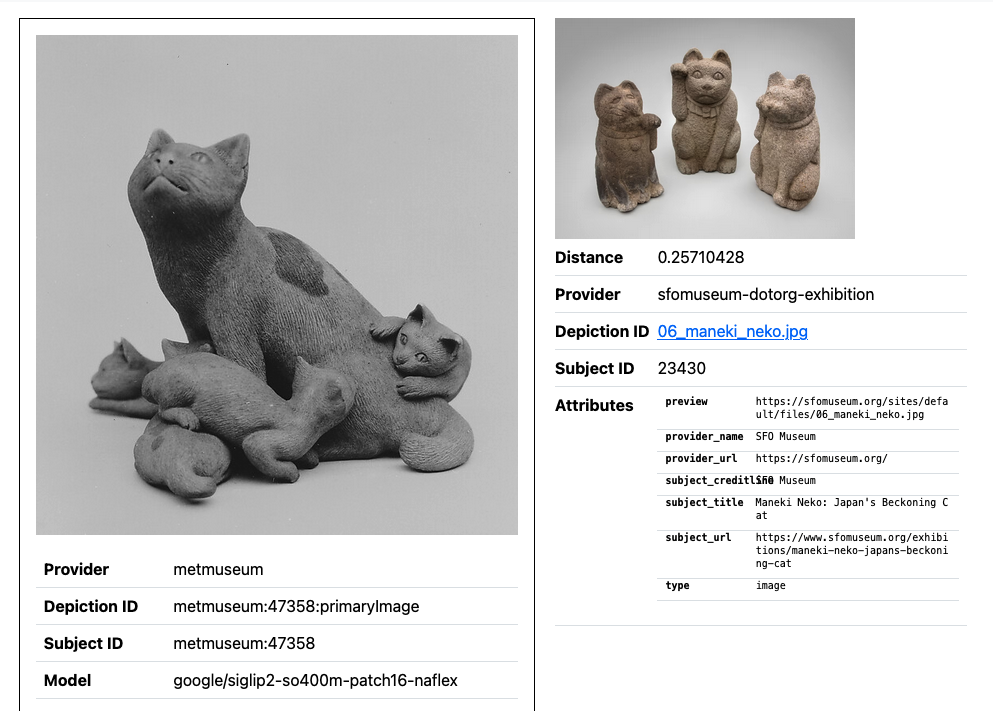
There is a lot of ground to cover in this blog post: The Met publishing their own vector embeddings, SFO Museum publishing 1152-dimension vector embeddings for its images, SFO Museum producing 1152-dimension vector embeddings for NGA and MoMA, and a whole bunch of updates to the tooling used to generate and query vector embeddings targeting local-first and consumer-grade hardware.
This is a blog post by aaron cope. It was published on May 27, 2026 and tagged roboteyes, machine-learning, collection, duckdb, golang, parquet, bleve, embeddings, aws, s3 and s3vectors.
OEmbeddings - What is the least amount of metadata necessary for shared vector embeddings?
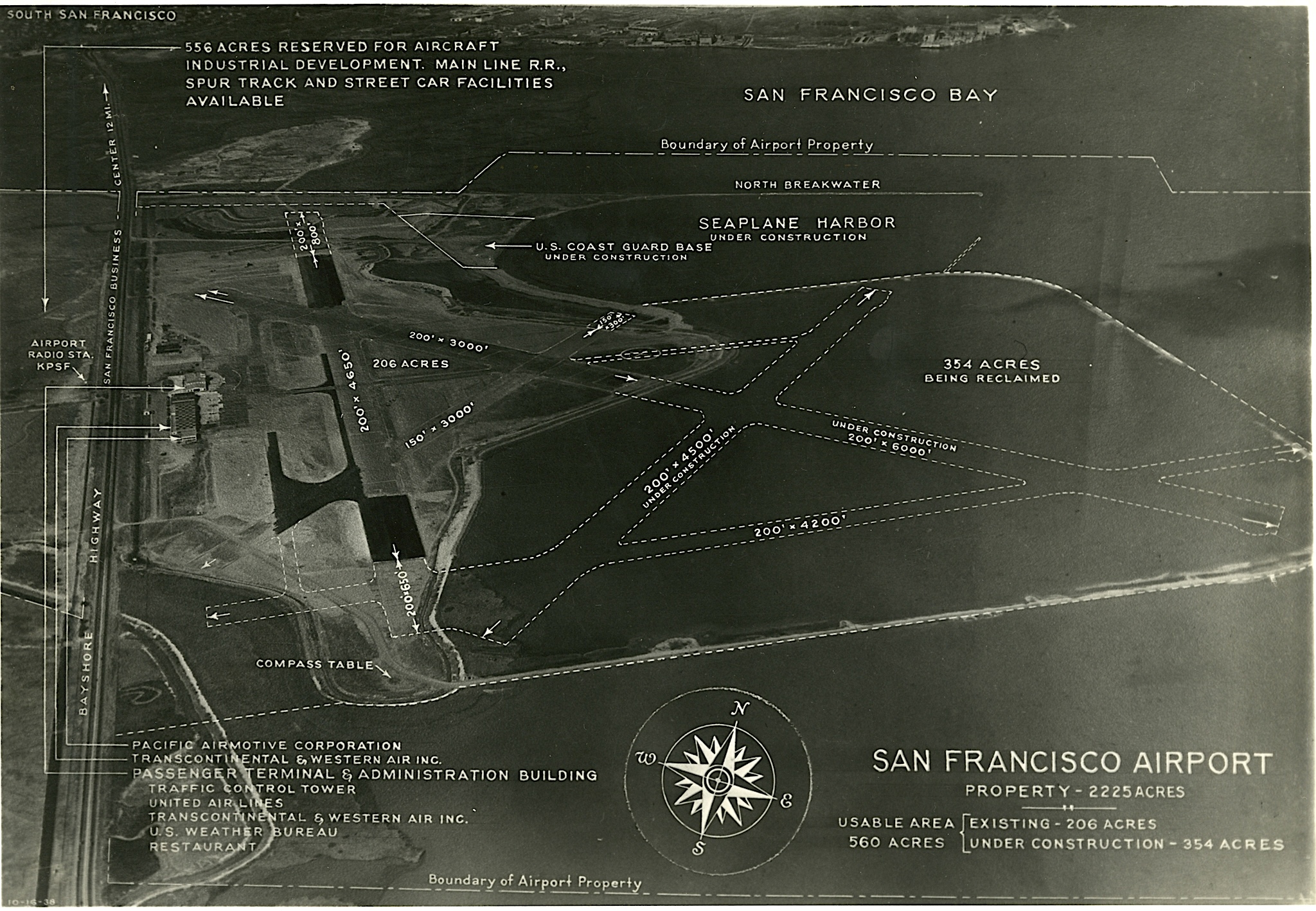
This is a blog post describing a proposal for a set of common attributes to include with shared vector embeddings. These common attributes are meant to be the least amount of metadata necessary to provide a simple preview and suitable attribution for the item (an image or text) for which vector embeddings have been produced.
This is a blog post by aaron cope. It was published on April 15, 2026 and tagged roboteyes, machine-learning, collection, oembeddings, embeddings, golang and parquet.
Shared cross-institutional vector embeddings – how we might get there
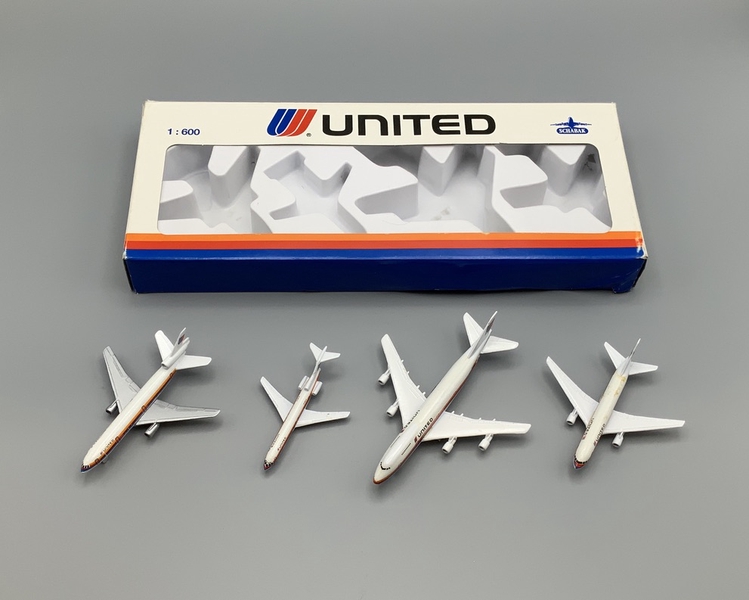
We are proposing a simple‑is‑best approach to sharing vector embeddings of our collections, a step that moves us closer to realizing the long‑standing ‘holy grail’ of cross‑institutional collections search through vector‑based image similarity.”
This is a blog post by aaron cope. It was published on April 06, 2026 and tagged roboteyes, machine-learning, collection, duckdb, golang, parquet and embeddings.
Updates (and additions) to machine-learning tools running on consumer hardware
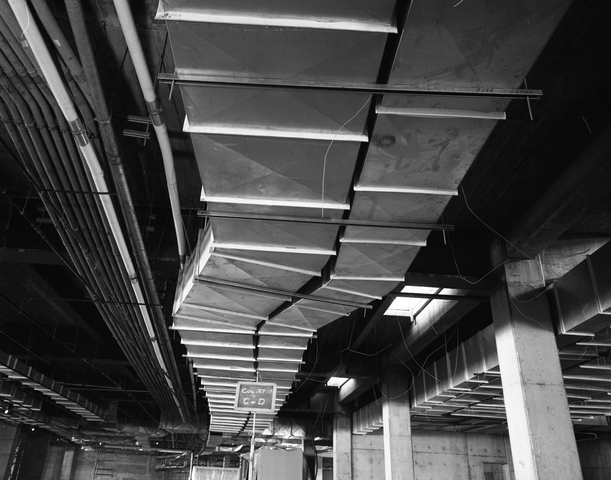
These are not “silver bullet” tools. Rather, they endeavour to be part of a set of building blocks for creating an infrastructure that preserves and guarantees the cultural heritage sector some agency in our work.
This is a blog post by aaron cope. It was published on February 10, 2026 and tagged swift, roboteyes, machine-learning, collection, duckdb, golang and embeddings.
Similar object images derived using the MobileCLIP computer-vision models
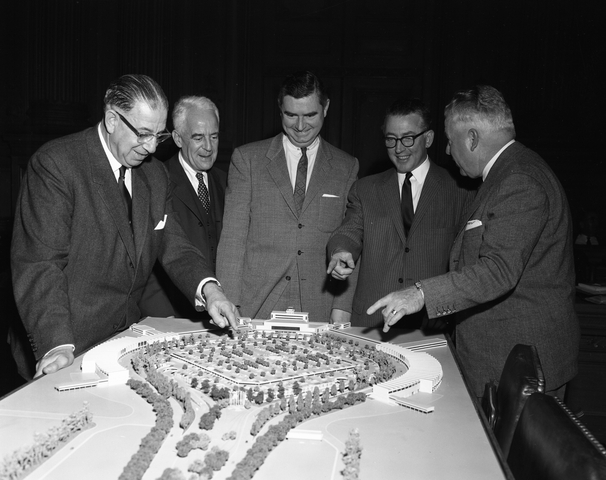
Like a lot of things involving machine-learning, the image similarity results while not always right aren’t necessarily wrong either. In the same vein as searching collections by color this “fuzzy” and imprecise space presents a whole new avenue for browsing collections and making visible objects that would otherwise get lost in the crowd.
This is a blog post by aaron cope. It was published on January 09, 2026 and tagged swift, roboteyes, machine-learning, collection, mobileclip and embeddings.
WallLabel – Experiments with Apple’s open source machine-learning frameworks
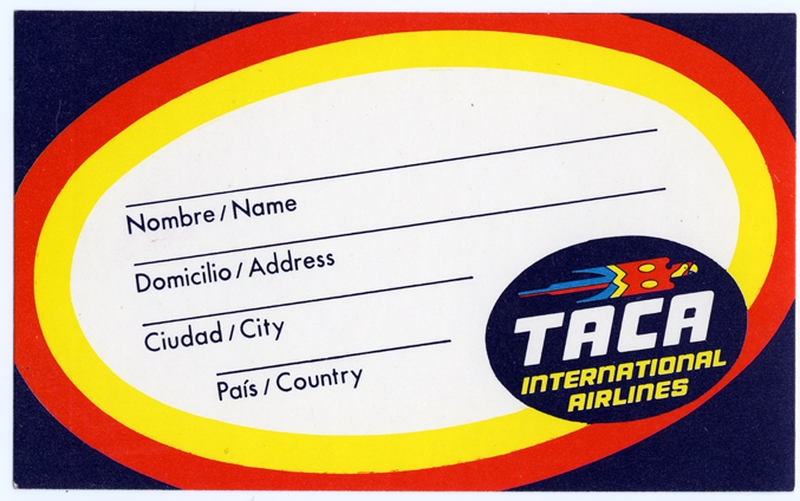
On-device models are still someone else’s models but having the flexibility to choose one model over another, to recognize that they are systems with strengths and weaknesses rather than all-knowing oracles, and the ability to incorporate those choices in to how our projects are designed and implemented is a small, but important, step in retaining some degree of control and agency in our work.
This is a blog post by aaron cope. It was published on October 29, 2025 and tagged swift, ios, mlx, machine-learning and roboteyes.
Registrar – Experiments with Apple’s on-device machine-learning frameworks

We are releasing this work in a spirit of generousity and to encourage others to suggest improvements with the larger goal of providing resources to help the broader cultural heritage sector think about how to use machine learning technologies outside and beyond the promises of the billboards advertising these same technologies in Silicon Valley and the world over.
This is a blog post by aaron cope. It was published on October 16, 2025 and tagged swift, ios, llm, machine-learning and roboteyes.
Updates to the SFO Museum text and image “embossers” (and a brand new tool for color matching)

In addition to all these changes the go-image-emboss package now includes a new command line tool, called review-colors, to perform image segmentation, color extraction and “snap-to-grid” matching with one or more color palettes for images, displaying all the results in a handy webpage.
This is a blog post by aaron cope. It was published on May 29, 2025 and tagged golang, swift, roboteyes, grpc and color.