
loading image

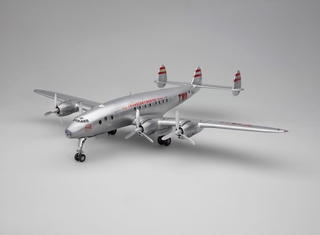
Introduced in 1951, the Lockheed 1049 Super Constellation was an enhanced-range, stretched upgrade of the 049 Constellation and was designed primarily to compete on transatlantic routes with the Douglas DC-6. The 1049G Super Constellation variant included more powerful Wright turbo-compound engines and a modification to allow the installation of wingtip fuel tanks, all of which gave the airliner increased range and speed. TWA (Trans World Airlines) eventually purchased twenty-eight of the aircraft from Lockheed and promoted them as the new “Super G.” The airline launched 1049G transatlantic service to Europe in November 1955 in an effort to compete with its major rival on the route, Pan American World Airways, which was flying the DC-6B. Under normal conditions, the aircraft could fly across the Atlantic nonstop. TWA’s “Super Gs” were appointed with interiors created by the renowned industrial designer Henry Dreyfuss. They included a lounge, sleeping berths, and colorful murals. See "Aviation Evolutions: The Jim Lund 1:72 Scale Model Airplane Collection", which features more than 200 models, on display, pre-security, in the Aviation Museum. http://bit.ly/AviationEvolutions
This image was posted on October 25, 2018.
Similar Instagram posts
In 1939, Hollywood producer, financial magnate, and visionary aviator Howard Hughes acquired a majority share of TWA (Transcontinental & Western Air).
This image was posted on December 08, 2017.
#aviationevolutions #jimlund #twa #howardhughes #lockheed #connie #constellation #avgeek #avationgeek #aviation #aviationhistory #aviationlovers #vintageaviation #history #avhistory #aviationgeeks #instaplane #flying #modelplane #flight #airline #avgeeks #aviation4u #aviationdaily #modelaricraft #airplane #aircraft
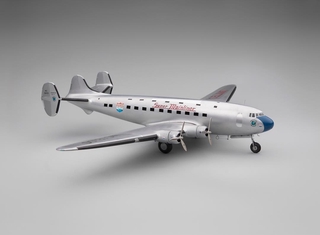
In 1935, in response to a request for a large-capacity, long-range airliner from United Air Lines, Douglas began developing the DC-4.
This image was posted on November 29, 2017.
#aviationevolutions #jimlund #avgeek #avationgeek #aviation #aviationhistory #aviationlovers #vintageaviation #history #avhistory #aviationgeeks #instaplane #flying #modelplane #flight #airline #avgeeks #aviation4u #aviationdaily #modelaricraft #airplane #aircraft
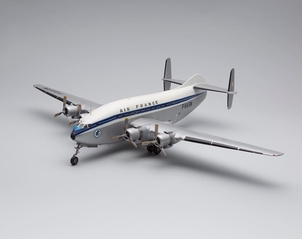
At the end of World War II, the French aircraft manufacturer Breguet began designing a large-capacity, mid-range airliner that would ultimately become the four-engine, double-deck 763 Provence.
This image was posted on August 24, 2018.
#aviationevolutions #jimlund #avgeek #aviationgeek #aviation #aviationhistory #vintageaviation #history #aviationgeeks #modelplane #scalemodel #avgeeks
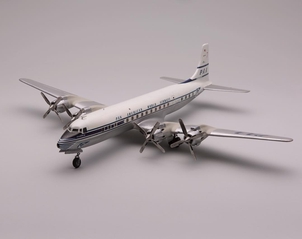
In an effort to compete with TWA (Trans World Airlines) on transatlantic routes to Europe, Pan American World Airways ordered the extended-range DC-7C (dubbed the “Seven Seas”) from Douglas Aircraft.
This image was posted on September 13, 2018.
#aviationevolutions #jimlund #avgeek #aviationgeek #aviation
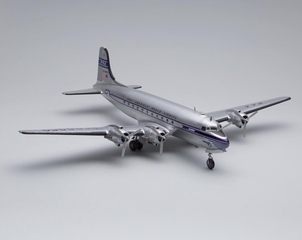
During the late 1930s, following a request from United Air Lines, Douglas Aircraft of Santa Monica, California, developed a large-capacity, long-range, pressurized, four-engine airliner.
This image was posted on December 26, 2018.
#aviationevolutions #modelplane #scalemodel #avgeek #aviationhistory #dc-4 #panam
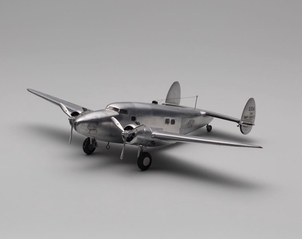
The Lockheed Model 14 Super Electra was a twin-engine, low-wing monoplane with a clean, aerodynamic fuselage and a twin tail.
This image was posted on December 07, 2018.
#aviationevolutions #jimlund #lockheed #avgeek #aviationgeek #aviation #aviationhistory #vintageaviation #history #aviationgeeks #modelplane #scalemodel #avgeeks
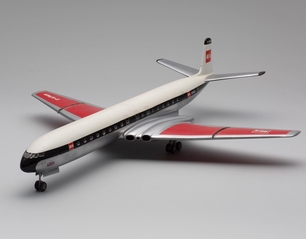
Introduced in 1952, the de Havilland D.H. 106 Comet was the first commercial passenger jetliner to enter service, years before the introduction of other jetliners.
This image was posted on June 16, 2021.
#wingwednesday #avgeek #airplane #dehavilland #dehavillandcomet #jet
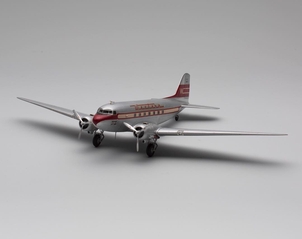
The Douglas DC-3 was arguably the most significant commercial airliner introduced before World War II.
This image was posted on February 07, 2019.
#aviationevolutions #jimlund #avgeek #aviationgeek #aviation #aviationhistory #vintageaviation #history #aviationgeeks #modelplane #scalemodel #avgeeks
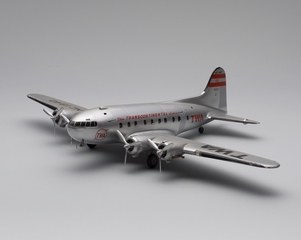
The Boeing 307 Stratoliner was the first commercial airliner put in service to have a pressurized cabin.
This image was posted on July 05, 2018.
#aviationevolutions #jimlund #avgeek #avationgeek #aviation #aviationhistory #vintageaviation #history #avhistory #aviationgeeks #modelplane #avgeeks #modelaircraft #airplane #aircraft #boeing #boeing307 #twa
This post mentions the following things involved with the SFO Museum collection:
Aviation Evolutions: The Jim Lund 1:72 Scale Model Airplane Collection
This aviation exhibition was on display between September 2017 and March 2019 in the AML Aviation Museum Gallery 01 gallery, located in International Terminal