
loading image

Introduced in 1952, the de Havilland D.H. 106 Comet was the first commercial passenger jetliner to enter service, years before the introduction of other jetliners. Initially seen as a major landmark in aeronautical engineering, after intermittent operation and several disastrous structural failures, service and production were canceled until airframe engineering deficiencies could be corrected. As a result, after many years of redesigning, the much-improved, lengthened, Comet Mk. 4 was finally delivered to BOAC (British Overseas Airways Corporation) in 1958. Shortly after, the airline inaugurated regular transatlantic jet service from London to New York with one refueling stop in Newfoundland. BEA (British European Airways) inaugurated shorter-range Comet Mk. 4B service on its Tel Aviv to London route in April 1960. The Comet Mk. 4 had a cruising speed of just over five hundred miles an hour and comfortably accommodated up to eighty-one passengers, but ultimately could not compete with the Boeing 707 or the Douglas DC-8.
This image was posted on June 16, 2021.
Similar Instagram posts
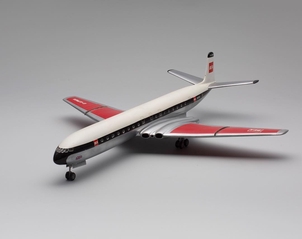
Introduced in 1952, the de Havilland Comet was the first commercial passenger jetliner to enter service, years before the introduction of other jetliners.
This image was posted on September 28, 2018.
#aviationevolutions #jimlund #avgeek #aviationgeek #aviation #aviationhistory #vintageaviation #history #aviationgeeks #modelplane #scalemodel #avgeeks #turboprop
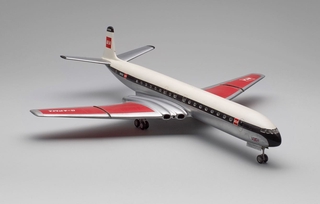
BEA (British European Airways), was formed by the Civil Aviation Act of 1946 in Great Britain.
This image was posted on February 24, 2022.
#defunctthursday #bea #boac #avgeek #britishairways
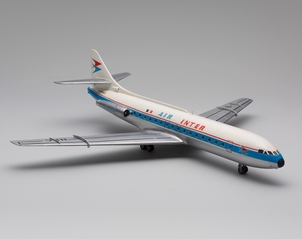
The Sud Aviation Caravelle was one of the first successful commercial jetliners produced in Europe.
This image was posted on August 02, 2018.
#aviationevolutions #jimlund #avgeek #avationgeek #aviation #aviationhistory #vintageaviation #history #avhistory #aviationgeeks #modelplane #avgeeks #modelaircraft #airplane #aircraft
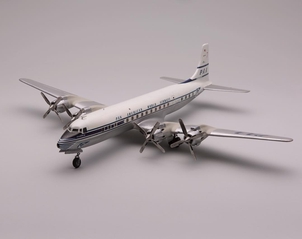
In an effort to compete with TWA (Trans World Airlines) on transatlantic routes to Europe, Pan American World Airways ordered the extended-range DC-7C (dubbed the “Seven Seas”) from Douglas Aircraft.
This image was posted on September 13, 2018.
#aviationevolutions #jimlund #avgeek #aviationgeek #aviation
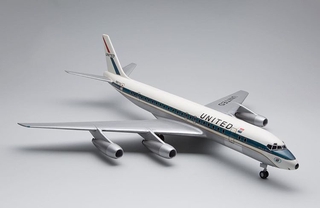
The Douglas DC-8 was developed during the mid-1950s as a competitive design to Boeing’s 707.
This image was posted on January 09, 2019.
#aviationevolutions #jimlund #avgeek #aviationgeek #aviation #aviationhistory #vintageaviation #history #aviationgeeks #modelplane #scalemodel #avgeeks
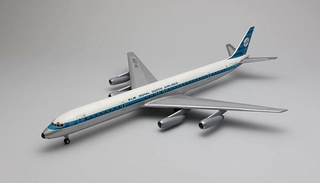
In 1959, United Air Lines and Delta Airlines introduced the Douglas DC-8.
This image was posted on February 22, 2019.
#aviationevolutions #jimlund #avgeek #aviationgeek #aviation #aviationhistory #vintageaviation #history #aviationgeeks #modelplane #scalemodel #avgeeks #douglasaircraft #klm
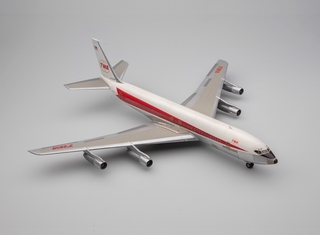
First flown in 1957, the Boeing Model 707 was the first US-made, pure-turbojet airliner to be introduced.
This image was posted on January 24, 2018.
#aviationevolutions #jimlund #avgeek #avationgeek #aviation #aviationhistory #aviationlovers #vintageaviation #history #avhistory #aviationgeeks #flying #modelplane #avgeeks #modelaircraft #airplane #aircraft #boeing #boeing707 #twa
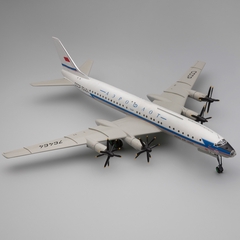
Developed behind the Iron Curtain by the Tupolev Design Bureau during the late 1950s, the massive Tu-114 Rossiya (Russia) turboprop airliner was introduced by the Soviet national airline Aeroflot in 1961.
This image was posted on February 20, 2018.
#aviationevolutions #jimlund #avgeek #avationgeek #aviation #aviationhistory #aviationlovers #vintageaviation #history #avhistory #aviationgeeks #instaplane #flying #modelplane #flight #airline #avgeeks #aviation4u #aviationdaily #modelaircraft #airplane #aircraft