
@SFOMuseum Twitter Posts Tagged WingWednesday This is SFO Museum's archive of the @SFOMuseum Twitter account. There are 144 posts and this is page 10 of 12. See all the tags or all the Twitter posts that have been archived so far.
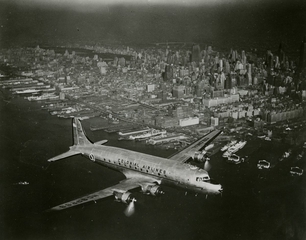
Deemed too complicated and expensive to operate, its design was changed to a smaller, unpressurized airliner with a single tail, which became the DC-4. #WingWednesday #AvGeek
This tweet was posted on April 07, 2021.
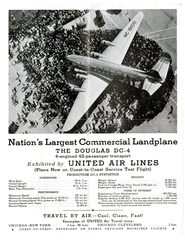
In the late 1930s, United Air Lines asked Douglas Aircraft to develop a large-capacity, long-range, pressurized, four-engine airliner. The DC-4E featured a tripletail and a nose wheel, then unique to large passenger aircraft, and first flew in 1938. #WingWednesday #avgeek
This tweet was posted on April 07, 2021.
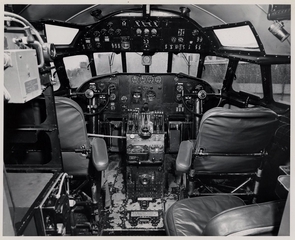
Named the “Stratoliner” for its ability to fly near the stratosphere, it had a circular cross-section and a tear-drop fuselage to handle pressurization. Only ten were produced: a prototype, three for Pan Am, five for TWA, and one for Howard Hughes. #WingWednesday
This tweet was posted on March 31, 2021.
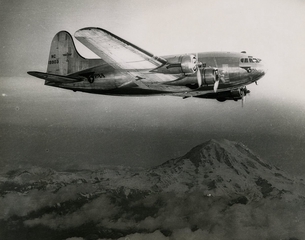
In 1934, Boeing began design studies for a four-engine bomber in conjunction with a four-engine civil airliner. The bomber version became the B-17 and was produced in large numbers. The civil airliner version emerged as the Model 307. #WingWednesday
This tweet was posted on March 31, 2021.
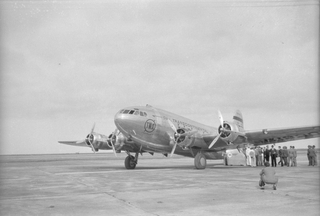
These days, it's common for planes to cruise at altitudes of 35,000 feet. But back in 1940, when the first pressurized commercial airliner, the Boeing 307 Stratoliner, was introduced, it was a marvel to fly above most weather disturbances at 20,000 feet. #WingWednesday
This tweet was posted on March 31, 2021.
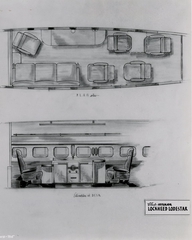
Most sales of the Lodestar were to foreign airlines or to the U.S. military, as improving air strength was a priority leading up to World War II. After the war, many were converted into private or executive aircraft with a sleek, club-style interior. #WingWednesday
This tweet was posted on March 24, 2021.
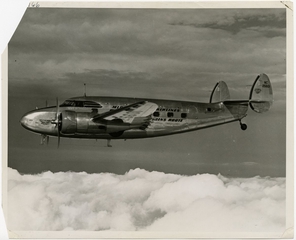
Extra seats let the Lodestar compete economically with the DC-3, but many U.S. airlines had fully committed to the DC-3. The first Lodestar was acquired in 1940 by Mid-Continent Airlines, which operated throughout the Midwest and was acquired in 1952 by Braniff. #WingWednesday.
This tweet was posted on March 24, 2021.
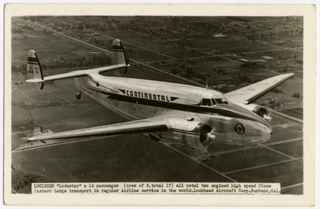
While Lockheed's Model 14 Super Electra performed admirably, its larger competitor, the Douglas DC-3, was less expensive to operate. Elongating the Electra allowed for two more rows of seats and the revised aircraft, the Model 18 Lodestar, first flew in Sept. 1939. #WingWednesday
This tweet was posted on March 24, 2021.
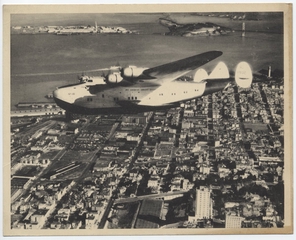
Designed by Wellwood E. Beall, it distinguished itself by shear size, three vertical stabilizers in the tail, and cantilevered seawings that doubled as fuel tanks. #WingWednesday #avgeek #PanAm
This tweet was posted on March 17, 2021.
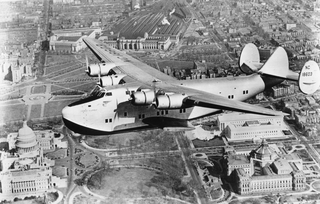
The B-314 was introduced to Pan Am's Pacific Division and used to open its Atlantic service in 1939. Here, the Yankee Clipper is shown over Washington D.C. and the Empire State Building. #WingWednesday #avgeek #PanAm
This tweet was posted on March 17, 2021.
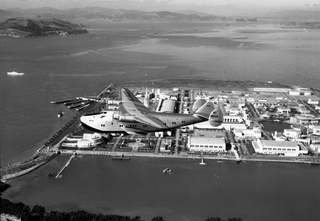
Pan American Airways ordered six of the original version and six more 314A variants, three of which were sold before delivery to the British Overseas Airways Corporation (BOAC). #WingWednesday #avgeek
This tweet was posted on March 17, 2021.
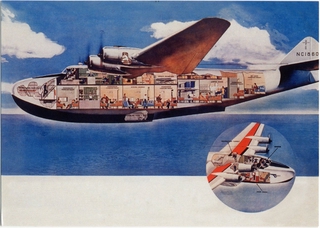
The largest and most luxurious of all of the flying boats, the Boeing 314 was called a flying hotel by journalists of the day. #WingWednesday #avgeek
This tweet was posted on March 17, 2021.