
loading image

In an effort to compete with TWA (Trans World Airlines) on transatlantic routes to Europe, Pan American World Airways ordered the extended-range DC-7C (dubbed the “Seven Seas”) from Douglas Aircraft. Developed from the earlier DC-6B transcontinental airliner, it included upgraded engines, increased fuel capacity, and greater wingspan, all of which gave it slightly better range and speed compared to TWA’s Lockheed 1049 Super Constellation. Promoted as the “Super Seven,” Pan Am introduced the airliner in May 1956, on the Atlantic route from Miami to Paris, and in September 1957, on the time-saving, transpolar “great circle route,” across the Arctic Ocean to Northern Europe. It could comfortably seat up to eighty-four passengers and was mostly operated in a tourist class configuration, while the Boeing 377 was reserved for premium class operations. Many regular business travelers chose the DC-7C over the Boeing 377 simply because it saved at least one hour on most transatlantic routes. See "Aviation Evolutions: The Jim Lund 1:72 Scale Model Airplane Collection", which features more than 200 models, on display, pre-security, in the Aviation Museum. http://bit.ly/AviationEvolutions
This image was posted on September 13, 2018.
Similar Instagram posts
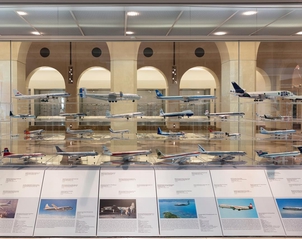
Introduced in 1952, the de Havilland Comet was the first commercial passenger jetliner to enter service, years before the introduction of other jetliners.
This image was posted on September 28, 2018.
#aviationevolutions #jimlund #avgeek #aviationgeek #aviation #aviationhistory #vintageaviation #history #aviationgeeks #modelplane #scalemodel #avgeeks #turboprop
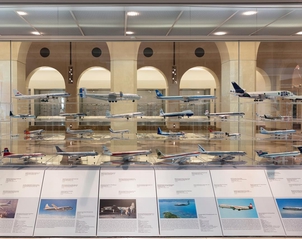
Introduced in 1952, the de Havilland Comet was the first commercial passenger jetliner to enter service, years before the introduction of other jetliners.
This image was posted on September 28, 2018.
#aviationevolutions #jimlund #avgeek #aviationgeek #aviation #aviationhistory #vintageaviation #history #aviationgeeks #modelplane #scalemodel #avgeeks #turboprop
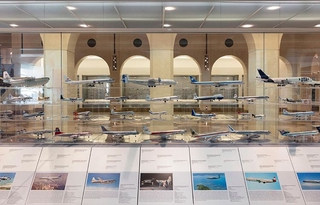
In 1957, BOAC (British Overseas Airways Corporation) introduced the long-delayed, turboprop Britannia, developed and produced by the Bristol Aircraft Company of Filton, England.
This image was posted on November 09, 2018.
#aviationevolutions #jimlund #avgeek #aviationgeek #aviation #aviationhistory #vintageaviation #history #aviationgeeks #modelplane #scalemodel #avgeeks #boac #britannia #england #britishoverseasairwayscorporation
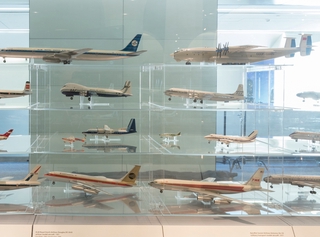
First flown in 1957, the Boeing Model 707 was the first US-made, pure-turbojet airliner to be introduced.
This image was posted on January 24, 2018.
#aviationevolutions #jimlund #avgeek #avationgeek #aviation #aviationhistory #aviationlovers #vintageaviation #history #avhistory #aviationgeeks #flying #modelplane #avgeeks #modelaircraft #airplane #aircraft #boeing #boeing707 #twa
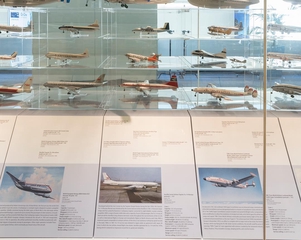
Introduced in 1951, the Lockheed 1049 Super Constellation was an enhanced-range, stretched upgrade of the 049 Constellation and was designed primarily to compete on transatlantic routes with the Douglas DC-6.
This image was posted on October 25, 2018.
#aviationevolutions #jimlund #avgeek #aviationgeek #aviation #aviationhistory #vintageaviation #history #aviationgeeks #modelplane #scalemodel #avgeeks
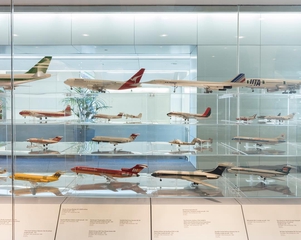
The DC-10 was McDonnell Douglas’ first wide-body jetliner.
This image was posted on October 12, 2018.
#aviationevolutions #jimlund #avgeek #aviationgeek #aviation #aviationhistory #vintageaviation #history #aviationgeeks #modelplane #scalemodel #avgeeks
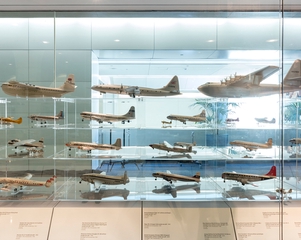
The Convair 240 was the first postwar commercial airliner developed by the Consolidated Vultee Company, or Convair, of San Diego.
This image was posted on July 18, 2018.
#aviationevolutions #jimlund #avgeek #avationgeek #aviation #aviationhistory #vintageaviation #history #avhistory #aviationgeeks #modelplane #avgeeks #modelaircraft #airplane #aircraft #convair #convair240
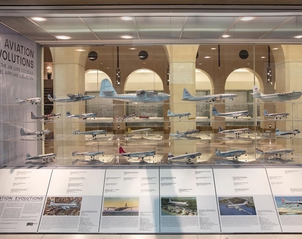
The Hughes H-4 flying boat, also known as the “Spruce Goose,” was designed and built by the Hughes Aircraft Company as an ultra-large, transoceanic military transport for use during World War II.
This image was posted on November 02, 2018.
#aviationevolutions #jimlund #avgeek #aviationgeek #aviation #aviationhistory #vintageaviation #history #aviationgeeks #modelplane #scalemodel #avgeeks #sprucegoose #howardhughes
This post mentions the following things involved with the SFO Museum collection:
Aviation Evolutions: The Jim Lund 1:72 Scale Model Airplane Collection
This aviation exhibition was on display between September 2017 and March 2019 in the AML Aviation Museum Gallery 01 gallery, located in International Terminal