
loading image

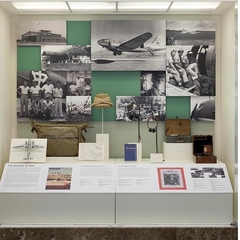
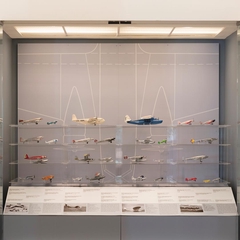
As commercial aviation advanced in the 1920s and ‘30s, manuals for airliners were separated into flight operations and maintenance categories. Eastern Air Lines was a major operator of the Douglas DC-2 and DC-3 in the 1930s and provided maintenance crews with manuals that included data on the airframe, lubrication, brakes, the electrical system, instruments, engines, the oil system, landing gear, and fuel systems. After World War II, larger, multi-engine airliners enabled the rapid growth of the airline industry. These aircraft were more demanding to fly and required large crews to operate them and rigorous maintenance schedules. The number of airliner manuals and the complexity of their content grew to voluminous levels. With the arrival of the jet fleets by the late 1950s, more manuals with new types of information were issued. “By the Book: Airliner Flight, Maintenance, and Training Manuals” is on display, pre-security, in the Aviation Museum and Library in the International Terminal. . . .
This image was posted on April 11, 2019.
Similar Instagram posts
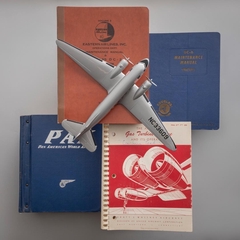
With the introduction of the airplane in the early twentieth century, pilots and mechanics needed written instructions on how to properly fly these complicated machines and keep them in safe operating condition.
This image was posted on April 05, 2019.
#bythebook #trainingmanual #airliner #flight #maintenance #avgeek #pilots #mechanics #manuals #airplane
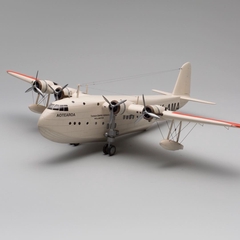
Introduced in the late 1930s, the British-produced Short S.30 series of aircraft was a large-capacity double-deck flying boat.
This image was posted on January 17, 2019.
#aviationevolutions #jimlund #avgeek #aviationgeek #aviation #aviationhistory #vintageaviation #history #aviationgeeks #modelplane #scalemodel #avgeeks #auckland #sydney #teal
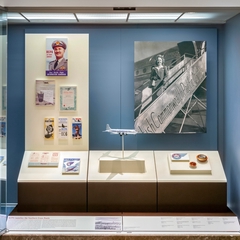
One of the first Australian airlines to operate transpacific commercial air services to America was BCPA (British Commonwealth Pacific Airlines) which was formed by the governments of Australia, Great Britain, and New Zealand in 1947.
This image was posted on February 16, 2023.
#flyingsoutherncross #australia #avgeek
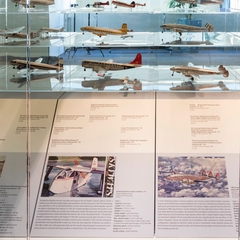
Designed by Republic Aircraft’s test pilot and engineer Percival Hopkins "Spence" Spencer, the RC-3 Seabee was an all-metal, single-engine, sport amphibian aircraft introduced in 1946.
This image was posted on May 17, 2018.
#aviationevolutions #jimlund #republic #seabee #amphibian #avgeek #avationgeek #aviation #aviationhistory #vintageaviation #history #avhistory #aviationgeeks #modelplane #avgeeks #modelaircraft #airplane #aircraft
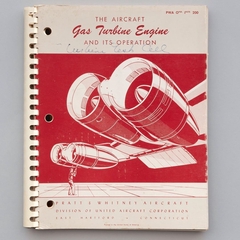
When jetliners were introduced in the 1950s, they brought air travel to a larger percentage of the public as their high speeds, extensive range, and large capacities enabled the airlines to substantially reduce their seat-mile costs.
This image was posted on May 23, 2019.
#bythebook #avgeek #jetliners #paa #panam
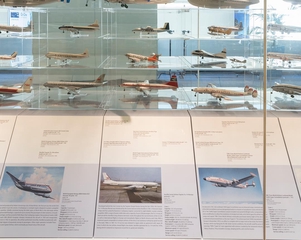
Introduced in 1951, the Lockheed 1049 Super Constellation was an enhanced-range, stretched upgrade of the 049 Constellation and was designed primarily to compete on transatlantic routes with the Douglas DC-6.
This image was posted on October 25, 2018.
#aviationevolutions #jimlund #avgeek #aviationgeek #aviation #aviationhistory #vintageaviation #history #aviationgeeks #modelplane #scalemodel #avgeeks
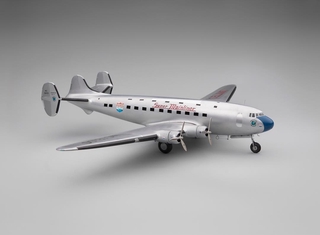
In 1935, in response to a request for a large-capacity, long-range airliner from United Air Lines, Douglas began developing the DC-4.
This image was posted on November 29, 2017.
#aviationevolutions #jimlund #avgeek #avationgeek #aviation #aviationhistory #aviationlovers #vintageaviation #history #avhistory #aviationgeeks #instaplane #flying #modelplane #flight #airline #avgeeks #aviation4u #aviationdaily #modelaricraft #airplane #aircraft
Introduced in the late 1930s, the British-produced Short S.30 series of aircraft was a large-capacity double-deck flying boat.
This image was posted on January 17, 2019.
#aviationevolutions #jimlund #avgeek #aviationgeek #aviation #aviationhistory #vintageaviation #history #aviationgeeks #modelplane #scalemodel #avgeeks #auckland #sydney #teal