
loading image

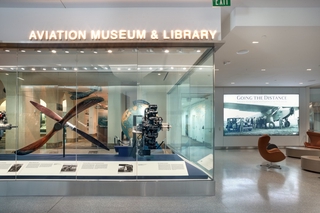
What was it like navigating open waters in an aircraft during the 1930s? Complicated to say the least! In addition to celestial navigation and a radio compass, Pan American Airways pilots used a process called dead reckoning, which involved calculating a position based on a previously determined position, or fix, using data such as speed, elapsed time, and wind drift. Wind drift was calculated by dropping a ceramic drift marker overboard. Filled with metallic powder, it created a highly visible slick on the ocean surface. This fixed point was viewed through a drift meter to measure ground speed and sideways diversion from a crosswind that could then be calculated for a heading correction. 1st 📸: the crew of Pan Am’s first survey flight to Hawai’i, flown in 1935: Radio Officer W.T. Jarboe Jr., Junior Flight Officer Harry R. Canaday, First Officer R.O.D. Sullivan, Captain Edwin C. Musick, Navigator Fred J. Noonan, Engineer Officer Victor A. Wright. 2nd 📸: the navigation and radio kit used by Pan Am in the mid 1930s and early 1940s. Learn more about the China Clipper and early transpacific travel in "China Clipper" on display, pre-security, in the Aviation Museum and Library in the International Terminal. The Aviation Museum and Library is open daily 10am to 4:30pm. http://bit.ly/chinaclipper
This image was posted on February 28, 2020.
Similar Instagram posts
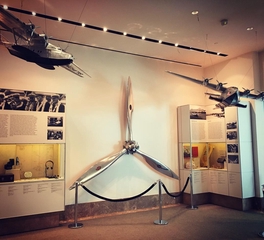
Records filed with the Bureau of Air Commerce tracked all parts used on Pan American's flying boats such as this Model 3E50-97 propeller.
This image was posted on July 26, 2016.
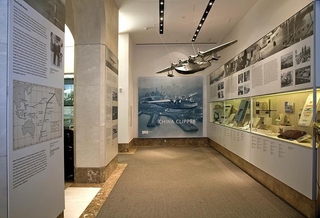
The adventurous nature of the first scheduled air service from the San Francisco Bay Area to Hong Kong is captured in our China Clipper exhibition.
This image was posted on February 27, 2019.
#chinaclipper #transpacific #panamerican #panam #hongkong #avgeek
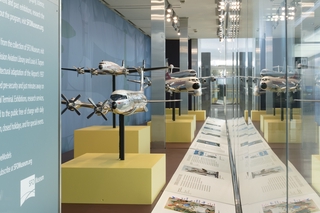
During the last half of the twentieth century, commercial aviation progressed at an unprecedented pace.
This image was posted on April 17, 2024.
#cutabovemodels
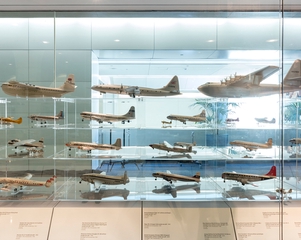
The Convair 240 was the first postwar commercial airliner developed by the Consolidated Vultee Company, or Convair, of San Diego.
This image was posted on July 18, 2018.
#aviationevolutions #jimlund #avgeek #avationgeek #aviation #aviationhistory #vintageaviation #history #avhistory #aviationgeeks #modelplane #avgeeks #modelaircraft #airplane #aircraft #convair #convair240
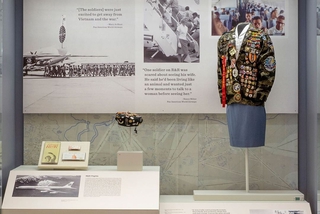
SFO Museum would like to offer a heartfelt thank you to all of the service members and families of the United States military.
This image was posted on November 14, 2019.
#freedombird #avgeek #veterans #vietnamwar #airlines #airline #crewlife
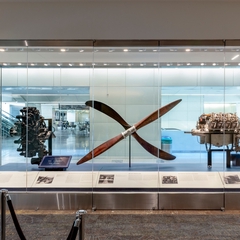
Micarta is a plastic compound first developed around 1910 by George Westinghouse (1846–1914).
This image was posted on February 21, 2023.
#enduranceengines #avgeek #aviationhistory
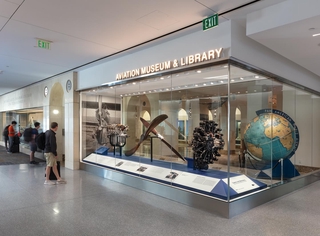
In the 1920s, aviation visionaries imagined how the nations of the Pacific Rim could be linked by a new mode of transportation: the aircraft.
This image was posted on June 14, 2022.
#airmail #australia #avgeek #aviationhistory #philately
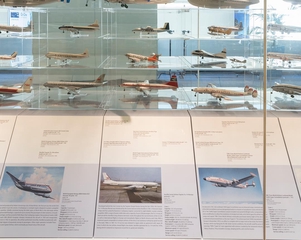
Introduced in 1951, the Lockheed 1049 Super Constellation was an enhanced-range, stretched upgrade of the 049 Constellation and was designed primarily to compete on transatlantic routes with the Douglas DC-6.
This image was posted on October 25, 2018.
#aviationevolutions #jimlund #avgeek #aviationgeek #aviation #aviationhistory #vintageaviation #history #aviationgeeks #modelplane #scalemodel #avgeeks
Following the historic first flight from North America to Australia by Charles Kingsford Smith and crew in 1928, the transpacific “Southern Cross” route— named after the aircraft they flew, the Fokker F.VIIb/3m Southern Cross—received worldwide fame.
This image was posted on June 24, 2022.
#flyingsoutherncross #australia #avgeek #aviationhistory #philately