
@SFOMuseum Twitter Posts Tagged intriguinginsects This is SFO Museum's archive of the @SFOMuseum Twitter account. There are 69 posts and this is page 1 of 6. See all the tags or all the Twitter posts that have been archived so far.
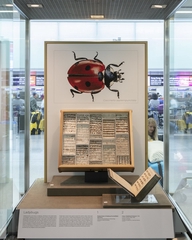
See “The Intriguing World of Insects” on display, pre-security, in the International Terminal. https://t.co/McPBuP0ipz #IntriguingInsects
This tweet was posted on December 24, 2019.
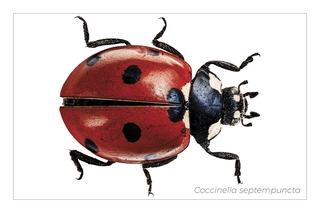
The first modern day success story of biocontrol was the introduction of the Vedalia beetle, a species of ladybug, from Australia into California in 1888 to control cottony cushion scale, a major insect pest of oranges and other citrus trees. #IntriguingInsects
This tweet was posted on December 24, 2019.
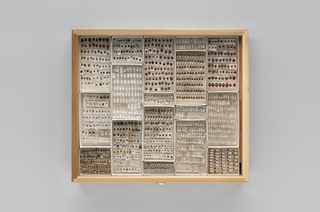
People have moved many species around the world to help control pest insects. This practice is called Classical Biological Control or Biocontrol. #IntriguingInsects
This tweet was posted on December 24, 2019.
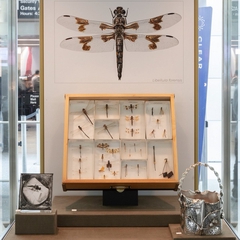
See “The Intriguing World of Insects” on display, pre-security, in the International Terminal. https://t.co/McPBuOIH0Z #IntriguingInsects
This tweet was posted on November 25, 2019.
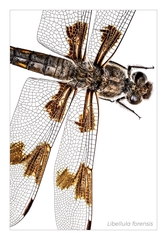
Shaped much like a helicopter, #dragonflies use direct flight muscles—muscles attached directly to the wings—to pull their wings up and down. However, because of how these muscles are attached, the wings cannot fold flat over their backs. #IntriguingInsects
This tweet was posted on November 25, 2019.
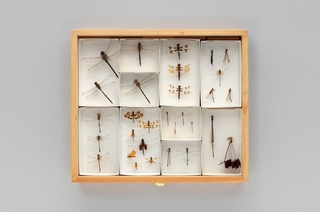
#Dragonflies, and their more slender cousins, the damselflies, were among the first insects to evolve wings around 325 million years ago—long before dinosaurs roamed the earth. #IntriguingInsects
This tweet was posted on November 25, 2019.
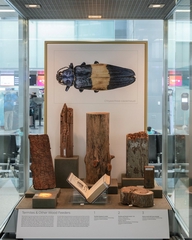
See “The Intriguing World of Insects” on display, pre-security, in the International Terminal. https://t.co/McPBuOIH0Z #IntriguingInsects
This tweet was posted on November 04, 2019.
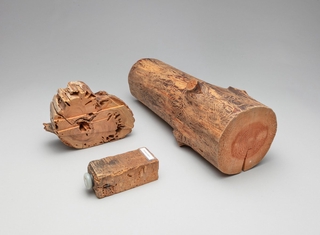
Other #insects, including some ants and bees, cannot digest wood as food, but rather carve it out to create nesting cavities for their young. Openings caused by insects allow fungi and bacteria to penetrate wood and help recycle the nutrients. #IntriguingInsects
This tweet was posted on November 04, 2019.
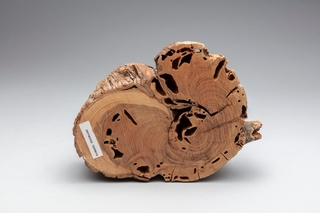
#Termites, bark beetles, and sawfly wasps, have evolved the ability to feed on dead and dying trees. Termites are able to digest wood thanks to symbiotic microbes in their stomachs that break down cellulose into nutrition which the termites can use. #IntriguingInsects
This tweet was posted on November 04, 2019.
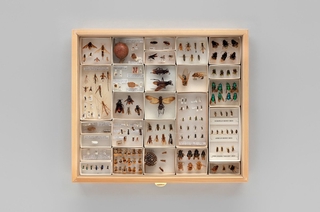
See “The Intriguing World of Insects” on display, pre-security, in the International Terminal. https://t.co/McPBuOIH0Z #IntriguingInsects
This tweet was posted on October 31, 2019.
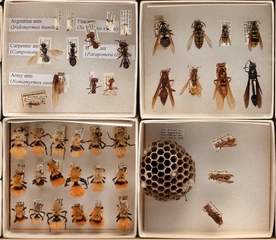
Most bees, wasps, and ants live in societies with overlapping generations and complex visual and chemical communication systems. For example, honey bees do a “waggle dance” to communicate the distance, direction, and quality of nectar and pollen resources. #IntriguingInsects
This tweet was posted on October 31, 2019.
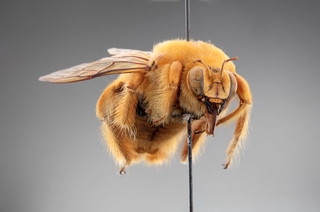
#Bees, #wasps, and #ants all belong to the order Hymenoptera, meaning membranous wings. Most honey bees, yellowjacket wasps, and ants are social species. #IntriguingInsects
This tweet was posted on October 31, 2019.