
@SFOMuseum Twitter Posts Tagged intriguinginsects This is SFO Museum's archive of the @SFOMuseum Twitter account. There are 69 posts and this is page 4 of 6. See all the tags or all the Twitter posts that have been archived so far.
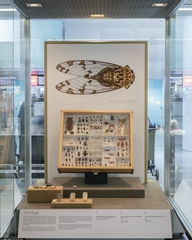
See “The Intriguing World of Insects” on display, pre-security, in the International Terminal. https://t.co/McPBuOIH0Z #IntriguingInsects
This tweet was posted on July 22, 2019.
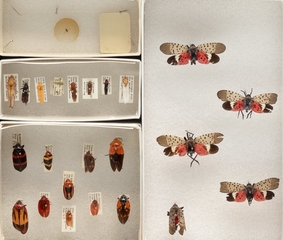
True bugs all have beak-like mouthparts, that can pierce through plant tissue or other insects’ exoskeletons. By injecting saliva with digestive enzymes into their food, they are able to suck the fluids out with their straw-like mouthparts. #IntriguingInsects
This tweet was posted on July 22, 2019.
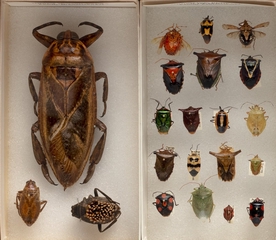
When you say “bug” to entomologists, they assume you mean a true bug— in the order Hemiptera. This group includes stink bugs, kissing bugs, water striders, cicadas, aphids, and many more. #IntriguingInsects
This tweet was posted on July 22, 2019.
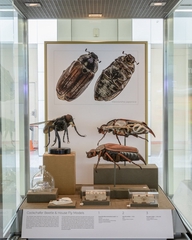
See “The Intriguing World of Insects” on display, pre-security, in the International Terminal. https://t.co/McPBuOIH0Z #IntriguingInsects
This tweet was posted on July 17, 2019.
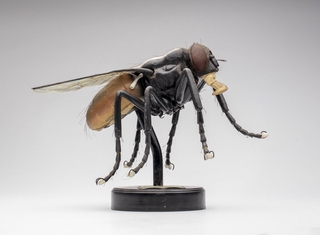
This German Stubenfliege (house fly) model accurately depicts the wing veins and other anatomical features that identify this species. House flies locate sugar with their feet, which are ten million times more sensitive than the taste buds on the human tongue. #IntriguingInsects
This tweet was posted on July 17, 2019.
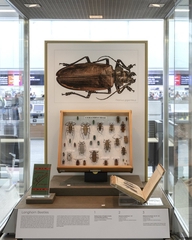
See “The Intriguing World of Insects” on display, pre-security, in the International Terminal. https://t.co/McPBuOIH0Z #IntriguingInsects
This tweet was posted on July 02, 2019.
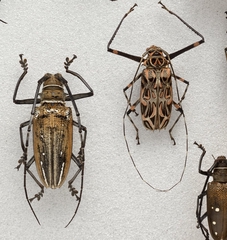
The intricate patterns on the elytra (wings) of many species of longhorn beetles help them to blend in with the bark of the trees on which they feed. #IntriguingInsects
This tweet was posted on July 02, 2019.
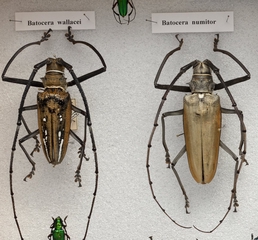
Longhorn beetles derive their name from their long antennae. Most longhorn beetle eggs are laid under pieces of bark. Their larvae feed inside the wood of dead and dying trees, including roots, trunks, and branches. #IntriguingInsects
This tweet was posted on July 02, 2019.
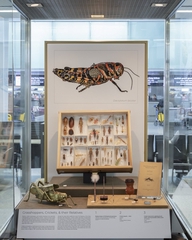
See “The Intriguing World of Insects” on display, pre-security, in the International Terminal. https://t.co/McPBuOIH0Z #IntriguingInsects
This tweet was posted on June 26, 2019.
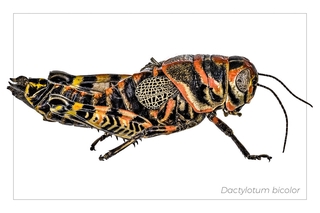
Males of various species of insects use “songs” to attract females or ward off other males from their territory. Grasshoppers, like this dactylotum bicolor, have “ears” on their abdomen. #IntriguingInsects
This tweet was posted on June 26, 2019.
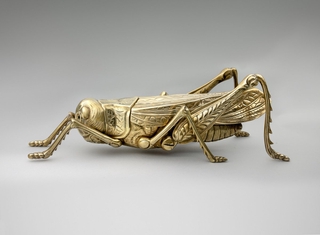
Crickets and katydids are well-known for the “songs” or chirps they produce by stridulation—that is, rubbing the “scraper” found at the base of one wing across a series of ridges or “file” on the other wing. #IntriguingInsects
This tweet was posted on June 26, 2019.
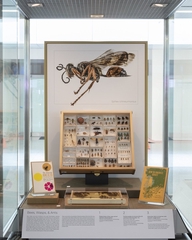
See “The Intriguing World of Insects” on display, pre-security, in the International Terminal. https://t.co/McPBuP0ipz
#IntriguingInsects
This tweet was posted on June 20, 2019.