
loading image

Sundials are some of the earliest instruments and measure time. Sundials date to ancient Egypt and were still widely used during the nineteenth century to check the accuracy of clocks and watches. Because the sun appears to move at different rates depending on location, horizontally fixed sundials are calibrated for specific latitudes. This equinoctial inclining sundial includes a compass for alignment and a hinged dial face that adjusts to various locations listed on the back. “Curiosity & Discovery: Antique Scientific Instruments” is on display, post-security in Harvey Milk Terminal 1 and online at: https://bit.ly/AntiqueScientificInstruments. All objects are courtesy of Mark McElyea.
This image was posted on November 02, 2021.
Similar Instagram posts
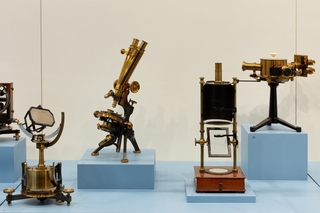
Composite lenses and precision manufacturing brought microscopes to the forefront of science in the nineteenth century.
This image was posted on May 04, 2022.
#scientificinstruments #antiquescientificinstruments #microscope
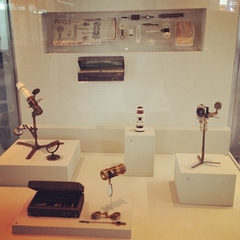
A sampling of early (1720s-40s) screw-barrel microscopes & components
This image was posted on June 01, 2012.
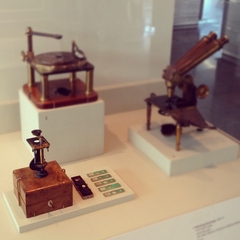
This one's for you, @zeiss_micro!
This image was posted on June 11, 2012.
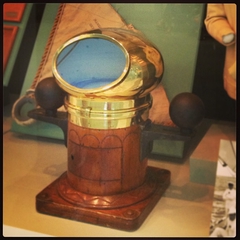
It's hard to imagine heavy instruments of oak and brass on today's #AmericasCup yachts, but this 1930s binnacle was used aboard three defenders: Enterprise, Rainbow, and Ranger.
This image was posted on September 11, 2013.
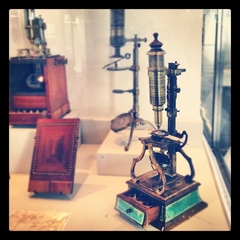
This 1750s microscope is one of only nine known to be by Alexis Magny
This image was posted on June 15, 2012.
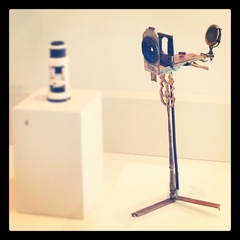
Watch & clockmaker to King George III, George Lindsay's microscope was the 1st to be patented.
This image was posted on May 04, 2012.
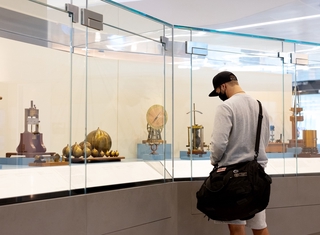
German physician and physicist Hermann von Helmholtz (1821–94) made important contributions to a variety of scientific fields.
This image was posted on January 03, 2022.
#antiquescientificinstruments #science #resonator #sound