
loading image

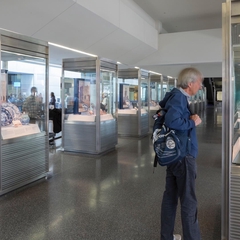
German physician and physicist Hermann von Helmholtz (1821–94) made important contributions to a variety of scientific fields. He was the first to measure the speed of a nerve impulse, and in 1851 he invented the ophthalmoscope, which is still used to inspect the interior of the eye. Helmholtz also developed acoustic instruments to experiment with the relationship of sound to the human ear. Each of his resonators, such as the group shown here, were tuned to a specific frequency to identify and amplify sound. In the 1863 book On the Sensations of Tone as a Physiological Basis for the Theory of Music, Helmholtz laid the scientific foundation for music theory. “Curiosity & Discovery: Antique Scientific Instruments” is on display post-security in Harvey Milk Terminal 1 and online at: https://bit.ly/AntiqueScientificInstruments. All objects are courtesy of Mark McElyea.
This image was posted on January 03, 2022.
Similar Instagram posts
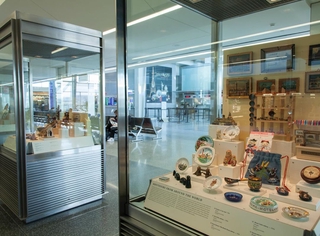
In honor of our 40th anniversary, every week this year we are highlighting one of our past exhibitions.
This image was posted on September 17, 2020.
#sfomat40 #tbtsfom #museumfromhome
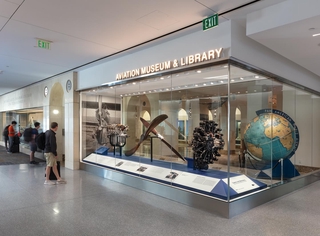
In the 1920s, aviation visionaries imagined how the nations of the Pacific Rim could be linked by a new mode of transportation: the aircraft.
This image was posted on June 14, 2022.
#airmail #australia #avgeek #aviationhistory #philately
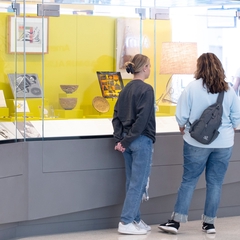
Eileen Reynolds Curtis (1915–77) was a San Francisco Bay Area studio potter who was known for hand-thrown ceramics with unique and distinctive glazes.
This image was posted on January 13, 2023.
#californiamodernistwomen #california #womenartists #modernism #eileenreynolds
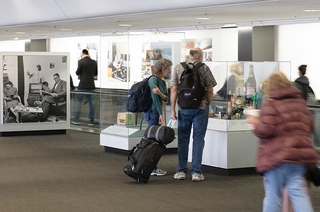
This is your last week to catch all the tunes in "On The Radio."
This image was posted on November 26, 2018.
#radiosfo #ontheradio #radio #radios #wireless #vintage #antique #vintageradios #transistorradio #portableradio #retroradio #retro
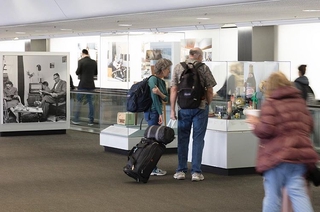
We want to hear from you!
This image was posted on September 13, 2018.
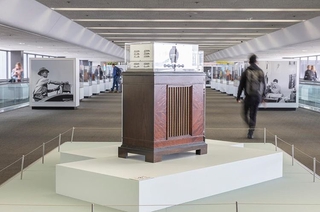
This is your last week to catch all the tunes in "On The Radio."
This image was posted on November 26, 2018.
#radiosfo #ontheradio #radio #radios #wireless #vintage #antique #vintageradios #transistorradio #portableradio #retroradio #retro
“In keeping with physical fitness trends, I was always hoping that visitors, by viewing some forgotten object, might be exercising that area of the brain which holds onto the memory cells.”—Mickey McGowan, curator, Unknown Museum, December 2022 A visit to the Unknown Museum is a complete immersion in conceptual art and American consumerism.
This image was posted on September 28, 2023.
#unknownmuseum #mickeymcgowan #bayarea #bayareahistory
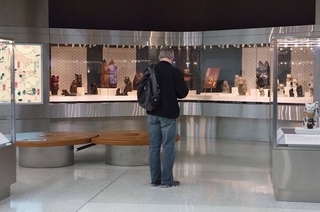
This is your last week to see ""Maneki Neko: Japan's Beckoning Cats.""
This image was posted on September 04, 2018.
#beckoningcats #manekineko #catsofinstagram #cats #neko #meow #mewseum #japan #mingei #japanese
The Aviation Museum and Library is closed today.
This image was posted on November 25, 2016.