
loading image

A mechanical device patented by Harry Hoke, Jr., required the player to flip a steel ball into a snake’s mouth before the machine would pay out—a feature billed as “Compulsory Skill Control” on the body of the machine. Although this feat required very little expertise, it allowed the machine’s classification as a game of skill rather than a game of chance, thus circumventing anti-gambling ordinances in many states. A horizontal coin escalator at the top of the machine was viewed through a window in the body of the snake. All objects are courtesy of the Joe Welch American Antique Museum. See "#GamesofChance: Gambling Devices of the Mechanical Age", on display, post-security, in Terminal 3. http://bit.ly/GamesofChance
This image was posted on February 24, 2017.
Similar Instagram posts
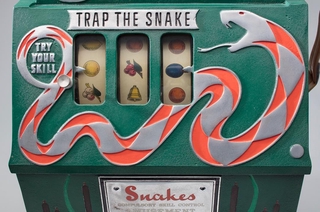
A mechanical device patented by Harry Hoke, Jr., required the player to flip a steel ball into a snake’s mouth before the machine would pay out—a feature billed as “Compulsory Skill Control” on the body of the machine.
This image was posted on February 24, 2017.

“Who hasn't dropped a nickel in the slot of those seductive little machines to be found almost any place where men most do congregate?...They are located in nearly all the saloons and cigar-stores in the City, eating up nickels as fast as the ‘tiger’ (card game) can eat up dollars.” San Francisco Call, February 2, 1896.
This image was posted on December 09, 2016.
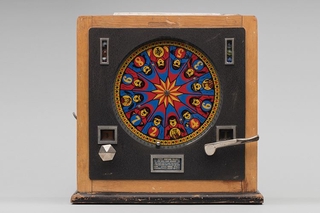
Fortune-telling was so fashionable in the first half of the 20th century that some machines, such as The Gypsy Fortune Teller, advertised the subject and did not actually offer a fortune.
This image was posted on August 30, 2018.
#coinoperated #fortunetelling #fortune #crystalball #theautomaticage #coinop #vintage #antique #gamemachines #slotmachine #slotmachines
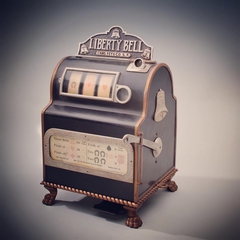
Inventor Charles Fey had been making coin-operated machines in San Francisco for nearly ten years prior to creating his Liberty Bell in 1898.
This image was posted on January 11, 2017.
#sfhistory #charlesfey
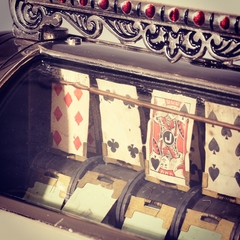
The poker machine was the most popular gambling device at the turn of the twentieth century.
This image was posted on March 13, 2017.
#sfhistory
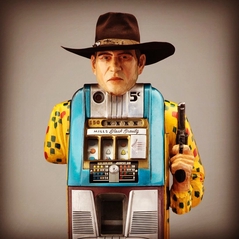
Although single-lever slot machines were referred to as “one-armed bandits” as early as the 1930s, the term became more literal in the late 1940s when saloons and casinos featured the gambling devices in the bodies of elaborately carved characters to attract the attention of patrons.
This image was posted on March 28, 2017.
#onearmedbandit #frankpolk #sculptures #basswood #bronze #mechanicalage #saloons #slotmachine
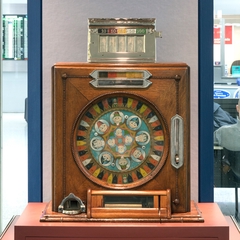
Prior to Prohibition and the Volstead Act of 1919, gambling was a mainstay of the saloon.
This image was posted on January 08, 2018.
#coinoperated #theautomaticage #coinop #vintage #antique #gamemachines #slotmachine #slotmachines
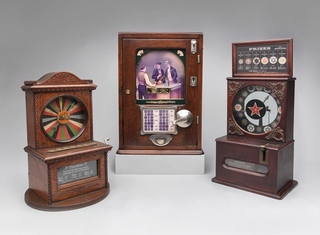
San Francisco-based machinists and inventors Theodore Holtz and Charles Fey were important pioneers in the development of early gambling devices.
This image was posted on January 26, 2017.
#sfhistory #charlesfey #theodoreholtz
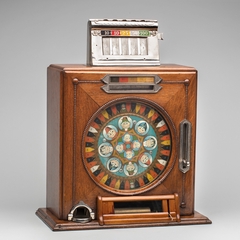
Prior to Prohibition and the Volstead Act of 1919, gambling was a mainstay of the saloon.
This image was posted on January 08, 2018.
#coinoperated #theautomaticage #coinop #vintage #antique #gamemachines #slotmachine #slotmachines