
loading image

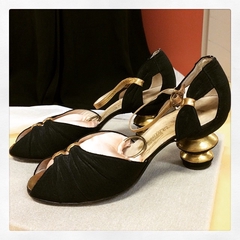
At the turn of the twentieth century, women’s ankles were covered with long skirts, silk stockings, and tight-fitting, feminine ankle boots. The majority of shoes were black, brown, or white. Part of the reason for the predominance of black and brown shoes was because people believed that darker colors made feet look smaller. Generally, leather was preferred for most footwear in the late 1890s and early 1900s. As the century progressed and women’s skirts became shorter, they began to wear showier shoes. Buttons and laces were commonly used as closures on shoes and boots in the early 1900s. The wide, curved Louis heel, which originated in the 1700s, re-emerged in the 1870s and remained the common dress-shoe heel until the mid-1920s. See more shoes from all over the world in "Stepping Out: Shoes in World Culture" on display, pre-security, in the International Terminal. http://bit.ly/ShoesinCulture
This image was posted on July 14, 2017.
Similar Instagram posts
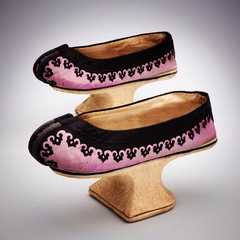
The semi-nomadic Manchu conquerors who founded the Qing dynasty (1644–1911) embraced much of the cultural and artistic practices of the Han Chinese.
This image was posted on May 10, 2017.
#shoes #shoestagram #shoeswag #shoesoftheday #shoedesign #instashoes #shoefashion #shoeslover #platformshoes
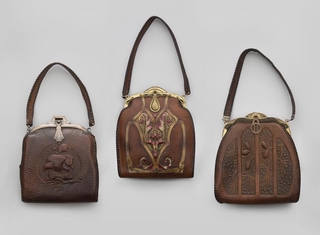
Hand-tooled and embossed leather bags became popular around 1900 and continued to be fashionable until the late 1930s.
This image was posted on March 28, 2016.
#essentialpurses #vintage #antique #purse #fashion
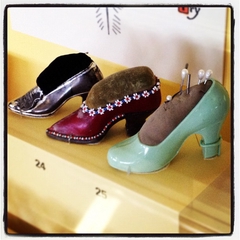
Mastering the art of sewing allowed ladies to put their best foot forward (& pincushions showcased the latest footwear fashions)
This image was posted on May 31, 2012.
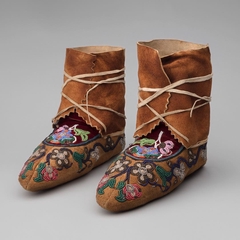
Prior to European colonization, Native American footwear displayed a variety of distinctive adornment and design styles.
This image was posted on October 27, 2017.
#shoesinculture #shoes #instashoes #shoestagram #shoeswag #shoesoftheday #shoedesign #shoefashion #shoeslover #footwearfriday #fridayfootwear #moccasins #alaska #nativeamericans #nativeamerican #fur #gwichin
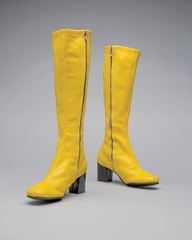
These boots were made for walking, but that’s not what they’ll do (anymore).
This image was posted on August 22, 2022.
#avgeek #shoes #boots #collections #museumlife
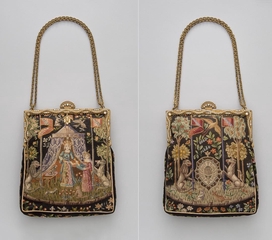
During the first half of the twentieth century, petit point and tapestry purses were a sought-after European import.
This image was posted on March 11, 2016.
This post mentions the following things involved with the SFO Museum collection:
Stepping Out: Shoes in World Cultures
This nonaviation exhibition was on display between March 2017 and November 2017 in the A-02 International South Cases gallery, located in International Terminal