
loading image

During the first half of the twentieth century, petit point and tapestry purses were a sought-after European import. Austria and France served as the leading exporters of petit point, a fine needlepoint embroidery on canvas. Makers took inspiration from paintings, literature, historic tapestries, such as the fifteenth-century Lady and the Unicorn, and engravings dating back to the seventeenth century. Purses displayed imagery from pastoral landscapes and mythological figures to courting scenes. Skilled needleworkers embroidered petit point purses on fine cotton or linen using wool, linen, or silk threads. Finely made bags contain 900 to 3,000 stitches per square inch. Fine metal frames impressed with ornate designs and embellished with pearls, jewel-like stones, and enamel enhanced these exceptional bags. Petit point purse with LeViste family tapestry scene c. 1920s Austria thread, fabric, metal The Purse Museum / Vicki Schwager L2015.2302.016
This image was posted on March 11, 2016.
Similar Instagram posts
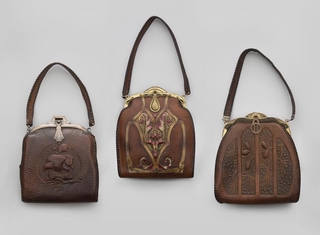
Hand-tooled and embossed leather bags became popular around 1900 and continued to be fashionable until the late 1930s.
This image was posted on March 28, 2016.
#essentialpurses #vintage #antique #purse #fashion
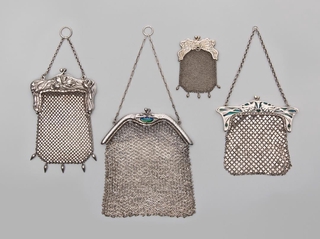
This is your last week to catch "Essential Style: Vintage and Antique Purse", on display, pre-security, in the International Terminal!
This image was posted on July 19, 2016.
#artnouveausfo
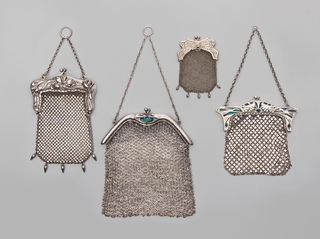
This is your last week to catch "Essential Style: Vintage and Antique Purse", on display, pre-security, in the International Terminal!
This image was posted on July 19, 2016.
#artnouveausfo
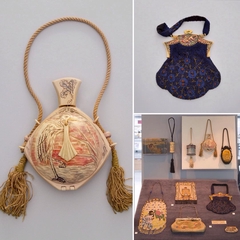
The Western World has long been inspired by Chinese and Japanese arts.
This image was posted on June 13, 2016.
#essentialpurses
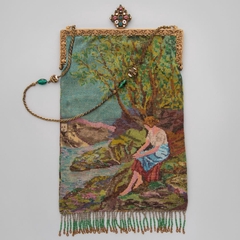
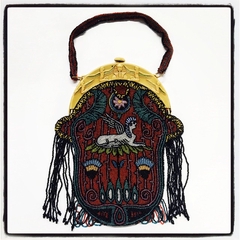
Knitted, beaded bags required thousands of beads and could take weeks to complete.
This image was posted on July 16, 2016.
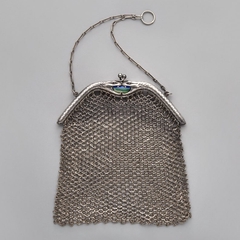
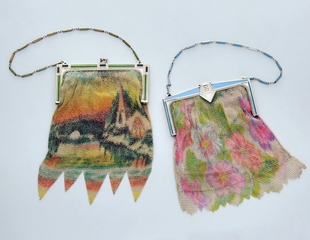
Wade Davis, later to become Whiting & Davis, a silversmith company outside of Boston, first offered handmade ring mesh purses in the United States in 1892.
This image was posted on April 26, 2016.