loading image

Folk pottery is still made today in North Carolina and Georgia. The southern tradition has emphasized high-fired stoneware vessels that could withstand rough usage on the farm. Alkaline stoneware glazes are distinctly regional, with wood ashes or lime mixed in a solution to help melt the other ingredients-usually sand and clay. These glazes turn green or brown depending on the firing conditions and can have a runny texture. They were developed in South Carolina around 1815, perhaps inspired by published accounts of similar high-firing Chinese glazes. The face jug made by Georgia's Lanier Meaders represents a later-twentieth-century shift in emphasis from utilitarian farm wares to more decorative pieces for collectors, a trend that continues today. Jugs are courtesy of the Atlanta History Center and courtesy of John Burrison. See "#AmericanFolkArt: An Enduring Legacy", on display, pre-security, in the International Terminal. http://bit.ly/AmericanFolkArt
This image was posted on January 26, 2018.
Similar Instagram posts
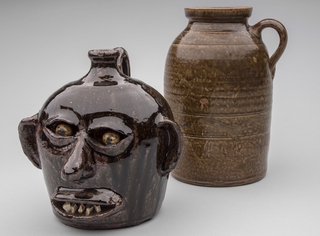
Folk pottery is still made today in North Carolina and Georgia.
This image was posted on January 26, 2018.
#americanfolkart #folkart #american #history #americana #antique #vintage #antiquefolkart #vintagefolkart #folkarts #folkartantiques #folkartantique #pottery #stonewear #ceramics #laniermeaders
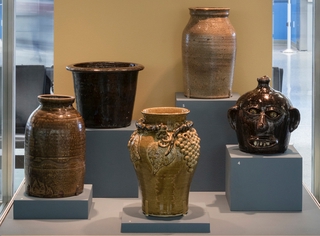
Folk pottery is still made today in North Carolina and Georgia.
This image was posted on January 26, 2018.
#americanfolkart #folkart #american #history #americana #antique #vintage #antiquefolkart #vintagefolkart #folkarts #folkartantiques #folkartantique #pottery #stonewear #ceramics #laniermeaders
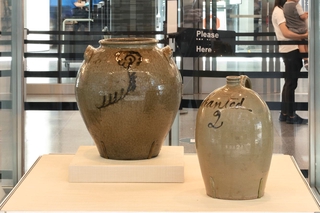
Thomas Chandler and other potters of Edgefield, South Carolina, often mixed different clays together to achieve the proper balance and ground their clays in a pug mill to obtain the right consistency for turning.
This image was posted on November 19, 2021.
#stonewarestories #thomaschandler #edgefield #ceramics
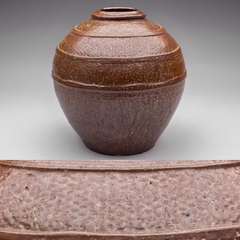
This image was posted on October 20, 2015.
#mingeifolkart
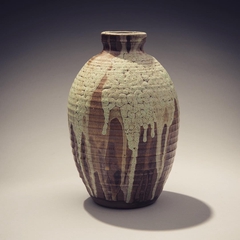
“The way of life in California is not like a life in Chicago…it’s outdoor-indoor living, and I wanted to do something that was as nice to use and as beautiful for everyday use as it was for Sunday’s best.” – Edith Heath Influenced by organic design and refined #modernism, Edith Heath (1911–2005) translated the studio pottery aesthetics of her early hand-thrown work into small-batch production methods for storage vessels and tableware.
This image was posted on April 03, 2017.
#heath #heathceramics #5womenartists #edithheath #brianheath
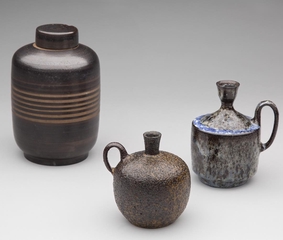
Marguerite Wildenhain went to work at the Municipal School of Fine and Applied Arts in 1926 where she headed the school’s ceramics department for seven years.
This image was posted on January 20, 2016.
#pondfarm