
@SFOMuseum Twitter Posts Tagged wingwednesday This is SFO Museum's archive of the @SFOMuseum Twitter account. There are 144 posts and this is page 7 of 12. See all the tags or all the Twitter posts that have been archived so far.
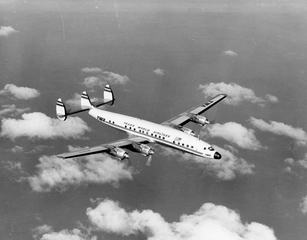
The L-1649 Starliner, the final variant in Lockheed’s Constellation-based design series, embodied the zenith in large-capacity, piston-engine airliner development, rivaled only by the Douglas DC-7C, with which it was designed to compete. #WingWednesday #avgeek
This tweet was posted on June 09, 2021.
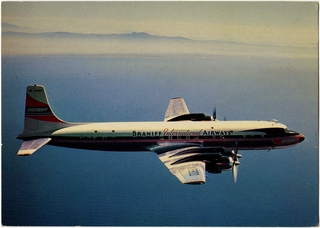
In 1957, Braniff International Airways launched DC-7C service to South America that it dubbed “El Dorado” service. Sales of the DC-7 rapidly declined by the end of the decade, with the arrival of long-range jets such as the Boeing 707 and Douglas DC-8. #WingWednesday
This tweet was posted on June 02, 2021.
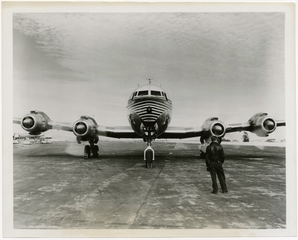
In 1956, Pan American World Airways introduced the DC-7C and European carriers such as BOAC and SAS followed with their own orders. #WingWednesday
This tweet was posted on June 02, 2021.
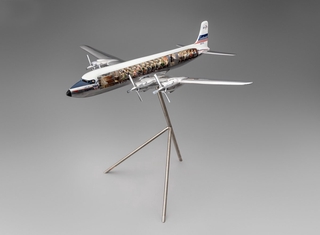
The slightly larger DC-7C (Seven Seas) variant, preceded by the DC-7B, was designed to fly transatlantic routes. Upgraded engines, increased fuel capacity, and a greater wingspan gave it slightly better range and speed compared to TWA’s L-1049. #WingWednesday
This tweet was posted on June 02, 2021.
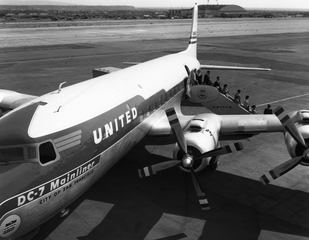
The DC-7 was designed to fly fast enough to travel from coast-to-coast in under eight hours, the U.S. safety limit for pilots. (In actual operation, however, this was often not attained.) #WingWednesday
This tweet was posted on June 02, 2021.
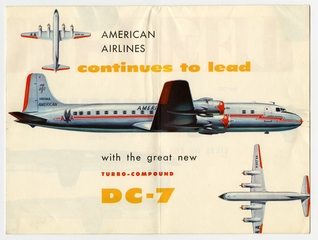
The DC-7 was Douglas Aircraft’s last design evolution of the piston-powered, four-engine, low-wing airliner layout that began with the DC-4. In 1953, American Airlines introduced the DC-7 as its first nonstop, transcontinental airliner. #WingWednesday
This tweet was posted on June 02, 2021.
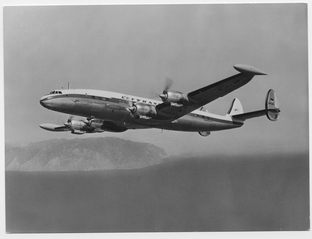
The L-1049G included more powerful Wright turbo-compound engines and a modification to allow the installation of wingtip fuel tanks. Primarily operated on long-haul transpacific routes, the L-1049G had a superior range of over 5,000 miles. #WingWednesday
This tweet was posted on May 26, 2021.
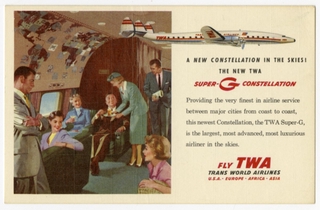
The L-1049G Super Constellation variant, introduced into service in 1955 by TWA (Trans World Airways) and Northwest Orient Airlines, was the ultra long-range version of the aircraft. #WingWednesday
This tweet was posted on May 26, 2021.
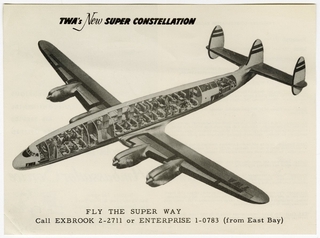
The L-1049's cabin was divided into multiple sections to minimize the effect of the long-tube view when looking up from one's seat. With a 100-passenger capacity, the airliner had a range of 4,000 miles and a cruising speed of 300 miles. #WingWednesday
This tweet was posted on May 26, 2021.
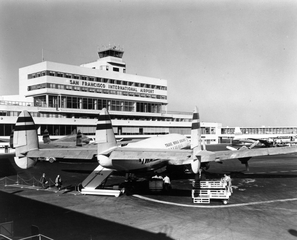
Introduced in 1951, the Lockheed L-1049 Super Constellation was an enhanced-range, stretched upgrade of the L-049 Constellation and was designed primarily to compete on transoceanic routes with the Douglas DC-6. #WingWednesday #avgeek
This tweet was posted on May 26, 2021.
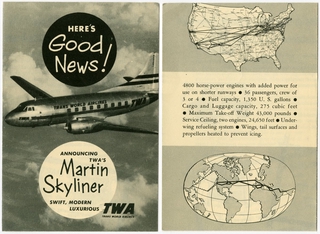
TWA (Trans World Airlines) was the only other major carrier to order the Martin 4-0-4, and operated a fleet of forty. Other airlines operating the 4-0-4 included Southern Airways and Piedmont Airlines. #WingWednesday
This tweet was posted on May 19, 2021.
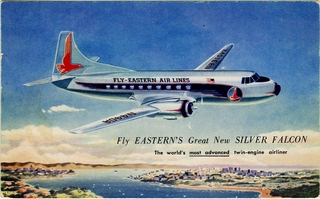
Eastern Air Lines ordered sixty of the 4-0-4 and introduced the aircraft in 1951, with scheduled service commencing in early 1952. The airline operated the 4-0-4 primarily on its eastern U.S. routes and branded the service as the “Silver Falcon.” #WingWednesday
This tweet was posted on May 19, 2021.