
@SFOMuseum Twitter Posts Tagged wingwednesday This is SFO Museum's archive of the @SFOMuseum Twitter account. There are 144 posts and this is page 3 of 12. See all the tags or all the Twitter posts that have been archived so far.
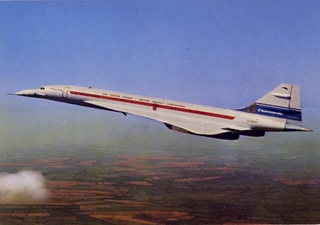
The service aboard the British Airways Concorde was all one class: Concorde Class. Considered comparable or a step above most airlines’ first-class services, it included premium spirits and gourmet meals, served on dishes designed specifically for the Concorde. #WingWednesday
This tweet was posted on September 15, 2021.
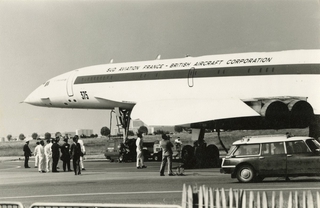
The Concorde SST (supersonic transport) was the first successful transoceanic supersonic airliner—although the Soviet Tupolev Tu-144 was the first supersonic airliner to be introduced. Developed as a joint endeavor between the governments of Great Britain & France. #WingWednesday
This tweet was posted on September 15, 2021.
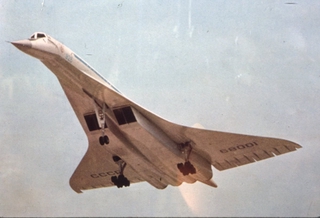
With a maximum cruising speed of Mach 2.15, the Tupolev Tu-144 was the fastest production SST ever produced. Four Kuznetsov NK-144 afterburning turbofan engines powered the aircraft. #WingWednesday
This tweet was posted on September 08, 2021.
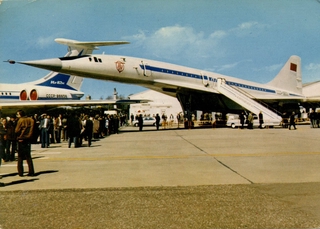
The aircraft proved costly to operate when compared to newer subsonic airliners available at the time. With little market for high-priced supersonic travel in the Soviet Union, Aeroflot’s passenger service was intermittent and brief, and ended in June 1978. #WingWednesday
This tweet was posted on September 08, 2021.
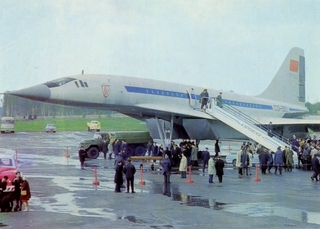
Soviet Tupolev Tu-144 was the first supersonic airliner to be introduced, with freight and mail service starting in December 1975 and passenger service from Aeroflot Soviet Airlines in November 1977. #WingWednesday
This tweet was posted on September 08, 2021.
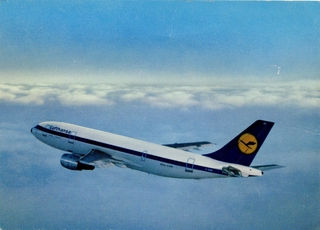
The Airbus A300 was the first wide-body airliner produced by Airbus Industries, a European aerospace manufacturing consortium formed in 1970. Air France introduced the aircraft in 1974 and Lufthansa followed two years later. #WingWednesday
This tweet was posted on September 01, 2021.
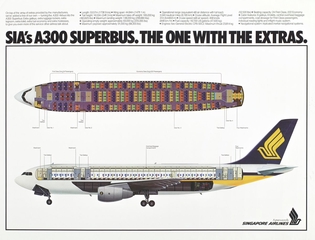
The fuselage of the Airbus A300 was wide enough to seat eight across in economy, which was arranged in a two-four-two configuration with two aisles. The first-class cabin seated six across, also with two aisles, in a two-two-two arrangement. #WingWednesday
This tweet was posted on September 01, 2021.
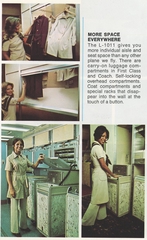
The coach section of the Lockheed L-1011 TriStar featured a full-service bar surrounded by small alcoves for socializing and was equipped with twin passenger seats that TWA claimed were the “finest coach seats in the world.” #wingwednesday #avgeek
This tweet was posted on August 25, 2021.
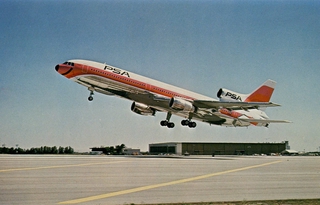
Despite its accolades, only 250 were ordered, well short of the projected 500. It was Lockheed’s first and only entry into the widebody airliner market. #wingwednesday #avgeek
This tweet was posted on August 25, 2021.
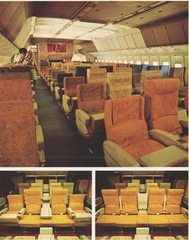
Airlines touted the L-1011’s twin aisle, wide-body passenger comforts, ease of operation, and reduced environmental impact. The galley was placed in the luggage compartment, and meals were brought up via elevators. #wingwednesday #avgeek
This tweet was posted on August 25, 2021.
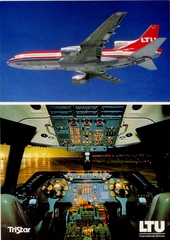
The Lockheed L-1011 TriStar was a wide-body, long-range tri-jet airliner introduced in 1972. It featured state-of-the-art avionics, including an autopilot with the capability of virtually flying and landing by itself, including in low-visibility weather conditions. #wingwednesday
This tweet was posted on August 25, 2021.
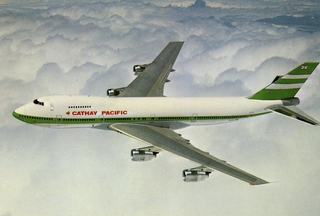
Hong Kong-based Cathay Pacific Airways waited for the extended-range 747-200 and received its first delivery in 1979. With a range of nearly 7,000 miles, the new aircraft were capable of providing nonstop service on most transoceanic routes. #WingWednesday
This tweet was posted on August 18, 2021.