
@SFOMuseum Twitter Posts Tagged ChinaClipper This is SFO Museum's archive of the @SFOMuseum Twitter account. There are 29 posts and this is page 1 of 3. See all the tags or all the Twitter posts that have been archived so far.
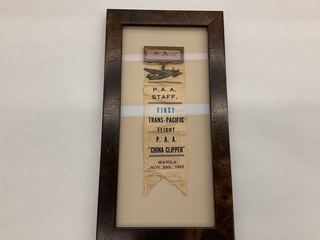
On November 29, 1935, the inaugural transpacific Pan American Airways airmail service landed in Manila from California carrying 110,865 letters. An elaborate welcoming ceremony welcomed the crew, with an estimated 250,000 people in attendance. #52Objects #ChinaClipper #AvGeek
This tweet was posted on November 29, 2023.
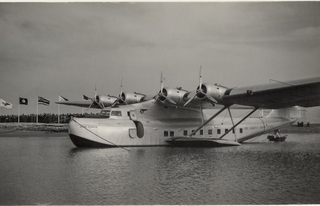
On the afternoon of November 22, 1935, a Pan American Airways Martin M-130 named “China Clipper”, lifted off from the waters of the San Francisco Bay into the sky and history books as the inaugural scheduled transpacific airmail flight. #AvGeek #ChinaClipper #PanAm
This tweet was posted on November 22, 2022.
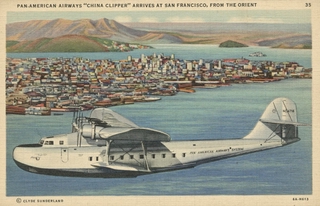
Our exhibition detailing the entire adventurous endeavor, "China Clipper", is online at: https://t.co/MPq52u5pOS
You can also read the entire exhibition catalog and watch all three segments of “Clipper Glory” there!
#AvGeek #ChinaClipper #PanAm
This tweet was posted on November 22, 2022.
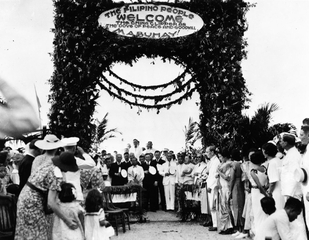
After leaving Alameda on Nov 22, and landing in Manila (shown here!) on Nov 29, the #ChinaClipper started its long journey back to the United States on Dec 2. The entire round-trip included over 123 hours of flying time, covered over 16,000 miles, and set 19 world records.
This tweet was posted on November 29, 2021.
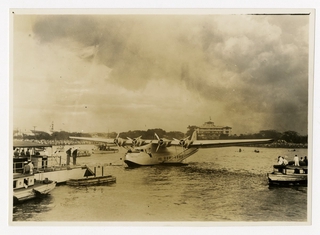
Can you imagine embarking on a fifteen-day roundtrip flight between Alameda and Manila? In 1935, the first scheduled transpacific airmail flight took eight days to reach Manila from Alameda, with stops in Honolulu, Midway Atoll, Wake Island, and Guam. #ChinaClipper
This tweet was posted on November 29, 2021.
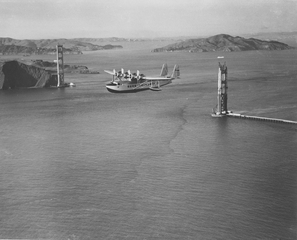
See “China Clipper” online at: https://t.co/MPq52u5pOS #ChinaClipper #avgeek #MuseumFromHome
This tweet was posted on April 03, 2020.
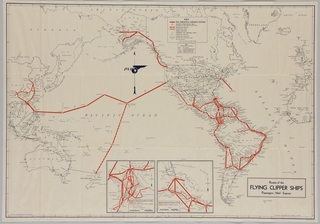
In the days before non-stop flights, a journey across the Pacific Ocean took many days and required multiple stops along the way, including those flown by #PanAmerican. #ChinaClipper #MuseumFromHome #avgeek
This tweet was posted on April 03, 2020.
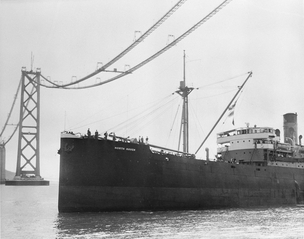
To create #PanAm’s transpacific layovers, #onthisday in 1935, the North Haven set sail, carefully loaded in sequence with 2 pre-fab villages, 5 air bases, 250,000 gallons of fuel, barges, tractors, generators, and 50 ft timbers to build radio towers. #ChinaClipper #MuseumFromHome
This tweet was posted on April 03, 2020.
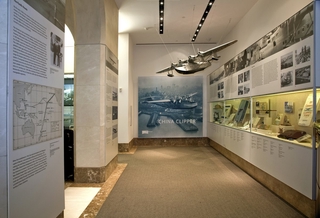
@flySFO @panamhistory Learn more about open water navigation during the 1930s in our exhibition, "China Clipper" on display, pre-security, in the Aviation Museum and Library in the International Terminal. https://t.co/MPq52tNOXk #ChinaClipper #avgeek #PanAm
This tweet was posted on February 28, 2020.
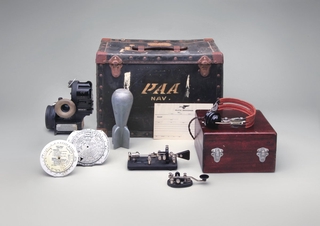
@flySFO @panamhistory Transpacific flights in the 1930s required serious navigation skills, including dead reckoning and celestial navigation. Shown here is the navigation and radio kit used by #PanAm in the mid 1930s and early 1940s. #ChinaClipper #avgeek
This tweet was posted on February 28, 2020.
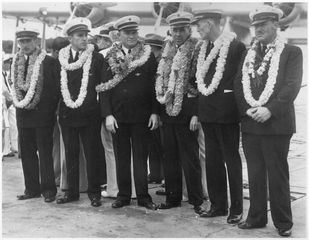
Flying over open waters in an aircraft in the 1930s was complicated! Pan American Airways had a cross-trained crew of up to ten staff on each flight. Shown here: the crew of six on #PanAm’s 1935 survey flight to Hawaii. #ChinaClipper #avgeek
This tweet was posted on February 28, 2020.
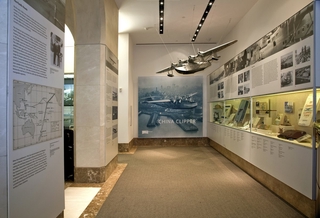
Learn more about early transpacific aviation in "China Clipper" on display, pre-security, in the Aviation Museum. https://t.co/MPq52u5pOS #ChinaClipper #avgeek #panam
This tweet was posted on December 06, 2019.