
loading image

Innovation often comes from challenges. This is no different in the history of air cargo refrigeration. In the early 1970s, Japan Air Lines faced the challenge of how to transport Atlantic Bluefin Tuna, caught on the eastern coast of Canada, to hungry Japanese consumers located over 6,600 miles away in Tokyo. Atlantic Bluefin Tuna can average from 400 to 1,000 pounds and are highly coveted around the world for sushi and sashimi. As the fish is served raw, the freshness of the fish must be preserved as much as possible. After a few failed attempts, including an instance where the airline consulted local Canadian funeral directors to build coffins to transport the fish, the tuna would arrive in Tokyo in less than pristine condition. The airline attempted many different methods to preserve the fish – ice was too heavy, insulating urethane foam, carbon dioxide only preserved the flesh of the fish while the insides rotted, and existing systems for preserving other frozen meat and fish did not work. The airline concluded to design and built its own custom refrigerator containers to fit in the lower cargo compartment of a Douglas DC-8. In 1972, the first successful sale of the transported fish took place at Tokyo’s Tsukiji market. This 1975 JAL cargo promotional poster, features fish in addition to a multitude of other commodities. poster: JAL Cargo; 1975 Gift of Thomas G. Dragges 2001.135.011
This image was posted on December 18, 2023.
Similar Instagram posts
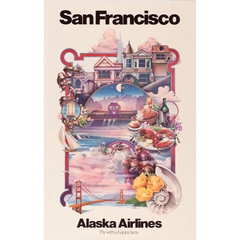
This Alaska Airlines poster from the 1980s features an amalgamation of different San Francisco landmarks.
This image was posted on September 18, 2015.
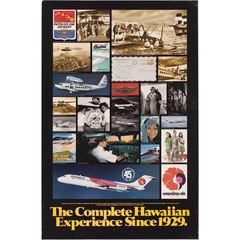
Hawaiian Airlines dates back to before Hawai’i’s statehood; Incorporated as Inter-Island Airways #onthisday in 1929, service started later that year in November.
This image was posted on January 30, 2023.
#avgeek #hawaiian #hawaiianairlines
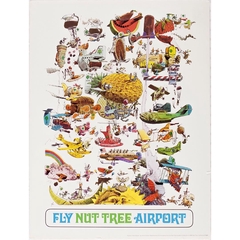
For generations of Californians and visitors to the Golden State, the Nut Tree Restaurant in Vacaville, California was a popular destination.
This image was posted on October 30, 2018.
#nuttree #california #vacaville #generalaviation #nuttreerestaurant #sanfrancisco #airfield #solonocounty
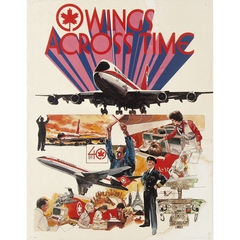
#Onthisday in 1937, Trans-Canada Air Lines (TCA), the flag carrier of Canada, was founded by royal assent in Parliament.
This image was posted on April 10, 2024.
#52posters #aircanada
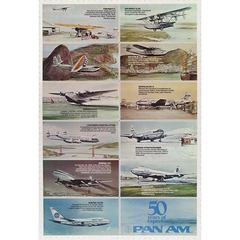
The Pan Am Historical Foundation was established #onthisday in 1992 by a group of former Pan American employees to preserve and promote the unique heritage of Pan American World Airways, Inc. and its incomparable contributions to the technology, convenience, safety and excitement of commercial aviation.
This image was posted on March 31, 2017.
#panamericanhistoricalfoundation #panam #avgeek #aviationhistory
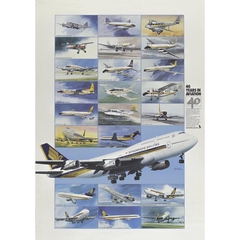
Malayan Airways started service in 1947, and later became Malaysia-Singapore Airlines in the 1960s.
This image was posted on March 22, 2016.
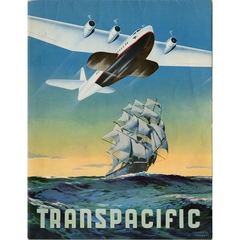
Pan American Airways' pioneering transpacific service is advertised in this brochure from 1940: "Over pioneer aerial trade routes blazed by Lindbergh to the lands of the West Indies, Central and South America, high above the age-old routes of Columbus, Spanish conquistadores, swash-buckling pirateers, of clipper ships of another generation, great Flying Clipper Ships now speed along radio-guarded highways of the sky to thirty-three countries and colonies of the southern Americas.
This image was posted on February 28, 2017.
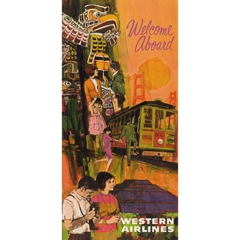
This cover art on this seat-pocket flight information packet features various landmarks from Western Airlines’ travel destinations.
This image was posted on February 03, 2017.
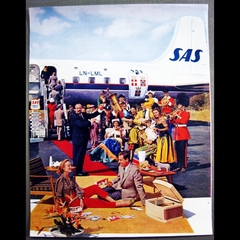
For this week's #TravelTuesday, our Curator of Aviation, Dennis, would love to go to Copenhagen, via SAS (Scandinavian Airlines System), for his dream vacation.
This image was posted on August 25, 2015.
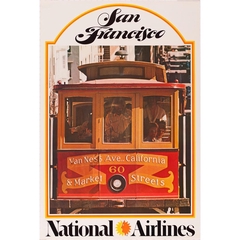
Have you ever taken a ride on one of San Francisco's historic cable cars?
This image was posted on June 03, 2016.