
loading image

The Concorde was the first and only successful supersonic airliner to sustain regularly scheduled service. Developed as a joint endeavor between the governments of Great Britain and France, and the aerospace companies British Aircraft Corporation and Aerospatiale, the project encountered numerous delays due to the technical difficulty of flying at supersonic speeds. Designed by French engineer Pierre Satre (1909–80) and British engineer Sir Archibald Russell (1904–95), the aircraft featured a highly-swept delta wing and was one of only a few commercial aircraft to employ a design without a horizontal stabilizer on the tail. The Concorde was also one of the first airliners to have a fly-by-wire flight control system— manual flight controls replaced with an electronic interface and computer. The fuselage needed to withstand temperatures exceeding 260°F from the air friction produced at Mach 2 speeds, which caused the airframe to expand by nearly one foot. See “Supersonic Transport: The First Generation” on display, pre-security, in the Aviation Museum and Library and online at: https://bit.ly/SSTFirstGeneration #sstfirstgeneration advertisements: Air France, Airbus; 1980s Gift of Thomas G. Dragges 2015.165.613 postcard: BAC Aerospatiale, Concorde; Gift of Henk Harkema 2023.009.095
This image was posted on December 01, 2023.
Similar Instagram posts
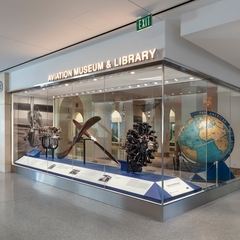
The Concorde’s Rolls-Royce/SNECMA Olympus 593 afterburning turbojet engines— a turbine-driven compressor that thrusts heated, compressed air through a propelling nozzle—were atypical.
This image was posted on January 19, 2023.
#sstfirstgeneration #avgeek #concorde
Born in Fort Payne, Alabama, Katherine Stinson (1891-1977) was the fourth woman in the United States to obtain a pilot’s certification.
This image was posted on March 28, 2023.
#enduranceengines #womenshistorymonth
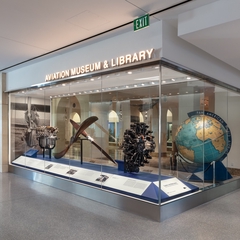
Harold McMillan Bixby, a midwestern businessman with a strong interest in the emerging technology of aviation, worked for Pan American Airways in the 1930s to the 1950s.
This image was posted on December 29, 2023.
#bixbycollection #panam #paa #avgeek #haroldbixby
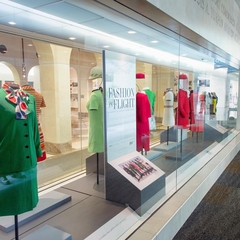
Do your summer travel plans include flying through SFO?
This image was posted on July 09, 2016.
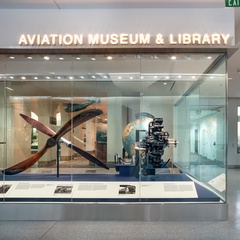
In 1917, Katherine Stinson asked Glenn Curtiss to build a new exhibition aircraft for her.
This image was posted on January 24, 2023.
#enduranceengines #avgeek #aviationhistory #katherinestinson
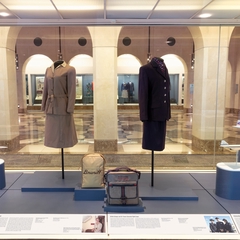
Flying on the Concorde at twice the speed of sound was an aviation experience like no other, even for flight crews who often found it nearly as exciting as the passengers.
This image was posted on May 09, 2023.
#sstfirstgeneration
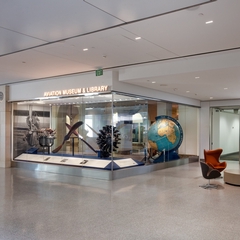
Glenn H. Curtiss (1878–1930) started the Curtiss Company in 1902 to manufacture engines and motorcycles.
This image was posted on April 21, 2023.
#enduranceengines #avgeek #aviationhistory
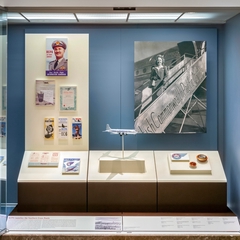
One of the first Australian airlines to operate transpacific commercial air services to America was BCPA (British Commonwealth Pacific Airlines) which was formed by the governments of Australia, Great Britain, and New Zealand in 1947.
This image was posted on February 16, 2023.
#flyingsoutherncross #australia #avgeek
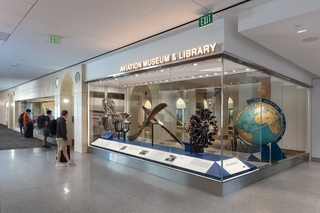
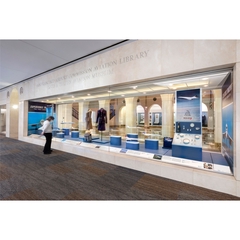
The long-awaited day has come: the Aviation Museum and Library reopened today with a new facade and five new exhibitions!
This image was posted on June 01, 2022.
#avgeek #museum #aviation