
loading image

A prominent leader in advancing women’s suffrage, Clara Barck Welles represented the “new woman”—a term coined in 1894 to describe the newfound independence many women began to seek. This social movement, which sought social and economic autonomy for women, first began in the United Kingdom in the late nineteenth century. Welles served as head of the Illinois delegation in support of women’s suffrage and arranged for a train to take the group to the Woman Suffrage Procession in Washington, DC in March of 1913. In Chicago, police officers and a band led the women as they proceeded to the train station to leave. Among the thousands of spectators who turned out for the procession in Washington, DC were many unruly men, who jeered at the marchers. One of them caught hold of Welles, and she retaliated with her baton. The women’s march garnered a great deal of press and gave impetus to the suffrage movement. In June 1913, Governor Edward F. Dunne signed the Illinois Municipal Voting Act that provided partial voting rights to women, making Illinois the first state east of the Mississippi to do so. American women would not gain full voting rights until 1920, when the Nineteenth Amendment passed. See "A New Woman: Clara Barck Welles, Inspiration & Influence in Arts & Crafts Silver" on display pre-security in the Mayor Edwin M. Lee International Terminal Departures Hall and online at: https://bit.ly/BarckWelles
This image was posted on December 06, 2023.
Similar Instagram posts
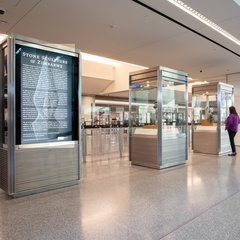
The Shona are the largest Indigenous group in Zimbabwe.
This image was posted on October 12, 2022.
#zimbabwesculpture #zimbabwe #sculpture #harare

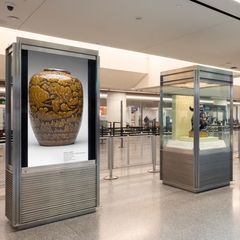
Not one, but TWO exhibitions and galleries opened this week!
This image was posted on May 28, 2021.
#flightpatterns #stonewarestories #avgeek #museum #uniforms #pottery
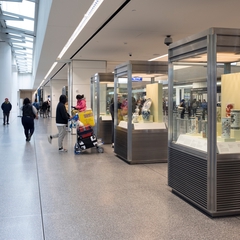
The Aviation Museum and Library will be closed today to observe Memorial Day and will reopen tomorrow, May 28th at 10am.
This image was posted on May 27, 2024.
#memorialday
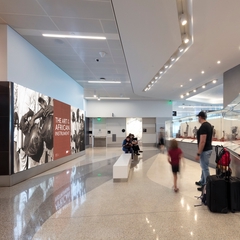
One of Africa’s most revered and ancient percussion instruments, drums, are carved from solid logs of wood and covered with a stretch membrane.
This image was posted on October 01, 2024.
#artoftheafricaninstrument

Clara Barck Welles (1868–1965) founded the Kalo Shop in 1900 with five other women graduates of the School of the Art Institute of Chicago.
This image was posted on June 14, 2023.
#barckwellessilver #silver

In 1970, Marvin Lipofsky was invited to Italy by Ludovico Diaz de Santillana, director of the Venini Glass Factory on the island of Murano.
This image was posted on September 24, 2021.
#studioglass #glasssculpture #glassblowing #glassart #contemporaryart #marvinlipofsky
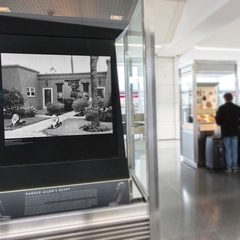
The Aviation Museum and Library is closed today to observe Indigenous People’s Day and will reopen tomorrow, October 15th at 10am.
This image was posted on October 14, 2024.
#indigenouspeoplesday