
loading image

Fiber artist Kay Sekimachi’s series of monofilament sculptures began in 1963 as an experiment to weave a wall hanging in multiple, translucent layers. After weaving a linen sample, Sekimachi realized she could produce three-dimensional forms using a nylon monofilament material (now commonly known as fishing line) that DuPont introduced in 1959. Sekimachi wove her monofilament sculptures as flat, interlocking layers that when suspended, folded-out into stratified, cascading shapes—suggesting billowing, organic forms that she named after natural phenomena. “Ogawa” translates from Japanese to “little river” or “stream. A very special thank you to Forrest L. Merrill for making this exhibition possible. See "Kay Sekimachi: Weaving Traditions" on display, post-security, in Harvey Milk Terminal 1. https://ow.ly/ikFt50QQPrt
This image was posted on March 11, 2024.
Similar Instagram posts
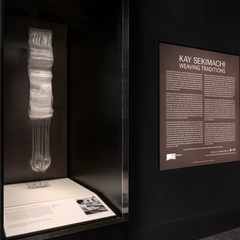
Fiber artist, Kay Sekimachi is Nisei, a second-generation Japanese American, born in San Francisco’s Japantown in 1926.
This image was posted on May 01, 2024.
#kaysekimachiweaving #kaysekimachi #weaving #aapihm
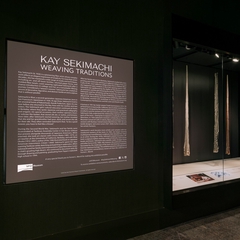
Building on the success of her loom-woven sculptures, in the 1970s Kay Sekimachi adapted nylon monofilament to the centuries-old, off-loom technique of card weaving.
This image was posted on May 15, 2024.
#kaysekimachiweaving #kaysekimachi #aapihm
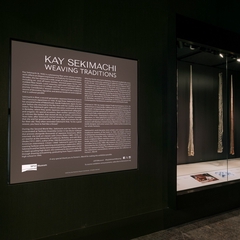
Fiber artist Kay Sekimachi is Nisei, a second-generation Japanese American, born in San Francisco’s Japantown in 1926.
This image was posted on November 15, 2023.
#kaysekimachiweaving
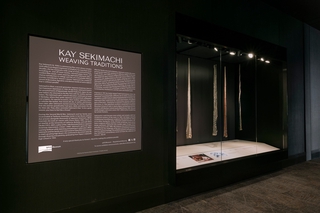
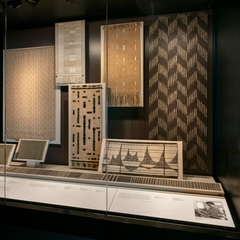
It is your last week to see "Kay Sekimachi: Weaving Traditions!"
This image was posted on July 08, 2024.
#kaysekimachiweaving