
loading image

Fiber artist, Kay Sekimachi is Nisei, a second-generation Japanese American, born in San Francisco’s Japantown in 1926. Sekimachi’s series of monofilament sculptures began in 1963 as an experiment to weave a wall hanging in multiple, translucent layers. After weaving a linen sample, Sekimachi realized she could produce three-dimensional forms using a nylon monofilament material (now commonly known as fishing line) that DuPont introduced in 1959. Due to their complexity, each of Sekimachi's monofilament design was carefully plotted on graph paper prior to weaving. As she developed her first series, Sekimachi’s monofilament sculptures grew progressively larger and more intricate. In the last version of this series, each inch of multilayered monofilament required more than an hour to weave. A very special thank you to Forrest L. Merrill for making this exhibition possible. See "Kay Sekimachi: Weaving Traditions" on display, post-security, in Harvey Milk Terminal 1. https://www.sfomuseum.org/exhibitions/kay-sekimachi-weaving
This image was posted on May 01, 2024.
Similar Instagram posts
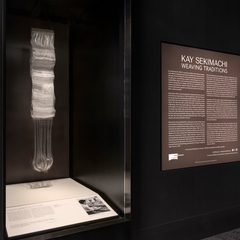
Fiber artist Kay Sekimachi’s series of monofilament sculptures began in 1963 as an experiment to weave a wall hanging in multiple, translucent layers.
This image was posted on March 11, 2024.
#kaysekimachiweaving #kaysekimachi #weaving #5womenartists #womenshistorymonth
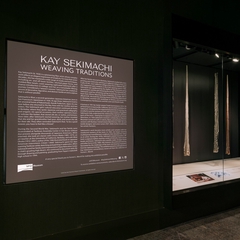
Building on the success of her loom-woven sculptures, in the 1970s Kay Sekimachi adapted nylon monofilament to the centuries-old, off-loom technique of card weaving.
This image was posted on May 15, 2024.
#kaysekimachiweaving #kaysekimachi #aapihm
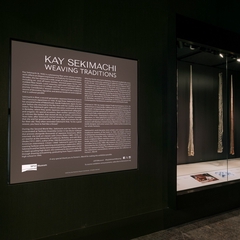
Fiber artist Kay Sekimachi is Nisei, a second-generation Japanese American, born in San Francisco’s Japantown in 1926.
This image was posted on November 15, 2023.
#kaysekimachiweaving
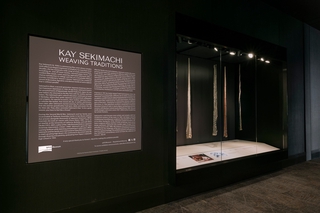
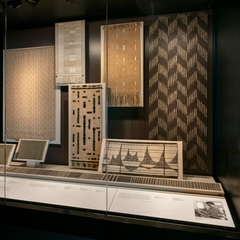
It is your last week to see "Kay Sekimachi: Weaving Traditions!"
This image was posted on July 08, 2024.
#kaysekimachiweaving