
loading image

The DC-7 was Douglas Aircraft’s final design evolution of the piston-powered, four-engine, low-wing airliner concept that began with the DC-4 in the 1940s. In 1953, American Airlines introduced the DC-7 as its first nonstop transcontinental airliner. With the U.S. safety requirement that limited pilots to a maximum eight hours per shift, the airliner was designed to fly fast enough to travel from coast to coast in under that time. It was equipped with four powerful eighteen-cylinder Wright R-3350 Duplex-Cyclone supercharged radial engines, which powered the airliner to cruise speeds of 350 miles per hour. Yet, in actual operation, this goal was often not attained. Like the earlier DC-6, the airliner was pressurized, which allowed it to fly high in the stratosphere at around 20,000 feet, which was above most adverse weather conditions. The DC-7B, with enhanced range and greater load capacity, was the chosen variant ordered by Continental Air Lines and was introduced by the airline in 1957. The propliner could comfortably seat between sixty and ninety passengers, depending on the class configuration. Continental Air Lines offered an all-coach DC-7B service on its domestic flights between Chicago, Denver, Kansas City, and Los Angeles. Branded as “Club Coach,” it included extra amenities not offered in other coach services, including a roomy five-seat Club Coach Lounge in the aft fuselage of the aircraft. See “A Cut Above: Airplane Models from the SFO Museum Collection” on display, pre-security, in the Mayor Edwin M. Lee International Terminal Departures Hall and online at: https://bit.ly/CutAboveModels
This image was posted on May 03, 2024.
Similar Instagram posts
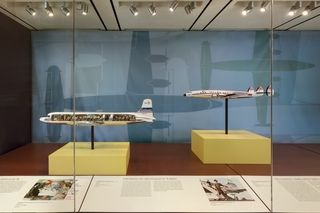
This model of the Continental Air Lines Douglas DC-7B City of Los Angeles was crafted by Gary Field (b.
This image was posted on June 24, 2024.
#cutabovemodels
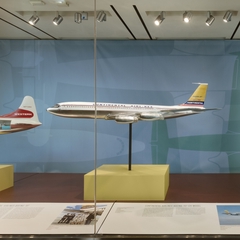
First flown in 1957, the Boeing 707 was the first successful jet airliner to provide regular, sustained commercial passenger service.
This image was posted on October 04, 2024.
#cutabovemodels
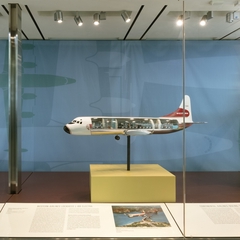
Developed by the Lockheed Corporation, the L-188 Electra was the only large turboprop airliner produced in the U.S.
This image was posted on August 23, 2024.
#cutabovemodels
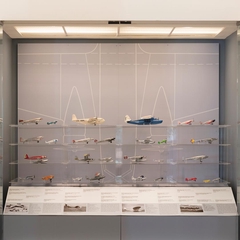
Introduced in the late 1930s, the British-produced Short S.30 series of aircraft was a large-capacity double-deck flying boat.
This image was posted on January 17, 2019.
#aviationevolutions #jimlund #avgeek #aviationgeek #aviation #aviationhistory #vintageaviation #history #aviationgeeks #modelplane #scalemodel #avgeeks #auckland #sydney #teal
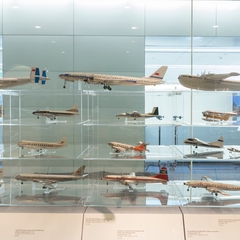
Developed behind the Iron Curtain by the Tupolev Design Bureau during the late 1950s, the massive Tu-114 Rossiya (Russia) turboprop airliner was introduced by the Soviet national airline Aeroflot in 1961.
This image was posted on February 20, 2018.
#aviationevolutions #jimlund #avgeek #avationgeek #aviation #aviationhistory #aviationlovers #vintageaviation #history #avhistory #aviationgeeks #instaplane #flying #modelplane #flight #airline #avgeeks #aviation4u #aviationdaily #modelaircraft #airplane #aircraft
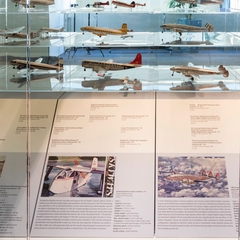
Designed by Republic Aircraft’s test pilot and engineer Percival Hopkins "Spence" Spencer, the RC-3 Seabee was an all-metal, single-engine, sport amphibian aircraft introduced in 1946.
This image was posted on May 17, 2018.
#aviationevolutions #jimlund #republic #seabee #amphibian #avgeek #avationgeek #aviation #aviationhistory #vintageaviation #history #avhistory #aviationgeeks #modelplane #avgeeks #modelaircraft #airplane #aircraft
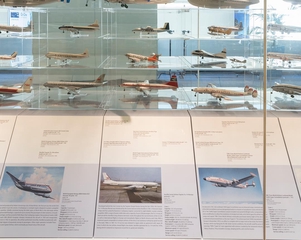
Introduced in 1951, the Lockheed 1049 Super Constellation was an enhanced-range, stretched upgrade of the 049 Constellation and was designed primarily to compete on transatlantic routes with the Douglas DC-6.
This image was posted on October 25, 2018.
#aviationevolutions #jimlund #avgeek #aviationgeek #aviation #aviationhistory #vintageaviation #history #aviationgeeks #modelplane #scalemodel #avgeeks
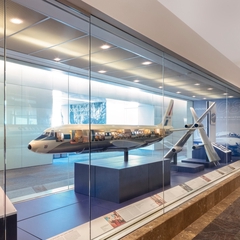
On this day in 1959, the DC-8 entered service with Delta Air Lines and United Air Lines.
This image was posted on September 18, 2023.