
loading image

It is your last week to see "Kay Sekimachi: Weaving Traditions!" Fiber artist, Kay Sekimachi, considered a “weaver’s weaver,” has created an oeuvre of decorative, figurative, and abstract textile art and sculpture that is without parallel. "I use traditional tapestry techniques modified for my own personal needs. Rather than working in rigid color areas and interlocking weft, I try for a more fluid effect by [using] extra weft inserts and overlapping threads. This enables me to work more rapidly and improvise as the work progresses. In each tapestry I try to achieve a harmonious integration of design, material, and technique." —Kay Sekimachi, 1959 Sekimachi began to weave more abstract wall hangings in the late 1950s, along with large, semi-transparent room dividers for the open floor plan homes popular at the time. Sekimachi recalled the complex process of creating “Room Divider” shown here: “I tied the warp off in groups of five threads, knowing that the groups of threads would have to be shifted in order to make the ikat pattern that I wanted....When the warp came out of the dye bath and dried, I cut away the wrapping and the warp was five inches of black, alternating with five inches of natural…Then the warp was spread in the raddle [a wooden bar with pegs that maintains thread spacing], and the warp threads shifted to make the pattern that I wanted. It was a lot of work.” A very special thank you to Forrest L. Merrill for making this exhibition possible. See "Kay Sekimachi: Weaving Traditions" on display, post-security, in Harvey Milk Terminal 1 for one last week! https://bit.ly/WeavingT
This image was posted on July 08, 2024.
Similar Instagram posts
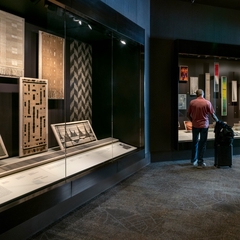
Fiber artist Kay Sekimachi studied silk screen printing and watercolor painting at California College of Arts and Crafts (CCAC, now California College of the Arts) in Oakland.
This image was posted on January 09, 2024.
#kaysekimachiweaving #kaysekimachi #weaving
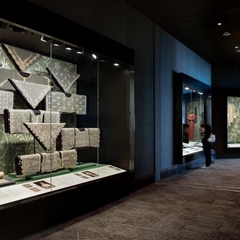
The pineapple plant, known all over the world for its delicious fruit, is indigenous to Central and South America.
This image was posted on April 26, 2022.
#pineappletopina #pineapple #lace #fashion #design #phillipines #textile
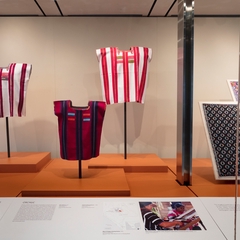
Autonomous craft organizations provide artisans with a market for their goods and offer strength in numbers to their collective membership.
This image was posted on January 20, 2018.
#empoweringthreads #mayantextiles #textile #textiles #mayan #mexico #mexican #mexicanhistory #mayanhistory #jolommayaetik #weavers #weaving #blouses #huipiles #looms #backstraploom #mayanculture #handwoven #sewing #cooperativa #artesanaschiapanecas #chiapas #cojinesartesanales #artesanias #empoweringwomen
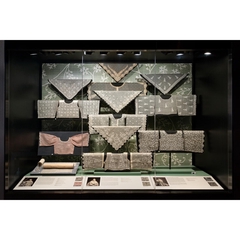
The María Clara served as the formal female ensemble of the Philippines in the late nineteenth century and was perfectly suited to the humid climate.
This image was posted on October 19, 2022.
#pineappletopina #piña #pineapple #lace #fashion #design #philippines
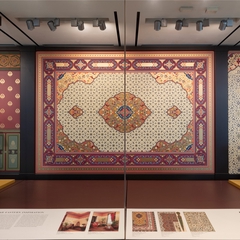
The individual patterns of this Persian ceiling paper set were drawn and adapted from examples of the Persian and Indo-Persian patterns depicted in Albert Racinet’s compendium L’Ornement Polychrome, published in installments between 1869 and 1873.
This image was posted on August 24, 2022.
#victorianpaperedwall #wallpaper #wallpaperwednesday #design
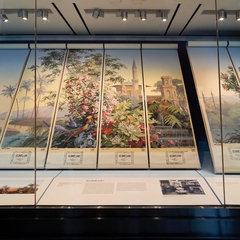
Eldorado (1849), one of the most popular scenic wallpapers created by Zuber et Cie, showcases the continents of Africa, Asia, Europe, and North America through both natural scenery and stunning architectural elements.
This image was posted on September 13, 2019.
#zuberscenicwallpaper #wallpaper #zuber #scenicwallpaper #interiordesign #museum #design
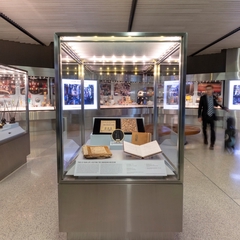
“In keeping with physical fitness trends, I was always hoping that visitors, by viewing some forgotten object, might be exercising that area of the brain which holds onto the memory cells.”—Mickey McGowan, curator, Unknown Museum, December 2022 A visit to the Unknown Museum is a complete immersion in conceptual art and American consumerism.
This image was posted on September 28, 2023.
#unknownmuseum #mickeymcgowan #bayarea #bayareahistory
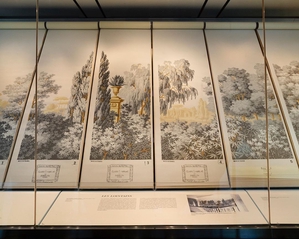
A romantic, classical composition in grisaille featuring architectural elements dotting a tranquil garden, “Les Lointains” was first offered in 1825.
This image was posted on October 10, 2019.
#zuberscenicwallpaper #wallpaper #zuber #scenicwallpaper #interiordesign #museum #design
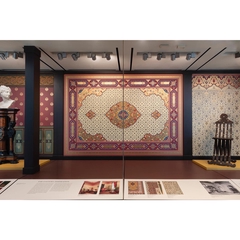
The individual patterns of this Persian ceiling paper set were drawn and adapted from examples of the Persian and Indo-Persian patterns depicted in Albert Racinet’s compendium “L’Ornement Polychrome,” published in installments between 1869 and 1873.
This image was posted on December 21, 2022.
#victorianpaperedwall #wallpaper #wallpaperwednesday #design