
loading image

Designed in the early 1940s under the leadership of Lockheed’s chief engineer Clarence "Kelly" Johnson (1910–90), with direction from TWA’s (Transcontinental & Western Air) owner Howard Hughes (1905–76), the Lockheed L-049 Constellation was introduced as a commercial airliner shortly after World War II. It was an advanced, large-capacity propliner featuring a unique, aerodynamic, dolphin-shaped fuselage with a distinctive triple tail. Introduced in 1951, the TWA (Trans World Airlines) Lockheed L-1049 Super Constellation was a larger, long-range upgrade of the Constellation. The L-1049G Super Constellation was introduced four years later. It was designed for even longer-range flights and included wingtip tanks for extra fuel, radar equipment, and more powerful engines. Promoted by TWA as the “Super G,” the airline touted its technology, speed, exceptional comfort, and smooth flying characteristics. The airliner could accommodate between sixty-two and ninety-five passengers depending on the class configuration. During the mid-1950s, the Super G served as TWA’s premier long-distance transoceanic airliner on routes to Europe and beyond. See “A Cut Above: Airplane Models from the SFO Museum Collection” on display, pre-security, in the Mayor Edwin M. Lee International Terminal Departures Hall and online at: https://bit.ly/CutAboveModels 📸: TWA (Trans World Airlines) Lockheed L-1049G Super Constellation model aircraft 1990s Gary Field scale 1:32 metal, paint Collection of SFO Museum Gift of the San Francisco Aeronautical Society 2018.127.007 a c L2024.0401.002 a d https://bit.ly/3zWfIXq
This image was posted on July 16, 2024.
Similar Instagram posts
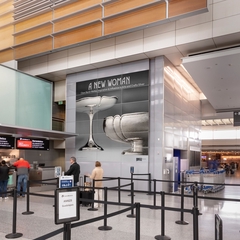
Clara Barck Welles (1868–1965) founded the Kalo Shop in 1900 with five other women graduates of the School of the Art Institute of Chicago.
This image was posted on June 14, 2023.
#barckwellessilver #silver
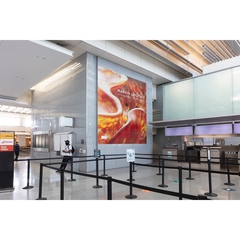
During the 1970s, pioneering American studio glass artist Marvin Lipofsky refined his formula for creating collaborative glass sculpture.
This image was posted on May 03, 2022.
#studioglass #glasssculpture #glassblowing #glassart #contemporaryart #marvinlipofsky

Artist Gar Waterman brings magnificence to life with this wasp sculpture.
This image was posted on May 31, 2019.
#intriguinginsects #worldofinsects #insects #entomology #berkeley #ucberkeley #garwaterman #wasp

Originally founded as Western Air Express in 1925, the company rebranded itself as Western Airlines in 1941 after several mergers during the 1930s.
This image was posted on January 10, 2023.
#airlinemealsets #avgeek #paxex
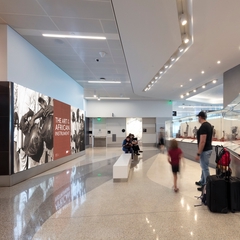
One of Africa’s most revered and ancient percussion instruments, drums, are carved from solid logs of wood and covered with a stretch membrane.
This image was posted on October 01, 2024.
#artoftheafricaninstrument

A visionary artist, Georges Liautaud (1899–1991) founded the Haitian metal sculpture movement.
This image was posted on September 12, 2023.
#haitianmetal #georgesliautaud #haiti
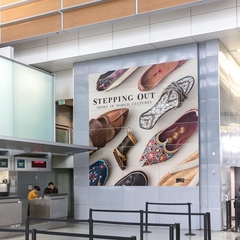
This is your last week to see "Stepping Out: Shoes in World Culture".
This image was posted on November 06, 2017.
#shoesinculture #shoes #instashoes #shoestagram #shoeswag #shoesoftheday #shoedesign #shoefashion #shoeslover

The Aviation Museum and Library will be closed today to observe Martin Luther King, Jr.’s Birthday and will reopen tomorrow, January 16, at 10am.
This image was posted on January 15, 2024.
#martinlutherkingjr
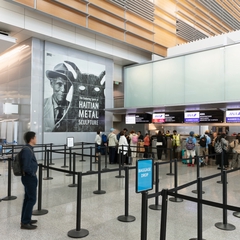
Murat Brièrre (1938–88) was the first to study under visionary artist Georges Liautaud (1899–1991), and he quickly gained recognition as one of the preeminent metal sculptors of Haiti.
This image was posted on February 28, 2024.
#haitianmetal
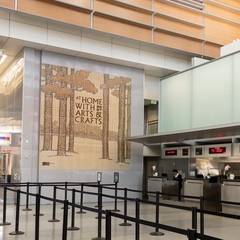
This is your last week to see "At Home with Arts and Crafts!”
This image was posted on December 04, 2017.
#sfoartsandcrafts #artsandcraftsmovement #artsandcraftsstyle #craftsmanstyle #craftsmanhome #bungalowstyle