
loading image

Zheng He (1371–1433), a Muslim court eunuch during the Ming dynasty (1368–1644), was sponsored by the Yongle emperor to lead a fleet of ships on multiple expeditions to distant lands, including Southeast Asia. As a result, significant numbers of Chinese settled on the Malay Peninsula and as far as the Indonesian archipelago, over several centuries and married into local families. Their multiracial descendants are culturally referred to as Peranakan Chinese. Nyonya or Peranakan porcelain, a richly decorated pastel porcelain, predominantly found on the Malay Peninsula, consists mostly of practical tableware, custom-ordered from Jingdezhen, China, by Peranakan families or businessmen in Southeast Asia during the late nineteenth and early twentieth centuries. Local importers also sold dinnerware to restaurants throughout most of the twentieth century. Nyonya has a distinct visual style—soft greens, reds, pinks, and yellows are skillfully used to create a sumptuous color contrast. Peonies and phoenixes are prominent; traditional patterns depicting flowers and birds also appear. Additional design motifs include botanical patterns and religious themes taken from Buddhism, Hinduism, and Islam. Special thank you to Sally Yu Leung and Guangzhen Zhou for making this exhibition possible, and to Dr. William Ma, Assistant Professor, College of Art & Design, Louisiana State University, for his curatorial contributions. See "Everyday Elegance in Chinese Ceramics" on display, pre-security, in the Mayor Edwin M. Lee International Terminal Departures Hall and online: at: https://bit.ly/Chinese-Ceramics
This image was posted on July 26, 2024.
Similar Instagram posts
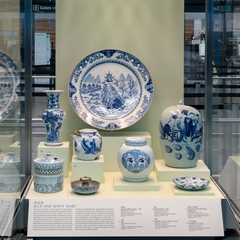
During the fourteenth century, Chinese ceramicists at the kilns at Jingdezhen, located in the southeastern province of Jiangxi, refined and perfected the art of porcelain painted with cobalt-blue decoration.
This image was posted on September 05, 2024.
#chineseceramics
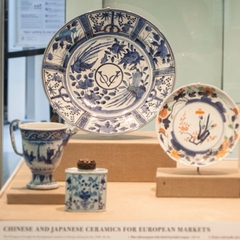
Part of the 17th century ceramics trade: a Japanese-made plate with the monogram of the Dutch East India Company.
This image was posted on May 29, 2013.
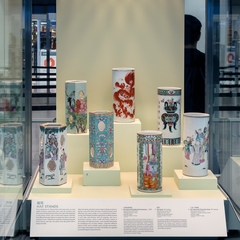
Once ubiquitous in Chinese dress, hats were worn on most public occasions.
This image was posted on November 01, 2024.
#chineseceramics
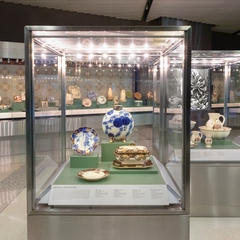
Following the peak of their popularity in the West during the 1880s, Japanese designs continued to provide inspiration to the Art Nouveau movement at the turn of the twentieth century in Europe and the United States.
This image was posted on November 28, 2022.
#japonisme #japan #design
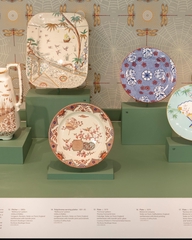
One of the most popular transfer-printed designs in the Japonesque style was the pattern Gildea & Walker marketed under the trade name of “Melbourne”.
This image was posted on June 30, 2022.
#japonisme #japan #design #transferware
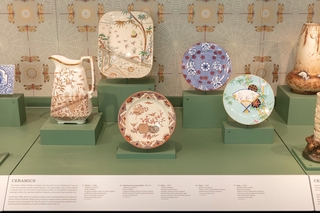
In the 1860s, Minton & Company, a major English ceramic producer whose wares ranged from affordable transferware to hand-decorated porcelain and large-scale monumental design, acquired books of Japanese birds and flowers.
This image was posted on July 11, 2022.
#japonisme #japan #design #minton #ceramics