
loading image

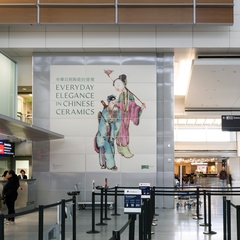
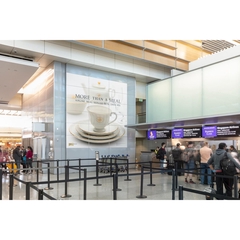
Porcelain developed in China during the Tang dynasty (618–907) and continued to be refined in proceeding centuries. Made with kaolin clay and other additives and fired at extremely high temperatures (above 1260 degrees Celsius or 2300 degrees Fahrenheit), porcelain results in a translucent, milky, white glass-like surface. Though porcelain was made throughout China, the kilns at Jingdezhen, located in the southeastern province of Jiangxi, perfected the art of porcelain painted with cobalt-blue decoration during the fourteenth century. The blue color came from cobalt oxide, which was initially imported from the Middle East. Exceptional artisans carefully hand painted designs onto porcelain using a brush. Long admired throughout Asia, the Middle East, and Europe, Chinese blue-and-white porcelain was highly sought after for its beauty, durability, and pure-white color and widely exported beginning in the Ming dynasty (1368–1644). Special thank you to Sally Yu Leung and Guangzhen Zhou for making this exhibition possible, and to Dr. William Ma, Assistant Professor, College of Art & Design, Louisiana State University, for his curatorial contributions. See "Everyday Elegance in Chinese Ceramics" on display, pre-security, in the Mayor Edwin M. Lee International Terminal Departures Hall and online at: https://bit.ly/Chinese-Ceramics 外銷瓷 Charger made for export c. 1780 Qing dynasty (1644–1911) Jiangxi province, China porcelain, underglaze-blue decoration Collection of Sally Yu Leung L2024.0301.006
This image was posted on August 26, 2024.
Similar Instagram posts
The fearless lion motif was introduced to China alongside Buddhism where it symbolizes strength and protection.
This image was posted on April 23, 2024.
#chineseceramics #ceramics #lion #buddhism
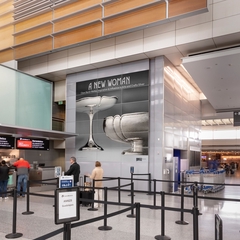
Clara Barck Welles (1868–1965) founded the Kalo Shop in 1900 with five other women graduates of the School of the Art Institute of Chicago.
This image was posted on June 14, 2023.
#barckwellessilver #silver
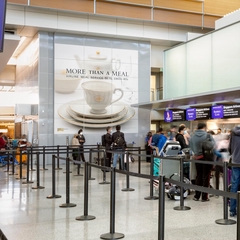
Originally founded as Western Air Express in 1925, the company rebranded itself as Western Airlines in 1941 after several mergers during the 1930s.
This image was posted on January 10, 2023.
#airlinemealsets #avgeek #paxex
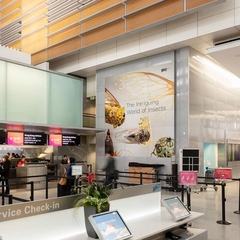
Artist Gar Waterman brings magnificence to life with this wasp sculpture.
This image was posted on May 31, 2019.
#intriguinginsects #worldofinsects #insects #entomology #berkeley #ucberkeley #garwaterman #wasp
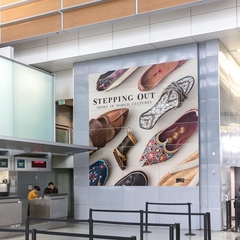
This is your last week to see "Stepping Out: Shoes in World Culture".
This image was posted on November 06, 2017.
#shoesinculture #shoes #instashoes #shoestagram #shoeswag #shoesoftheday #shoedesign #shoefashion #shoeslover
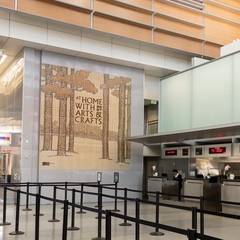
This is your last week to see "At Home with Arts and Crafts!”
This image was posted on December 04, 2017.
#sfoartsandcrafts #artsandcraftsmovement #artsandcraftsstyle #craftsmanstyle #craftsmanhome #bungalowstyle
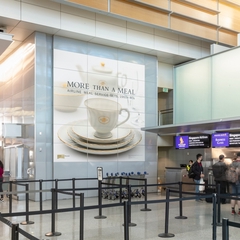
Founded as Varney Speed Lines in 1934, Continental Airlines rapidly expanded its regional services between Los Angeles and Chicago and across the Southwest during the 1950s and 60s.
This image was posted on June 21, 2023.
#airlinemealsets #avgeek #paxex
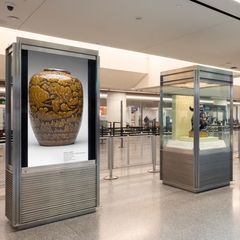
The Aviation Museum and Library is closed today to observe Indigenous People’s Day and will reopen tomorrow, October 15th at 10am.
This image was posted on October 14, 2024.
#indigenouspeoplesday
Presented within “More than a Meal: Airline Meal Service Sets, 1960s–80s” are Jason Peterson’s striking photographs made while flying on commercial airliners.
This image was posted on November 18, 2022.
#airlinemealsets #avgeek #paxex #windowseat