loading image

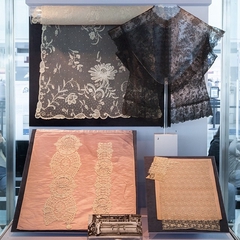
The two most spectacular forms of piña handwork include calado (pullwork) and sombrado (appliqué). Extremely fine calado entails pulling together selected fibers from the fabric to create uniform open areas in the weave; areas may then be embellished by embroidery to create a variety of geometric patterns. By the early twentieth century, calado work was limited to simple open grid patterns. The other painstaking technique, sombrado, involves a type of appliqué, in which pieces of fabric, either very fine white cotton or piña, are cut into designs; the edges are then rolled and carefully stitched onto the fabric. Rengue is a weaving technique where warp and weft threads are grouped to simulate the overall calado effect in far less time. Design motifs on piña include leaves, vines, birds, flowers, and butterflies. There is no evidence that patterns were documented—the work was left to the imagination of the embroiderer. See "From Pineapple to Piña: A Philippine Textile Treasure" on display, post-security, in Harvey Milk Terminal 1 and online at: https://bit.ly/PineappletoPina
This image was posted on June 07, 2022.
Similar Instagram posts
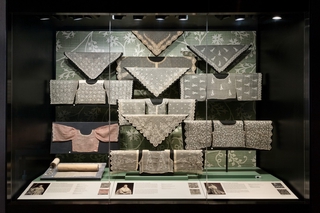
During Spanish colonization, young Filipina women acquired a Western education at convents, orphanages, and schools that were established in cities and provinces throughout the Philippines.
This image was posted on May 10, 2022.
#pineappletopina #piña #pineapple #lace #fashion #design #phillipines
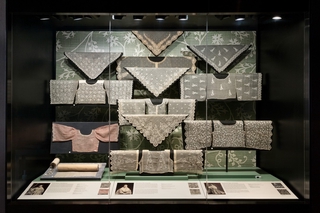
Light and airy, the María Clara served as the formal female ensemble of the Philippines in the late nineteenth century and was perfectly suited to the humid climate.
This image was posted on May 23, 2022.
#pineappletopina #piña #pineapple #lace #fashion #design #phillipines
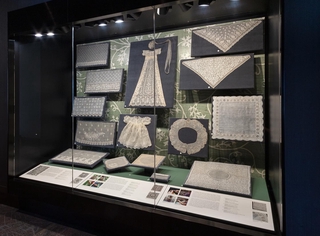
The quality of nineteenth-century piña textiles and embroidery is unsurpassed.
This image was posted on June 27, 2022.
#pineappletopina #piña #pineapple #lace #fashion #design #phillipines
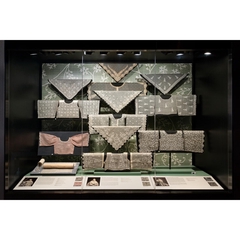
The María Clara served as the formal female ensemble of the Philippines in the late nineteenth century and was perfectly suited to the humid climate.
This image was posted on October 19, 2022.
#pineappletopina #piña #pineapple #lace #fashion #design #philippines