
loading image

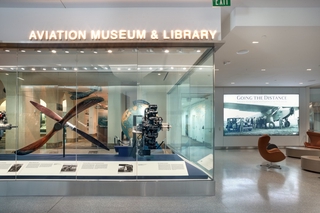
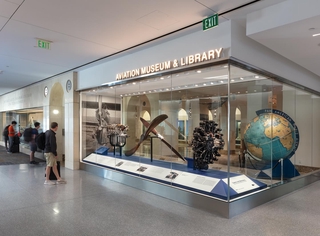
Aircraft propellers convert the power produced by the aircraft’s engine into thrust. Most early manufacturers produced fixed-pitch propellers from wood. Initially, they were created from single pieces of wood. As propeller technology advanced, manufacturers began to laminate thin layers of wood together. This prevented warping and enhanced strength. Most wood propellers were constructed from the preferred hardwoods of walnut, birch, oak, or mahogany. Often, a metal sheath was added to the leading edge of each blade for extra durability. This helped protect the wood from damage by rocks and other debris that was common on the dirt airstrips of the 1910s and 20s. This Paragon Striker propeller was designed for use with a Curtiss OX-5 engine and was produced of oak by the American Propeller and Manufacturing Company (APMC), of Baltimore, Maryland. Founded in 1909 by patent lawyer and engineer Spencer Heath (1876–1963), APMC grew to become one of the leading American manufacturers of propellers in the U.S. by the late 1910s. “Going the Distance: Endurance Aircraft Engines and Propellers of the 1910s and 20s” is on display pre-security in the Aviation Museum and Library and online at: https://bit.ly/EnduranceEngines
This image was posted on August 09, 2022.
Similar Instagram posts
Following the historic first flight from North America to Australia by Charles Kingsford Smith and crew in 1928, the transpacific “Southern Cross” route— named after the aircraft they flew, the Fokker F.VIIb/3m Southern Cross—received worldwide fame.
This image was posted on June 24, 2022.
#flyingsoutherncross #australia #avgeek #aviationhistory #philately
In 1917, Katherine Stinson asked Glenn Curtiss to build a new exhibition aircraft for her.
This image was posted on January 24, 2023.
#enduranceengines #avgeek #aviationhistory #katherinestinson
In the 1920s, aviation visionaries imagined how the nations of the Pacific Rim could be linked by a new mode of transportation: the aircraft.
This image was posted on June 14, 2022.
#airmail #australia #avgeek #aviationhistory #philately
Born in Fort Payne, Alabama, Katherine Stinson (1891-1977) was the fourth woman in the United States to obtain a pilot’s certification.
This image was posted on March 28, 2023.
#enduranceengines #womenshistorymonth
In the wake of World War II, Australian airline companies embarked on the task establishing an air route across the Pacific Ocean to the United States.
This image was posted on June 29, 2022.
#australianairliners #avgeek #aviationhistory
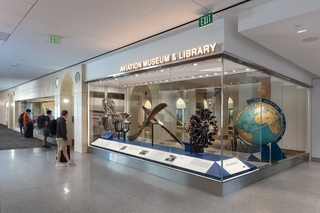
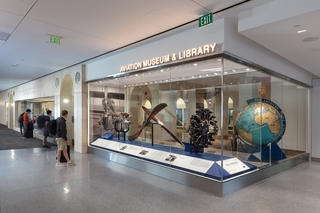
The long-awaited day has come: the Aviation Museum and Library reopened today with a new facade and five new exhibitions!
This image was posted on June 01, 2022.
#avgeek #museum #aviation
Harold McMillan Bixby, a midwestern businessman with a strong interest in the emerging technology of aviation, worked for Pan American Airways in the 1930s to the 1950s.
This image was posted on December 29, 2023.
#bixbycollection #panam #paa #avgeek #haroldbixby