
loading image

During the 1870s, stores specializing in Japanese art and merchandise, commonly referred to as Japanese novelty stores or fancy goods stores, opened across the United States—from New York and Boston to Philadelphia, Houston, and San Francisco. These stores sold various items, such as kimono, textiles, art objects, woodblock prints, and fans. Many of the stores were owned by Japanese entrepreneurs. Art historian and print collector Hiromichi Shugio (1853–1927), was born into a privileged family in Saga Prefecture. He arrived in New York around 1880 and became the proprietor of First Japan Manufacturing and Trading Company in New York. Shugio curated the first major American exhibition of ukiyo-e prints at the Grolier Club in New York City in 1889. Bunkio Matsuki (1867–1940) came to San Francisco in 1888, soon moving to Salem, Massachusetts, where he established a Japanese section in the city’s leading department store, Almy, Bigelow & Washburn, stocking more than twenty-thousand items. Matsuki also opened a store in Boston and supplied works of art to the Museum of Fine Arts, Boston. Tadamasa Hayashi (1853–1906) learned French in his native country of Japan before travelling to Paris in 1878 to serve as a translator at the Exposition Universelle. Hayashi decided to remain in Paris and became a highly regarded art dealer, selling ukiyo-e and other artworks to an international clientele. See “Japonisme: A Passion for Japan” on display, post-security, in Terminal 2 and online at: https://bit.ly/JaponismeSFO
This image was posted on August 22, 2022.
Similar Instagram posts
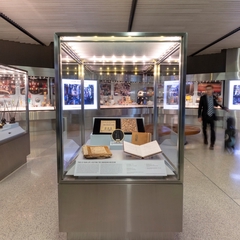
“In keeping with physical fitness trends, I was always hoping that visitors, by viewing some forgotten object, might be exercising that area of the brain which holds onto the memory cells.”—Mickey McGowan, curator, Unknown Museum, December 2022 A visit to the Unknown Museum is a complete immersion in conceptual art and American consumerism.
This image was posted on September 28, 2023.
#unknownmuseum #mickeymcgowan #bayarea #bayareahistory
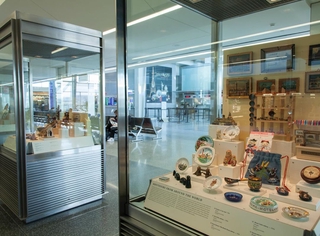
In honor of our 40th anniversary, every week this year we are highlighting one of our past exhibitions.
This image was posted on September 17, 2020.
#sfomat40 #tbtsfom #museumfromhome
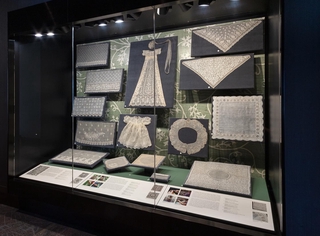
The quality of nineteenth-century piña textiles and embroidery is unsurpassed.
This image was posted on June 27, 2022.
#pineappletopina #piña #pineapple #lace #fashion #design #phillipines
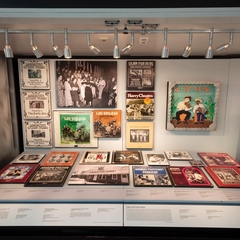
The French-speaking settlers who left the Acadian region of Canada for southwest Louisiana in 1764 became known as Cajuns.
This image was posted on November 07, 2018.
#storyofarhoolie #arhoolie #arhoolierecords #acadian #french #canada #louisiana #cajuns #cajun #creole #accordion #ballads #fiddletunes
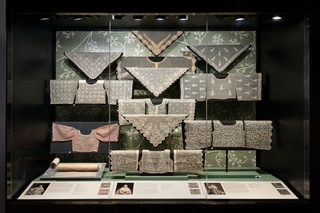
The two most spectacular forms of piña handwork include calado (pullwork) and sombrado (appliqué).
This image was posted on June 07, 2022.
#pineappletopina #piña #pineapple #lace #fashion #design #phillipines
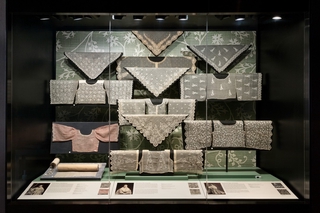
Light and airy, the María Clara served as the formal female ensemble of the Philippines in the late nineteenth century and was perfectly suited to the humid climate.
This image was posted on May 23, 2022.
#pineappletopina #piña #pineapple #lace #fashion #design #phillipines
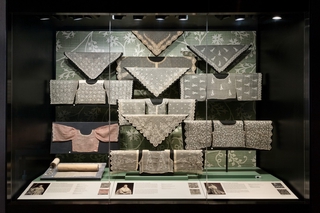
During Spanish colonization, young Filipina women acquired a Western education at convents, orphanages, and schools that were established in cities and provinces throughout the Philippines.
This image was posted on May 10, 2022.
#pineappletopina #piña #pineapple #lace #fashion #design #phillipines
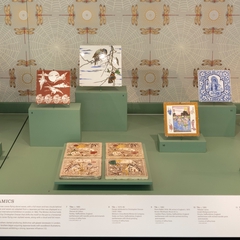
This tile shows three cranes flying above waves, with a full moon and two clouds behind them.
This image was posted on February 07, 2023.
#japonisme #japan #design #tile #ceramics #transferware
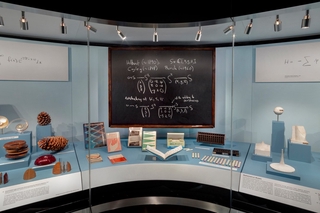
During the early twentieth century, the idea that children should spend time at play or in school, rather than working outside the home, led to toys that encouraged learning.
This image was posted on April 11, 2022.
#mathatsfo #mathematics #math #teaching