
loading image

Airmail became a driving force in the development of commercial aviation after World War I, and airmail envelopes and letters were instant souvenirs of new routes and first flights. Called flight covers, these artifacts serve as tangible proof of major aeronautical achievements and are touchstones to the past. In many cases, these covers are the only surviving physical objects from historic flights. In addition to the official postage stamp, cancellation mark, and postmark showing date and place, is the unique imprint called a cachet—a hand stamped or machine printed design commemorating a fight operation. Cachets range in sophistication from simple and handmade to fancy, multicolor depictions. Many covers also bear flight crew signatures. Aerophilately—the collecting and study of airmail—continues to be a popular pursuit. Today, these rare surviving airmail flight covers document how the air route across the Pacific Ocean was established during the 1920s and 30s, and then strengthened in the postwar era with the introduction of more advanced aircraft making non-stop travel between the United States and Australia a reality. Featuring rare surviving airmail flight covers that document how the air route across the Pacific Ocean was established during the 1920s and 30s, “Airmail Down Under” is on display, pre-security, in the Aviation Museum and Library, located on the departures level of the International Terminal and online at: https://bit.ly/3wz8Z1T
This image was posted on October 12, 2022.
Similar Instagram posts
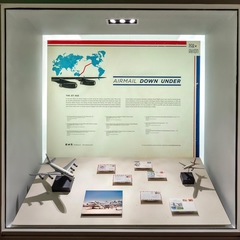
In the late 1950s, jet airliners began to enter service for airlines around the world.
This image was posted on November 09, 2022.
#airmaildownunder #avgeek #jetage
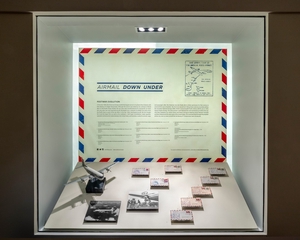
In the early 1940s, Pan American Airways established regular service to Auckland, New Zealand, with their Boeing 314 Clipper flying boats.
This image was posted on August 30, 2022.
#airmaildownunder #avgeek #philately #panam
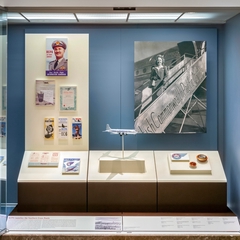
One of the first Australian airlines to operate transpacific commercial air services to America was BCPA (British Commonwealth Pacific Airlines) which was formed by the governments of Australia, Great Britain, and New Zealand in 1947.
This image was posted on February 16, 2023.
#flyingsoutherncross #australia #avgeek
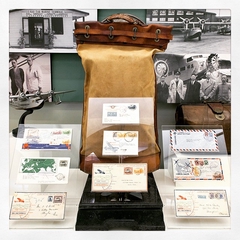
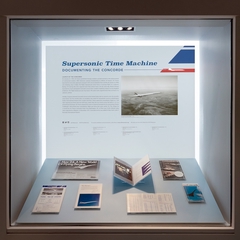
Initially, Congress banned Concorde service to the United States due to concerns over the aircraft’s sonic boom, but five months after the Concorde’s inaugural flight, an exception was made in May 1976 for transatlantic service to Washington Dulles International Airport from London and Paris.
This image was posted on March 24, 2023.
#ssttimemachine
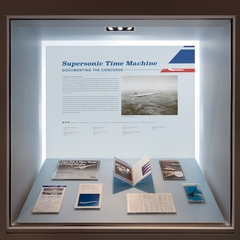
On January 21, 1976, Air France and British Airways marked a pivotal moment in the advancement of commercial aviation.
This image was posted on April 28, 2023.
#ssttimemachine #concorde #avgeek
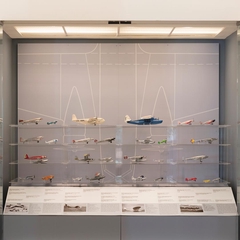
Introduced in the late 1930s, the British-produced Short S.30 series of aircraft was a large-capacity double-deck flying boat.
This image was posted on January 17, 2019.
#aviationevolutions #jimlund #avgeek #aviationgeek #aviation #aviationhistory #vintageaviation #history #aviationgeeks #modelplane #scalemodel #avgeeks #auckland #sydney #teal
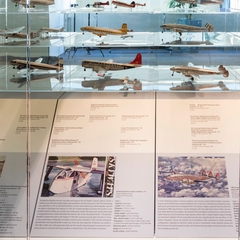
Designed by Republic Aircraft’s test pilot and engineer Percival Hopkins "Spence" Spencer, the RC-3 Seabee was an all-metal, single-engine, sport amphibian aircraft introduced in 1946.
This image was posted on May 17, 2018.
#aviationevolutions #jimlund #republic #seabee #amphibian #avgeek #avationgeek #aviation #aviationhistory #vintageaviation #history #avhistory #aviationgeeks #modelplane #avgeeks #modelaircraft #airplane #aircraft