
loading image

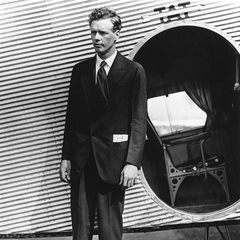
Pan American Airways was a pioneering U.S. international carrier founded by Juan T. Trippe (1899–1981) in 1927. Between the late 1920s and early 1930s, the airline expanded its route system throughout the Caribbean and into Mexico and Central America. During this time, the airline’s Ford Tri-Motors and Fokker F-10 trimotors were equipped with wicker passenger seats. Depending on the flight length, Ford Tri-Motors featured between eight and ten seats. The Fokker F-10 was designed to seat up to twelve passengers. With a slightly longer range than the Ford Tri-Motor—795 miles compared to 560 miles—passengers on the F-10 could potentially endure flights of more than six hours. Cruising at low altitudes, weather was a constant source of turbulence and motion sickness was very common. Windows could be opened during flight on these early unpressurized airliners, but this would allow engine noise and exhaust fumes to enter the cabin, often at intolerable levels. Flight crews frequently issued cotton to the passengers to plug their ears and readily offered aspirin for headaches. See “Remain Seated: Airliner Passenger Chairs,” on display, pre-security in the Aviation Museum and Library, located on the departures level of the International Terminal and online at: https://bit.ly/AirlinerChairs
This image was posted on April 26, 2023.
Similar Instagram posts
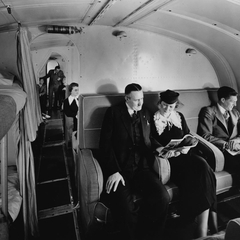
A trip on the Martin M-130 China Clipper in 1937 included five stops from San Francisco to Hong Kong: Honolulu; Midway Island; Wake Island; Guam; and Manila, Philippines.
This image was posted on May 14, 2016.
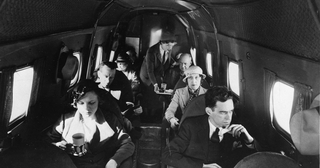
The all-metal, twin-engine Boeing 247 was a revolutionary airliner when it entered into service with United AIr Lines in 1933.
This image was posted on February 03, 2021.
#wingwednesday #avgeek #aviationhistory #boeing #1930s
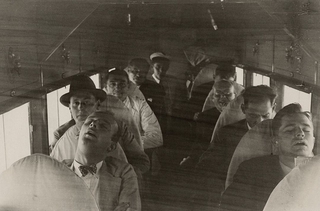
Pan American Airways pioneered commercial airline service to Latin America and the Caribbean in the late 1920s and early 1930s, when air travel was first developing into a viable form of transportation.
This image was posted on December 12, 2019.
#panamerican #panam #centralamerica #guatemala #ford #ford5at #trimotor
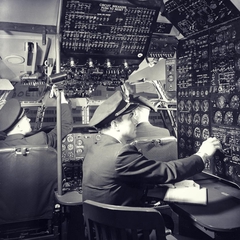
The newspaper blurb accompanying these photos of a Pan American Stratocruiser cockpit simulator read: “Reproducing in every detail the flight deck of one of Pan American World Airways’ big Pacific Strato Clippers, this electronic flight simulator has gone into service in the crew training program of PAA’s Pacific-Alaska Division at San Francisco International Airport.
This image was posted on December 16, 2015.
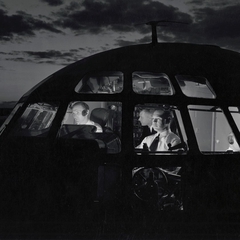
Ever wonder what the cockpit of the Boeing 377 looked like?
This image was posted on March 27, 2019.
#cockpits #cockpit #boeing377 #boeing #airliners #panam #panamerican #avgeek
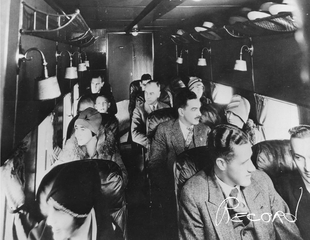
Early aircraft did not provide a way to heat meals for passengers, thus meals on flights were served cold.
This image was posted on January 28, 2016.
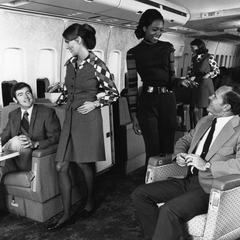
Parisian by birth, Hollywood costumer Jean Louis (1907–1997) designed for hundreds of leading ladies, including a famous strapless gown worn by Rita Hayworth in “Gilda.” A frequent nominee and Oscar-winner, Louis had a long engagement with United Airlines and created this uniform for the airline’s 4,500 stewardesses.
This image was posted on June 21, 2018.
#jeanlouis #united #crewlife #flightattendant #uniform #avgeek #avationgeek #aviation #aviationhistory #vintageaviation #history #avhistory #aviationgeeks #avgeeks #fashion
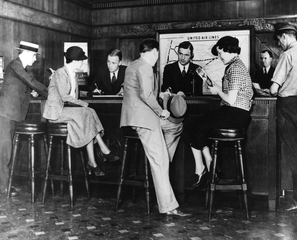
This rare view of the interior of the United Air Lines’ San Francisco Ticket Office is from circa 1933.
This image was posted on February 10, 2016.
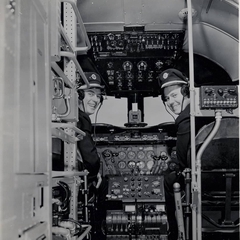
Did you know our collections staff catalog each object by hand?
This image was posted on May 13, 2019.
#behindthescenes #museummonday #museumlife