
loading image

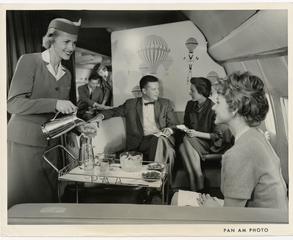
The DC-7 was Douglas Aircraft’s last design evolution of the piston-powered, four-engine, low-wing airliner layout that began with the DC-4. In 1953, American Airlines introduced the DC-7 as its first nonstop, transcontinental airliner. The DC-7 was designed to fly fast enough to travel from coast-to-coast in under eight hours, the U.S. safety limit for pilots. In actual operation, however, this was often not attained. The slightly larger DC-7C (Seven Seas) variant, preceded by the DC-7B, was designed with enough range to fly transatlantic routes. It included upgraded engines, increased fuel capacity, and greater wingspan, all of which gave it slightly better range and speed compared to TWA’s Lockheed L-1049 Super Constellation. In 1956, Pan American World Airways introduced the airliner and European carriers such as BOAC (British Overseas Airways Corporation) and SAS (Scandinavian Airlines System) followed with their own orders. In 1957, Braniff International Airways launched DC-7C service to South America that it dubbed “El Dorado” service. Sales of the DC-7 rapidly declined by the end of the decade, with the arrival of long-range jets such as the Boeing 707 and Douglas DC-8.
This image was posted on June 02, 2021.
Similar Instagram posts
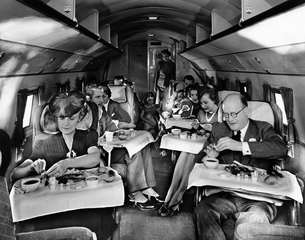
What did people eat on aircraft in the early days of aviation?
This image was posted on May 20, 2018.
#inflight #airlinemeals #meals #avgeek #avationgeek #aviation #aviationhistory #vintageaviation #history #avhistory #aviationgeeks #avgeeks
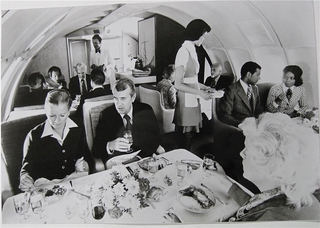
In the 1970s, Pan American World Airways offered meal service to passengers in upper deck first class cabin of Boeing 747.
This image was posted on April 04, 2017.
#boeing #panam #747 #boeing747 #firstclass #avgeek #aviationhistory
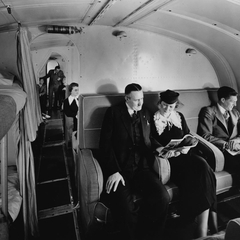
A trip on the Martin M-130 China Clipper in 1937 included five stops from San Francisco to Hong Kong: Honolulu; Midway Island; Wake Island; Guam; and Manila, Philippines.
This image was posted on May 14, 2016.
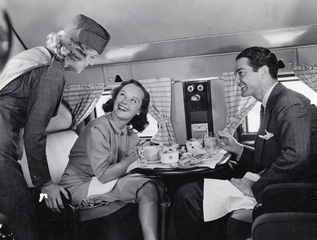
Taken around 1936 in a Douglas DC-3, this promotional TWA (Transcontinental & Western Air) photo advertises their complimentary meal service.
This image was posted on June 19, 2017.
#museumweek #foodmw #womenmw #twa
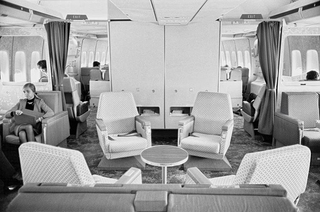
Introduced by Pan American World Airways in 1970, the Boeing 747-100 was the first of a new breed of jetliner, the “wide-body,” which ultimately revolutionized the airline industry.
This image was posted on February 14, 2019.
#avgeek #747 #boeing #jumbojet #unitedairlines #lounge #jetage
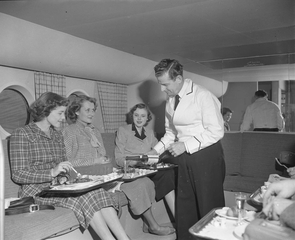
Introduced on April 1,1949 by Pan American World Airways, the Boeing 377 Stratocruiser was considered the most luxurious airliner in the skies.
This image was posted on January 31, 2020.
#avgeek #paa #panam #panamerican #stratocruiser #boeing #boeing377
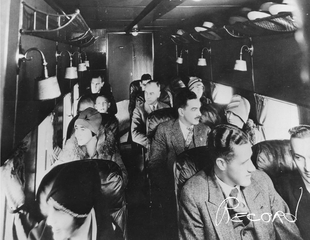
Early aircraft did not provide a way to heat meals for passengers, thus meals on flights were served cold.
This image was posted on January 28, 2016.
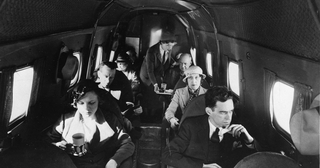
The all-metal, twin-engine Boeing 247 was a revolutionary airliner when it entered into service with United AIr Lines in 1933.
This image was posted on February 03, 2021.
#wingwednesday #avgeek #aviationhistory #boeing #1930s
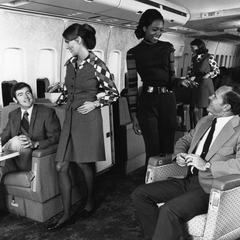
Parisian by birth, Hollywood costumer Jean Louis (1907–1997) designed for hundreds of leading ladies, including a famous strapless gown worn by Rita Hayworth in “Gilda.” A frequent nominee and Oscar-winner, Louis had a long engagement with United Airlines and created this uniform for the airline’s 4,500 stewardesses.
This image was posted on June 21, 2018.
#jeanlouis #united #crewlife #flightattendant #uniform #avgeek #avationgeek #aviation #aviationhistory #vintageaviation #history #avhistory #aviationgeeks #avgeeks #fashion