
loading image

In 1933, the world-renowned aviator Charles Lindbergh and his wife, radio operator, and navigator, Anne Morrow Lindbergh conducted a northern transatlantic exploratory survey flight for a commercial air route between North America and Europe for Pan American Airways. In 1931, they had explored a northern route to Asia. During a stop in Reykjavik, Iceland, he wrote a 12-page letter to Pan American Airways president and founder Juan Trippe regarding his observations and thoughts about the route. In the following paragraph the far-sighted Lindbergh predicted how aircraft would fly the route in the future: In establishing a trans Atlantic air route it is fully as important to decide which route will be most advantageous in the future as it is to decide which is the best to operate over today. It must be remembered that the route which is best for our present equipment and experience will not necessarily be as good as some other route when we have more efficient aircraft and have learned more about transoceanic flying. It has always been my belief that with every advance in aviation the air routes will tend to follow more closely the great circle course between the localities they serve. I believe that in the future aircraft will detour bad weather areas by flying above them rather than around them. Consequently I suggest that Pan American Airways lay plans for their eventual trans Atlantic air route to follow the appropriately the great circle to Europe. Just over two decades later, pressurized, long-range airliners began flying above the weather, between North America and Europe, following transpolar, great-circle routes, just as Lindbergh had envisioned. Modern jetliners have continued to fly these routes into the present. Photographic reproduction of C. A. Lindbergh to J. T. Trippe correspondence 1933 SFO Museum Collection Gift of the Pan Am Historical Foundation http://airandspace.si.edu/explore-and-learn/multimedia/detail.cfm?id=2769
This image was posted on April 18, 2016.
Similar Instagram posts
The first pitch of the Giants home opener game of the season against the Kansas City Royals was thrown this afternoon at 1:35pm PDT.
This image was posted on April 07, 2023.
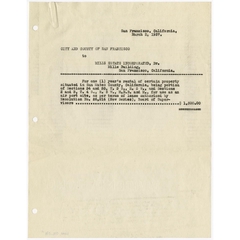
Want to nerd out about airport history?
This image was posted on September 29, 2022.
#sfohistory #sfhistory #avgeek
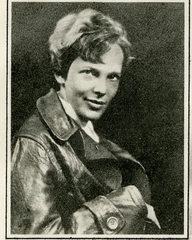
Happy Birthday, Amelia Earhart!
This image was posted on July 24, 2018.
#ameliaearhart #frednoonan #panam #oakland #transatlantic #avgeek #avationgeek #aviation #aviationhistory #vintageaviation #history #avhistory #aviationgeeks #avgeeks
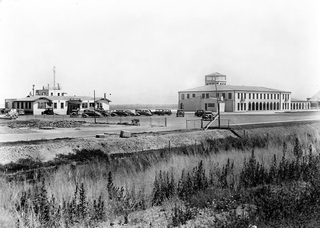
A seldom-seen photo of SFO’s first two administration buildings, which briefly coexisted side-by-side.
This image was posted on May 11, 2017.
#throwbackthursday #tbt #sfohistory #sfhistory #avgeek #aviationhistory #sfoat90
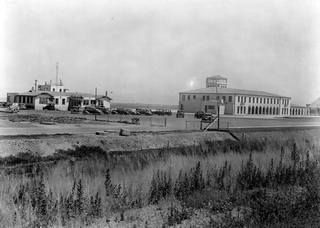
As the commercial aviation industry grew in the early 1930s, it became apparent that San Francisco Airport needed to enlarge and enhance their passenger facilities.
This image was posted on March 16, 2021.
#terminaltuesday #sfohistory #airport #airportarchitechture #1930s
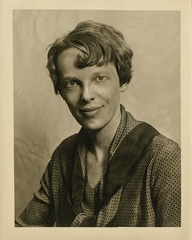
#Onthisday in 1935, Amelia Earhart departed from Honolulu, HI bound for Oakland, CA.
This image was posted on January 11, 2022.
#ameliaearhart #avgeek #avatrix #womeninaviation #aviationhistory
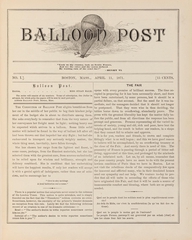
Susan Hale (1833-1910) edited the six numbers of the Balloon Post, a news sheet in 1871 about airmail via balloon to raise funds for the relief of French war refugees from the Franco-Prussian War.
This image was posted on August 03, 2018.
#intotheether #hotairballoon #hotairballoons #balloon #balloons #ballooning #avgeek #aeronaut #earlyaviation #susanhale #balloonpost #airmail #womeninaviation
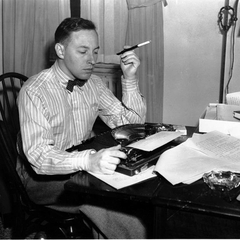
“When I write, everything is visual, as brilliantly as if it were on a lit stage.
This image was posted on June 13, 2017.
#thetypewriter #typewriters #history #design #queerhistory #queerwriter #lgbtpridemonth #lgbt #tennesseewilliams #writer #author #queerauthor #pride2017 #happypridemonth #playwrite
This image was posted on December 08, 2015.
#traveltuesday