
loading image

Blue-and-white transferware reached its peak in production and popularity in the first half of the nineteenth century. Staffordshire potters in central England first developed a successful method for transferring designs onto wares using hand-engraved copperplates as early as the mid-eighteenth century. Previously, potters laboriously applied decoration by hand, which consumed a great deal of time. The process of printing designs on paper and then transferring them directly onto wares transformed the ceramics industry and became a hallmark of the Staffordshire pottery industry. This exhibition features blue-and-white wares made by Spode and a number of other British potters. Scenes featured on wares range from famous architectural views of India, such as the Taj Mahal, drawn from "A Picturesque Tour along the Rivers Ganges and Jumna in India" (1824) to scenes of Turkey and China taken from "Views in the Ottoman Empire" (1803) and "A Picturesque Voyage to India by the Way of China" (1810). The corresponding prints accompany the ceramic wares. "From #PrintToPlate: Views of the East on Transferware" will be on display, pre-security, in the International Terminal starting on Saturday!
This image was posted on July 28, 2016.
Similar Instagram posts

The Taj Mahal, a Mughal monument and tomb, is located along the southern bank of the Yamuna (Jumna) River in Agra, India.
This image was posted on August 05, 2016.
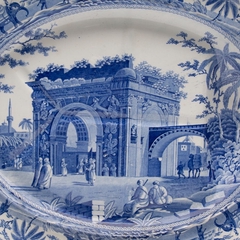
Erected in 165 CE to commemorate a victory over the Parthians during the Roman-Parthian wars, the triumphal Arch of Marcus Aurelius, depicted on this platter, is located in Tripoli, Libya, and demonstrates the vast extent of the Roman Empire.
This image was posted on December 12, 2016.
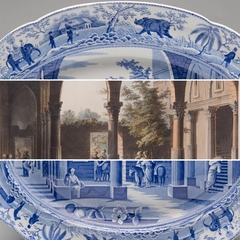
Spode Pottery introduced their Caramanian series around 1809.
This image was posted on March 09, 2017.
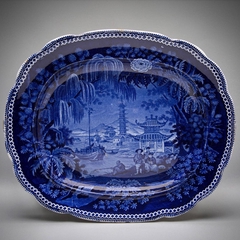
Sir George Leonard Staunton (1737–1801) arrived in China in 1792 as a member of a British delegation.
This image was posted on August 11, 2016.
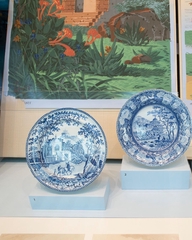
Before the advent of photography, a number of superbly illustrated books made by Western travelers and artists in the early nineteenth century helped fuel the public’s fascination with foreign locales.
This image was posted on March 18, 2020.
#zuberscenicwallpaper #wallpaper #zuber #scenicwallpaper #interiordesign #museumfromhome #design #wallpaperwednesday
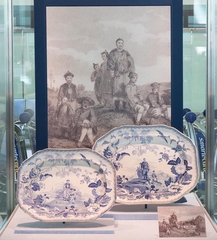
Staffordshire blue-and-white transfer-printed ceramics received their early inspiration from Chinese blue-and-white wares.
This image was posted on September 15, 2016.
#printtoplate: #transferware #blueandwhite #ceramics
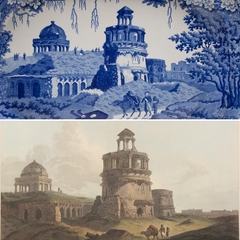
The aquatint technique was introduced to England from France in the mid-eighteenth century.
This image was posted on October 27, 2016.
#printtoplate: #transferware" #blueandwhite #design #transferware #aquatints