
loading image

Trained in architecture at Yale University and in Rome, George Nelson (1908–86) melded European modernism with American industrial design in furniture, household items, and modular office components. As Herman Miller’s Design Director, he created the “Slat Bench,” “Case Series,” and “Coconut Chair,” authored catalogs, directed brand identity, and hired new designers including Alexander Girard, Isamu Noguchi, and Charles Eames. Nelson’s clocks for the Howard Miller Company incorporated standard movements into artistic and whimsical housings of industrial materials such as wood, aluminum, brass, and plastic. See more #midcentury design in "#AModernApproach: Mid-Century Design", pre-security, in the International Terminal. http://bit.ly/AModernApproach #design #GeorgeNelson Model 2201 Kite wall clock 1950 Designed by George Nelson (1908–86) Howard Miller Co. Zeeland, Michigan aluminum, golf tees, metal, paint Collection of Steve Cabella L2016.1501.034
This image was posted on October 18, 2016.
Similar Instagram posts
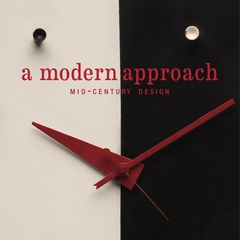
Mid-twentieth-century modern design balanced expression with efficiency and utility.
This image was posted on September 02, 2016.
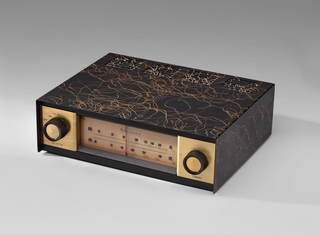
During the late 1940s, high-fidelity audio equipment progressed from floor standing, cabinet radios to scientifically designed, component-based systems.
This image was posted on February 01, 2019.
#1950sconsumer #1950s #vintage #radio #hifi #highfidelity #amplifier #amfm #1950sstyle #1950svintage #50s #fm #am #radios
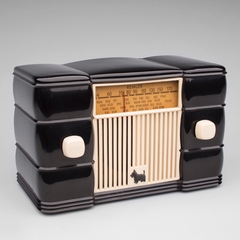
The Remler Company manufactured radio receivers in downtown San Francisco for more than three decades.
This image was posted on May 01, 2018.
#radiosfo #ontheradio #radio #radios #wireless #vintage #antique #vintageradios #transistorradio #portableradio #retroradio #retro #sfhistory
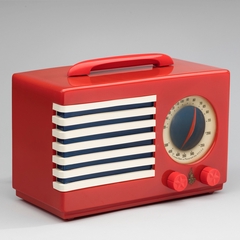
Described by Fortune magazine in 1936 as “the gaudy brother of somber Bakelite,” Catalin, the trade name for a cast-phenolic plastic made in a variety of brilliant colors, was first used to make smaller items such as bracelets, chess pieces, and buckles.
This image was posted on May 10, 2018.
#radiosfo #catalin #plastics #bakelite #resin #ontheradio #radio #radios #wireless #vintage #antique #vintageradio #portableradio #retroradio #retro #normanbelgeddes #modernism #design
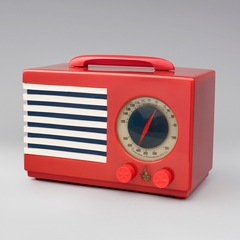
Described by Fortune magazine in 1936 as “the gaudy brother of somber Bakelite,” Catalin, the trade name for a cast-phenolic plastic made in a variety of brilliant colors, was first used to make smaller items such as bracelets, chess pieces, and buckles.
This image was posted on May 10, 2018.
#radiosfo #catalin #plastics #bakelite #resin #ontheradio #radio #radios #wireless #vintage #antique #vintageradio #portableradio #retroradio #retro #normanbelgeddes #modernism #design
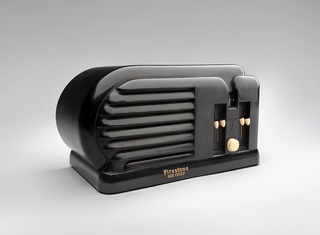
During the 1930s and ‘40s, as new forms of entertainment were electronically transmitted along radio waves from venues and broadcast stations to the public in their homes, the streamline designs of radios further conveyed the idea of technological progress.
This image was posted on May 28, 2019.
#streamlinesaesthetics #streamline #design #industrialdesign #avgeek
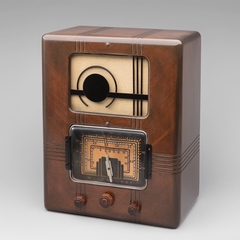
Think back to a time when families would gather around the radio to hear the news, weather, and their favorite radio programs.
This image was posted on May 14, 2018.
#radiosfo #ontheradio #radio #radios #wireless #vintage #antique #vintageradios #transistorradio #portableradio #retroradio #retro #design
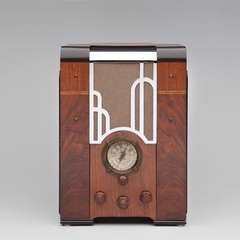
During the 1930s, the finest radio sets were influenced by popular aesthetic movements such as Art Deco, with designs rendered in streamlined and asymmetrical shapes.
This image was posted on August 07, 2018.
#radiosfo #ontheradio #radio #radios #wireless #vintage #antique #vintageradios #transistorradio #portableradio #retroradio #retro #artdeco