
loading image

The aquatint technique was introduced to England from France in the mid-eighteenth century. Aquatints, which resemble watercolors, were an affordable alternative to original paintings. This image was taken from the first volume of Oriental Scenery. The structures depicted in the aquatint, built under Firuz Shah Tughlaq (r. 1351–88) are no longer extant. Firuz Shah Tughlaq, noted for his passion for building, ruled during the Tughlaq Dynasty (1320-1413), which oversaw the Delhi Sultanate, a Muslim kingdom in and around Delhi, for most of the fourteenth century.
This image was posted on October 27, 2016.
Similar Instagram posts
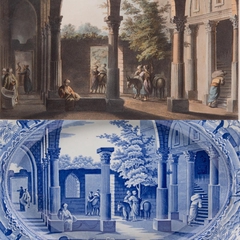
Spode Pottery introduced their Caramanian series around 1809.
This image was posted on November 01, 2016.
#painting #blueandwhite #ceramics #pottery #aquatint #transferware #spode #caramanian
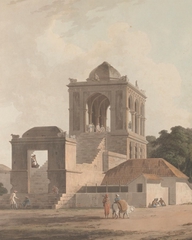
Before the advent of photography, a number of superbly illustrated books made by Western travelers and artists in the early nineteenth century helped fuel the public’s fascination with foreign locales.
This image was posted on March 18, 2020.
#zuberscenicwallpaper #wallpaper #zuber #scenicwallpaper #interiordesign #museumfromhome #design #wallpaperwednesday
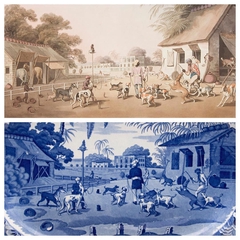
These are your last few weeks to see "From #PrintToPlate: Views of the East on Transferware" featuring features blue-and-white wares made by Spode and a number of other British potters and prints of scenes of famous architectural views from the East.
This image was posted on March 13, 2017.
#printtoplate: #transferware" #blueandwhite #staffordshire
This image was posted on September 22, 2016.
#fromprinttoplate #transferware #staffordshire #blueandwhite
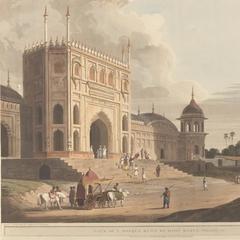
“Gate of a Mosque Built by Hafiz Ramut, Pillibeat” from the book "Oriental Scenery" appears on the aquatint displayed here.
This image was posted on December 28, 2016.
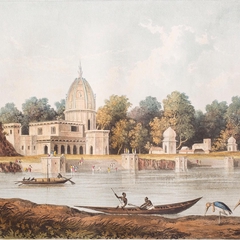
Charles Ramus Forrest created drawings of his travels in India between 1807 and 1808; they were published in "A Picturesque Tour along the Rivers Ganges and Jumna in India" in 1824.
This image was posted on February 02, 2017.
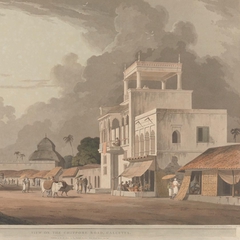
This illustration is from the second part of "Oriental Scenery" by Thomas and William Daniell, published from 1795 to 1807.
This image was posted on January 24, 2017.
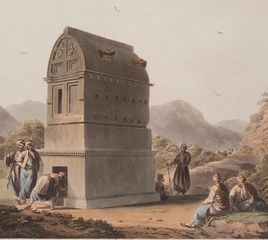
The Turquoise Coast, in southwest Turkey, was home to the Ancient Lycians.
This image was posted on February 13, 2017.