
loading image

The Turquoise Coast, in southwest Turkey, was home to the Ancient Lycians. Because Lycians lived between the Greek, Roman, and Near Eastern worlds, they intermingled with and absorbed elements from each of these cultures. Homer’s Iliad mentions the Lycians as allies of the Trojans. The Lycians left behind some truly extraordinary funerary architecture in the form of carved stone tombs and sarcophagi. Sarcophagi probably served as the predominant method of burial in the Hellenistic and Roman periods. These tombs attracted great attention after Westerners began documenting them in the early nineteenth century. Examples of their sarcophagi can be found on the plates and soup tureen displayed here. Sarcophagi consist of a base, a burial chamber, and an arched lid. The funerary art the Lycians left behind still remains in Lycia and is akin to an open-air museum today. All objects and images are from the collection of Michael Sack. "From #PrintToPlate: Views of the East on Transferware" is on display, every day, 24 hours a day, pre-security, in the International Terminal. http://bit.ly/PrintToPlate
This image was posted on February 13, 2017.
Similar Instagram posts
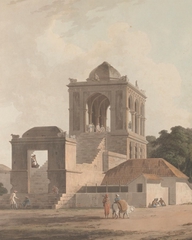
Before the advent of photography, a number of superbly illustrated books made by Western travelers and artists in the early nineteenth century helped fuel the public’s fascination with foreign locales.
This image was posted on March 18, 2020.
#zuberscenicwallpaper #wallpaper #zuber #scenicwallpaper #interiordesign #museumfromhome #design #wallpaperwednesday
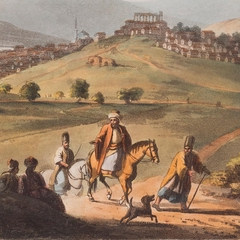
Luigi Mayer (1755–1803) grew up in Rome and later traveled throughout the Ottoman Empire between 1776 and 1794.
This image was posted on October 13, 2016.
#printtoplate: #transferware", #blueandwhite #staffordshire #spode
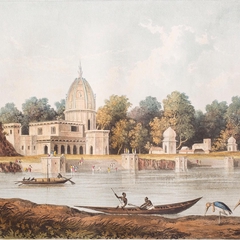
Charles Ramus Forrest created drawings of his travels in India between 1807 and 1808; they were published in "A Picturesque Tour along the Rivers Ganges and Jumna in India" in 1824.
This image was posted on February 02, 2017.
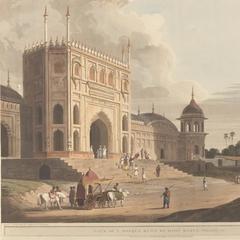
“Gate of a Mosque Built by Hafiz Ramut, Pillibeat” from the book "Oriental Scenery" appears on the aquatint displayed here.
This image was posted on December 28, 2016.
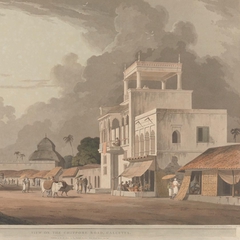
This illustration is from the second part of "Oriental Scenery" by Thomas and William Daniell, published from 1795 to 1807.
This image was posted on January 24, 2017.
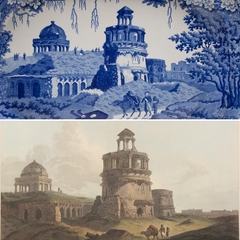
The aquatint technique was introduced to England from France in the mid-eighteenth century.
This image was posted on October 27, 2016.
#printtoplate: #transferware" #blueandwhite #design #transferware #aquatints