
loading image

In the early 1930s, the United States government commissioned a group of photographers under the Farm Security Administration (FSA) to document the daily lives, working conditions, and plight of Americans during the Great Depression and into World War II. Many of the resulting photographs, such as Dorothea Lange (1895–65)’s image of the migrant mother, Florence Owens Thompson, would become iconic of the era and engrained in the nation’s collective consciousness. While the 1930s are often remembered in black and white, the decade also marked the advent of Kodachrome, Kodak’s first commercially available color-positive film. At the time, color photography was largely considered a medium of advertising and commerce. Artists and documentarians had their reservations about using it—the film was difficult to work with, and the developing process was complicated and expensive. While working for the FSA, later the Office of War Information (OWI), a number of photographers including Jack Delano (1914–97) and Russell Lee (1903–86) began experimenting with the use of Kodachrome in the field, producing an archive of approximately sixteen hundred photographs between 1939 and 1945. Rendered in the rich detail and brilliant hues of Kodak’s early transparency sheet-film, the photographs in this exhibition offer a vivid glimpse of America during a period of economic recovery and industrial growth. "America in Color: 1940–1943" by photographers under the Farm Security Administration (FSA) is on display, pre-security, in Terminal 2. http://bit.ly/2CQdypZ
This image was posted on January 14, 2018.
Similar Instagram posts
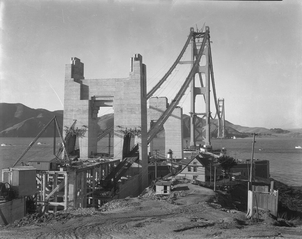
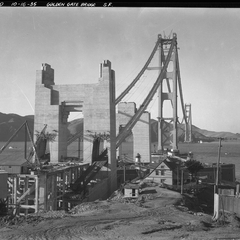
This image was posted on November 06, 2015.
#sfhistory
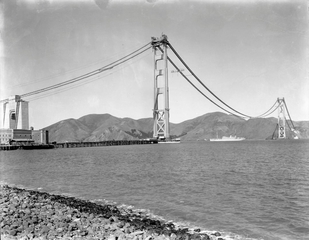
Happy Birthday to the Golden Gate Bridge!
This image was posted on May 27, 2020.
#sfhistory #goldengatebridge #museumfromhome
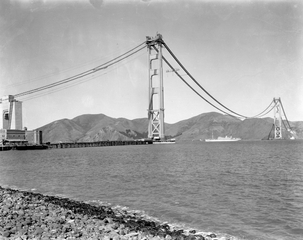
#Onthisday in 1933 construction on the Golden Gate Bridge began.
This image was posted on January 05, 2021.
#goldengatebridge #museumfromhome
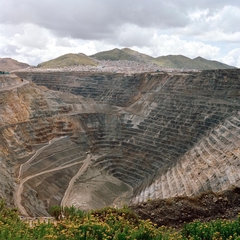
In his ongoing series, "El Muqui", Paccarik Orue draws focus on Cerro de Pasco, a historical mining city located fourteen thousand feet above sea level in the Peruvian Andes.
This image was posted on November 26, 2017.
#lima #peru #elmuqui #zink #mining #peruvian #fineart #fineartphotography #fineartphotos #photography #photographer #eltajo #paccarikorue
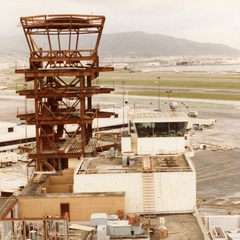
#TBT: Throwback to when the second Air Traffic Control Tower above Terminal 2 was being constructed; it replaced the first 1954 Air Traffic Control Tower (at right) and was completed in 1981.
This image was posted on May 26, 2016.
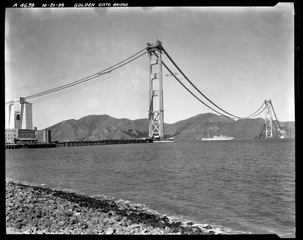
Construction of the Golden Gate Bridge, an internationally recognized symbol of San Francisco, started #onthisday in 1933.
This image was posted on January 05, 2023.
#sfhistory #sanfrancisco #goldengatebridge
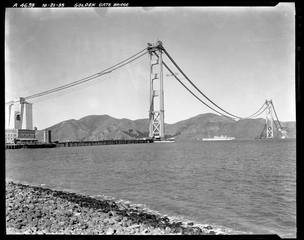
The Golden Gate Bridge is an internationally recognized symbol of San Francisco.
This image was posted on January 05, 2019.
#sfhistory #goldengatebride #bridge #goldengate