
loading image

Insects with bright, high-contrast colors are often noxious and do not taste good, or may bite, or sting. They evolved these repellant color patterns as a result of predators easily recognizing the brightly colored individuals in the population. In some places, several different kinds of noxious insects have evolved similar repellant color patterns. Referred to as Müllerian mimicry, this allows predators to learn to quickly identify these patterns and to avoid the untasty insect. Some palatable insects have evolved color patterns similar to the noxious species. Called Batesian mimicry, these imposters trick visual predators into thinking they will taste bad. For this mimicry to work, there needs to be more models than mimics in the area. See “The Intriguing World of Insects” on display, pre-security, in the International Terminal. http://bit.ly/IntriguingInsects
This image was posted on June 06, 2019.
Similar Instagram posts
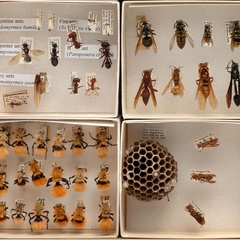
Bees, wasps, and ants all belong to the order Hymenoptera, meaning membranous wings.
This image was posted on October 31, 2019.
#intriguinginsects #worldofinsects #insects #entomology #berkeley #ucberkeley
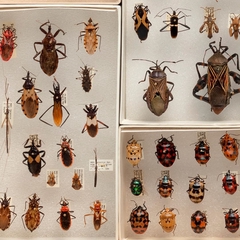
When you say “bug” to entomologists, they assume you mean a true bug—an insect in the order Hemiptera.
This image was posted on July 22, 2019.
#intriguinginsects #worldofinsects #insects #entomology #berkeley #ucberkeley #truebugs #bugs #hemiptera #museum
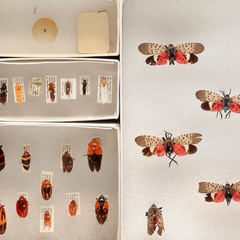
When you say “bug” to entomologists, they assume you mean a true bug—an insect in the order Hemiptera.
This image was posted on July 22, 2019.
#intriguinginsects #worldofinsects #insects #entomology #berkeley #ucberkeley #truebugs #bugs #hemiptera #museum
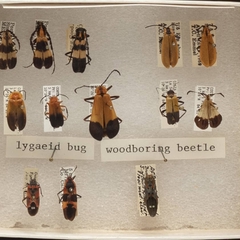
Insects with bright, high-contrast colors are often noxious and do not taste good, or may bite, or sting.
This image was posted on June 06, 2019.
#intriguinginsects #worldofinsects #insects #entomology #berkeley #ucberkeley #mimicry #müllerian #batesianmimicry
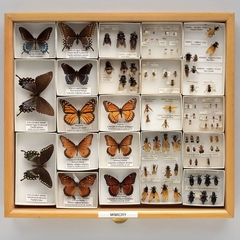
Insects with bright, high-contrast colors are often noxious and do not taste good, or may bite, or sting.
This image was posted on June 06, 2019.
#intriguinginsects #worldofinsects #insects #entomology #berkeley #ucberkeley #mimicry #müllerian #batesianmimicry
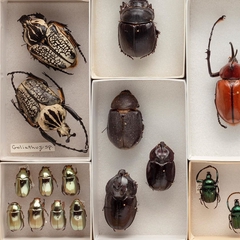
Dung beetles, June bugs, chafers, and scarabs all belong to the beetle family Scarabaeidae.
This image was posted on August 15, 2019.
#intriguinginsects #worldofinsects #insects #entomology #scarabaeidae #dungbeetles #beetles #beetle
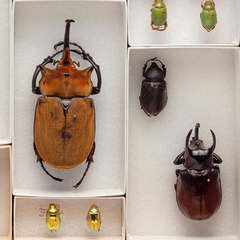
Dung beetles, June bugs, chafers, and scarabs all belong to the beetle family Scarabaeidae.
This image was posted on August 15, 2019.
#intriguinginsects #worldofinsects #insects #entomology #scarabaeidae #dungbeetles #beetles #beetle
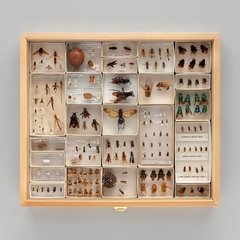
Bees, wasps, and ants all belong to the order Hymenoptera, meaning membranous wings.
This image was posted on October 31, 2019.
#intriguinginsects #worldofinsects #insects #entomology #berkeley #ucberkeley
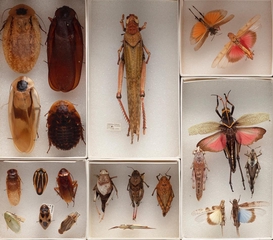
The only kind of bugs we want to see in a museum are those that are going on display!
This image was posted on April 09, 2019.
#insects #worldofinsects #intriguinginsects #entomology #insect #bugs