
loading image

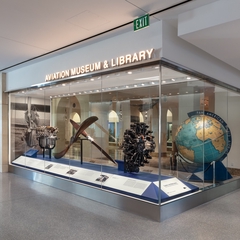
Beginning with the 1903 Wright Flyer, lightweight aircraft engines made of aluminum were vital to the advancement of aviation. The Pratt & Whitney R-985 Wasp Junior is a nine-cylinder, air-cooled radial engine. It was developed as a smaller version of the R-1340 Wasp radial, Pratt & Whitney’s first engine introduced in the late 1920s. The Wasp Junior was designed for the mid-size engine market and was installed in numerous civil, commercial, and military aircraft. Louise Thaden (1905–1979) and Blanche Noyes (1900–1981) won the 1936 Bendix air race trophy in a Beechcraft Model C17R Staggerwing powered by a Wasp Junior engine. The Wasp Junior was constructed of a combination of aluminum and steel. The cylinder barrels were machined from steel, while the heads were cast from aluminum. The flat-head, full skirt type pistons were machined from aluminum forgings, and the crankcase was also forged from aluminum. "Aluminum: The Miracle Metal of Aviation" is on display, pre-security, in the Aviation Museum and Library in the International Terminal. http://bit.ly/AviationAluminum
This image was posted on June 20, 2019.
Similar Instagram posts
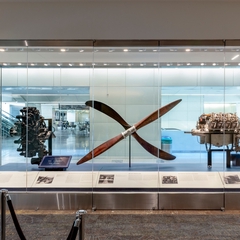
Micarta is a plastic compound first developed around 1910 by George Westinghouse (1846–1914).
This image was posted on February 21, 2023.
#enduranceengines #avgeek #aviationhistory
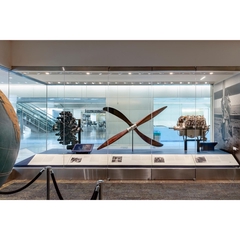
Flown by Australian pilots Charles Kingsford Smith (1897–1935) and Charles Ulm (1898–1934), with navigation and radio operations performed by American crew members Harry Lyon (c.
This image was posted on October 05, 2022.
#enduranceengines #avgeek #aviationhistory #airplane
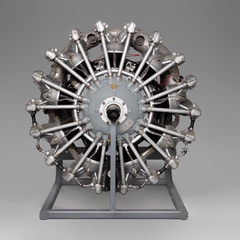
Beginning with the 1903 Wright Flyer, lightweight aircraft engines made of aluminum were vital to the advancement of aviation.
This image was posted on June 20, 2019.
#aviationaluminum #aluminum #design #industrialdesign #avgeek #engine #radialengine
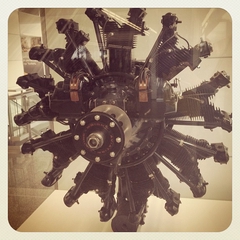
If you're not an #aviation engineer or #AVgeek, this could look modern.
This image was posted on May 18, 2012.
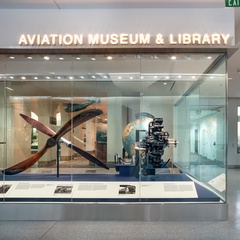
In 1917, Katherine Stinson asked Glenn Curtiss to build a new exhibition aircraft for her.
This image was posted on January 24, 2023.
#enduranceengines #avgeek #aviationhistory #katherinestinson
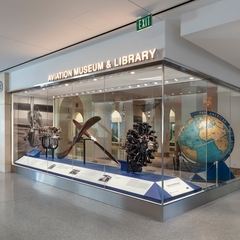
Born in Fort Payne, Alabama, Katherine Stinson (1891-1977) was the fourth woman in the United States to obtain a pilot’s certification.
This image was posted on March 28, 2023.
#enduranceengines #womenshistorymonth
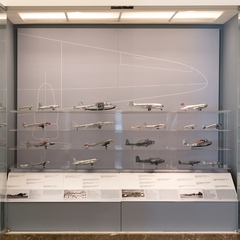
The Lockheed Model 12 Electra was similar to the Model 10 Electra in design, but smaller and faster.
This image was posted on April 26, 2018.
#aviationevolutions #jimlund #lockheed #electra #continental #avgeek #avationgeek #aviation #aviationhistory #aviationlovers #vintageaviation #history #avhistory #aviationgeeks #instaplane #flying #modelplane #flight #airline #avgeeks #aviation4u #aviationdaily #modelaircraft #airplane #aircraft
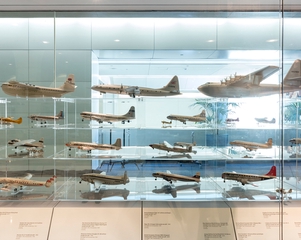
The Convair 240 was the first postwar commercial airliner developed by the Consolidated Vultee Company, or Convair, of San Diego.
This image was posted on July 18, 2018.
#aviationevolutions #jimlund #avgeek #avationgeek #aviation #aviationhistory #vintageaviation #history #avhistory #aviationgeeks #modelplane #avgeeks #modelaircraft #airplane #aircraft #convair #convair240
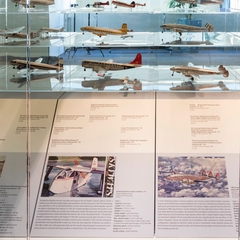
Designed by Republic Aircraft’s test pilot and engineer Percival Hopkins "Spence" Spencer, the RC-3 Seabee was an all-metal, single-engine, sport amphibian aircraft introduced in 1946.
This image was posted on May 17, 2018.
#aviationevolutions #jimlund #republic #seabee #amphibian #avgeek #avationgeek #aviation #aviationhistory #vintageaviation #history #avhistory #aviationgeeks #modelplane #avgeeks #modelaircraft #airplane #aircraft
Harold McMillan Bixby, a midwestern businessman with a strong interest in the emerging technology of aviation, worked for Pan American Airways in the 1930s to the 1950s.
This image was posted on December 29, 2023.
#bixbycollection #panam #paa #avgeek #haroldbixby
This post mentions the following things involved with the SFO Museum collection:
Aluminum: The Miracle Metal of Aviation
This aviation exhibition was on display between March 2019 and 2017~ in the AML Aviation Museum Gallery 01 gallery, located in International Terminal
Aluminum: The Miracle Metal of Aviation
This aviation exhibition was on display between 2017~ and July 2019 in the AML Aviation Museum Gallery 01 gallery, located in International Terminal