
loading image

American Modern Gothic furnishings evolved from the nineteenth-century English design reform movement in England. English proponents such as Charles Locke Eastlake (1836¬–1906) and Bruce J. Talbert (1838–81) advocated for “honest” furniture construction with discernible joinery, simple finishes, quality materials, and modern adaptations of medieval motifs. Talbert’s influential publication Gothic Forms Applied to Furniture, Metal Work, and Decoration for Domestic Purposes (1867) showed furniture in modern medieval-style interiors, which served as a resource for American designers and consumers. The 1876 Centennial International Exhibition in Philadelphia further encouraged the novel style. Modern Gothic furniture commonly features carved architectural elements in the Gothic fashion such as pointed arches, crockets and finials, and scrolling leafage. “The Style of Display: Victorian Pedestals” is on display pre-security in the International Terminal. http://bit.ly/VictorianPedestals
This image was posted on July 01, 2019.
Similar Instagram posts
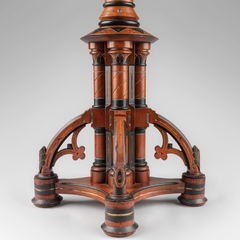
American Modern Gothic furnishings evolved from the nineteenth-century English design reform movement in England.
This image was posted on July 01, 2019.
#victorianpedestals #victorian #pedestals #victorianfurniture #victoriana #design #decorativeart #interiorstyle
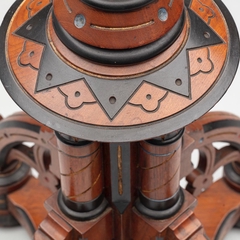
American Modern Gothic furnishings evolved from the nineteenth-century English design reform movement in England.
This image was posted on July 01, 2019.
#victorianpedestals #victorian #pedestals #victorianfurniture #victoriana #design #decorativeart #interiorstyle
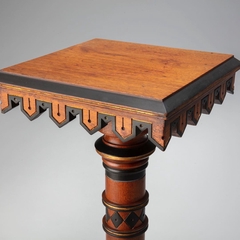
American Modern Gothic furnishings evolved from the nineteenth-century English design reform movement in England.
This image was posted on July 01, 2019.
#victorianpedestals #victorian #pedestals #victorianfurniture #victoriana #design #decorativeart #interiorstyle
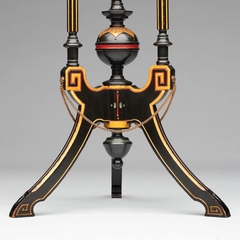
In response to the Victorians’ love of collecting and eclectic display, furniture firms also produced smaller, shorter stands to display all manner of items—from plants, vases, and candleholders to smoking paraphernalia.
This image was posted on December 02, 2019.
#victorianpedestals #victorian #pedestals #victorianfurniture #victoriana #design #decorativeart #interiorstyle
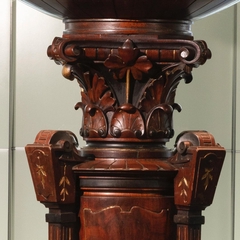
Renaissance Revival, the most ubiquitous furniture style following the Civil War, drew inspiration from the Renaissance of the fifteenth and sixteenth centuries as well as from the classical world.
This image was posted on October 18, 2019.
#victorianpedestals #victorian #pedestals #victorianfurniture #victoriana #design #decorativeart #interiorstyle #renaissancerevival #renaissance
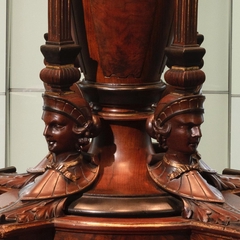
Renaissance Revival, the most ubiquitous furniture style following the Civil War, drew inspiration from the Renaissance of the fifteenth and sixteenth centuries as well as from the classical world.
This image was posted on October 18, 2019.
#victorianpedestals #victorian #pedestals #victorianfurniture #victoriana #design #decorativeart #interiorstyle #renaissancerevival #renaissance
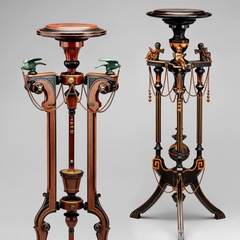
In response to the Victorians’ love of collecting and eclectic display, furniture firms also produced smaller, shorter stands to display all manner of items—from plants, vases, and candleholders to smoking paraphernalia.
This image was posted on December 02, 2019.
#victorianpedestals #victorian #pedestals #victorianfurniture #victoriana #design #decorativeart #interiorstyle