
@SFOMuseum Twitter Posts Tagged storyofarhoolie This is SFO Museum's archive of the @SFOMuseum Twitter account. There are 59 posts and this is page 3 of 5. See all the tags or all the Twitter posts that have been archived so far.
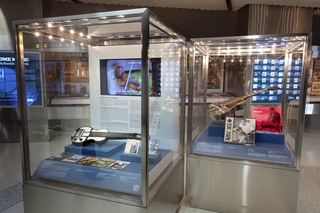
"Down-Home Music: The Story of #Arhoolie Records" is on display, post-security, in Terminal 2. https://t.co/LZ46UL9SuX #StoryofArhoolie
This tweet was posted on January 16, 2019.
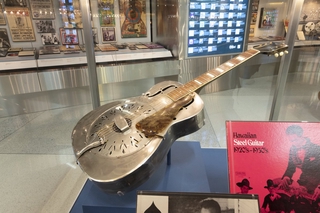
By the 1920s and ’30s, steel-guitar playing had become popular in the United States. The instrument is typically played horizontally rather than upright. #StoryofArhoolie
This tweet was posted on January 16, 2019.
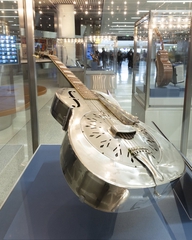
The lap steel guitar was developed in Hawai’i and is attributed to an adolescent named Joseph Kekuku (1874–1932). He began playing a regular guitar on his lap and sliding a piece of metal along its strings. #StoryofArhoolie
This tweet was posted on January 16, 2019.
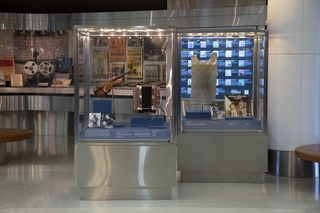
"Down-Home Music: The Story of Arhoolie Records" is on display, post-security, in Terminal 2. https://t.co/LZ46UL9SuX #StoryofArhoolie #Arhoolie
This tweet was posted on January 03, 2019.
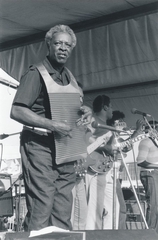
Cleveland Chenier, considered the most innovative and accomplished rubboard player, beat and scraped the instrument with bottle openers—six on each hand—to create varied sounds. #StoryofArhoolie #Arhoolie
This tweet was posted on January 03, 2019.
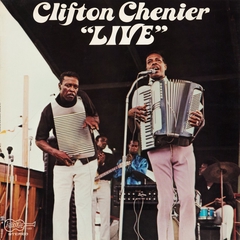
Although Cleveland Chenier was not the first to play a rubboard, his younger brother Clifton was the first to design this instrument to fit like a vest over his chest, a style which came to be emulated by other zydeco musicians who followed after him. #StoryofArhoolie #Arhoolie
This tweet was posted on January 03, 2019.
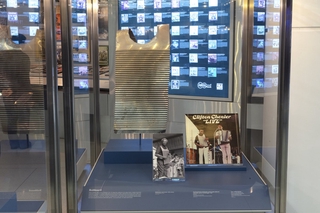
Cleveland Chenier, the older brother of the "King of Zydeco" Clifton Chenier, played the rubboard in Clifton's zydeco band. The rubboard is a rhythm instrument made from a corrugated steel board. #StoryofArhoolie #Arhoolie
This tweet was posted on January 03, 2019.
A unique form of #gospel music, #SacredSteel music features lap and pedal steel #guitars. Developed in the 1930s by members of the House of God, music serves as an integral part of their church services. #StoryofArhoolie #Arhoolie https://t.co/ZxjCgBFJob
This tweet was posted on December 19, 2018.
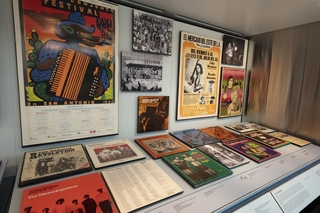
"Down-Home Music: The Story of Arhoolie Records" is on display, post-security, in Terminal 2. https://t.co/LZ46ULrtmv #StoryofArhoolie #Arhoolie
This tweet was posted on December 05, 2018.
Sisters María and Juanita Mendoza were born in Monterrey, Mexico. Although their sister Lydia would become the most famous member of the family, Juanita and María also achieved acclaim as the duet Las Hermanas Mendoza beginning in the 1950s. #storyofarhoolie #arhoolie https://t.co/EDCgYBVsC1
This tweet was posted on December 05, 2018.
In 1934, #LydiaMendoza recorded her most famous ballad, “Mal Hombre” (Bad Man). Many of her songs explore dark themes of heartbreak and suffering. #StoryofArhoolie https://t.co/3G6HP708Ei
This tweet was posted on November 29, 2018.
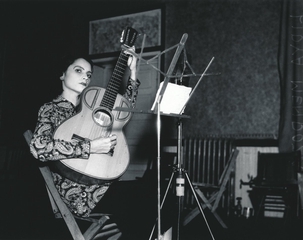
#LydiaMendoza (1916–2007), the first true star of Tejano music, was born in Houston to Mexican parents who fled the Mexican Revolution for South Texas. #StoryofArhoolie
This tweet was posted on November 29, 2018.