
@SFOMuseum Twitter Posts Tagged pineappletopina This is SFO Museum's archive of the @SFOMuseum Twitter account. There are 52 posts and this is page 4 of 5. See all the tags or all the Twitter posts that have been archived so far.
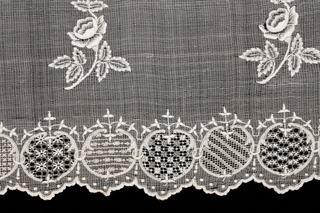
Extremely fine calado entails pulling together selected fibers from the fabric to create uniform open areas in the weave; areas may then be embellished by embroidery to create a variety of geometric patterns. #PineappletoPina #piña #pineapple #lace
This tweet was posted on June 07, 2022.
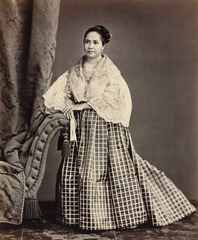
The two most spectacular forms of piña handwork include calado (pullwork) and sombrado (appliqué). Design motifs on piña include leaves, vines, birds, flowers, and butterflies. #PineappletoPina #piña #pineapple #lace
This tweet was posted on June 07, 2022.
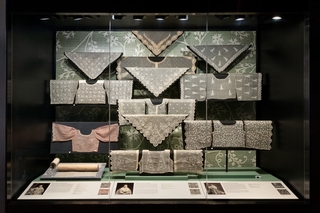
See "From Pineapple to Piña: A Philippine Textile Treasure" on display, post-security, in Harvey Milk Terminal 1 and online at: https://t.co/WWq06Yg2xJ
#PineappletoPina #piña #pineapple #lace #fashion #design #Phillipines
This tweet was posted on May 23, 2022.
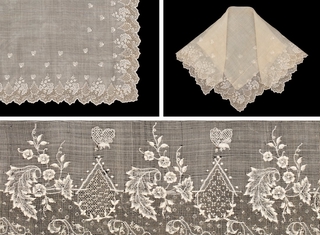
Pañuelos, likely inspired by shawls, provided protection from the sun as well as modesty due to the camisa’s sheerness and low neckline. Simultaneously, they served as the most decorative accents due to their lavish handwork embellishments. #PineappletoPina #piña
This tweet was posted on May 23, 2022.
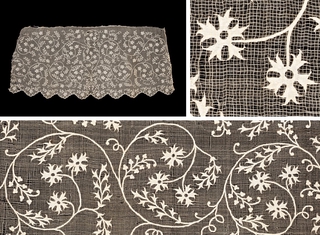
The blouse or camisa, featured bell-shaped sleeves or “angel wings,” and were often temporarily basted onto a camisa when worn, and then dismantled for washing, ironing, and flat storage. #PineappletoPina #piña
This tweet was posted on May 23, 2022.
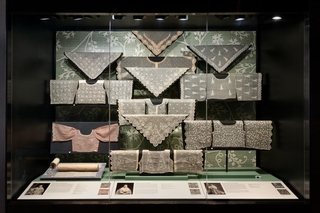
The ensemble consisted of a blouse or camisa, a long skirt or saya, and a pañuelo or square piece of cloth folded several times and placed over the shoulders. A tapis, or overskirt, completed the outfit.
#PineappletoPina #piña
This tweet was posted on May 23, 2022.
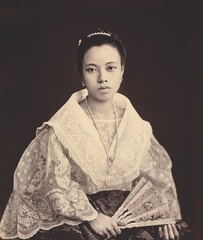
The María Clara, a light and airy ensemble, was worn by women for formal occasions in the Philippines in the late nineteenth century. #PineappletoPina #piña
This tweet was posted on May 23, 2022.
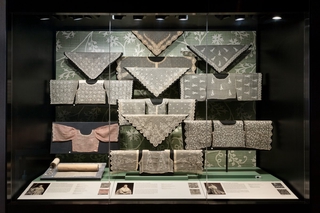
See "From Pineapple to Piña: A Philippine Textile Treasure" on display, post-security, in Harvey Milk Terminal 1 and online at: https://t.co/WWq06Yg2xJ
#PineappletoPina #pineapple #lace #fashion #design #Phillipines
This tweet was posted on May 10, 2022.
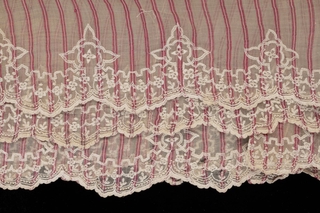
Today, most fabric is embroidered by artisans in Manila or Lumban, where entire families often work together as a freelance enterprise. Embroidery designs may take days, weeks, or months to complete depending on the intricacy of the designs. #PineappletoPina
This tweet was posted on May 10, 2022.
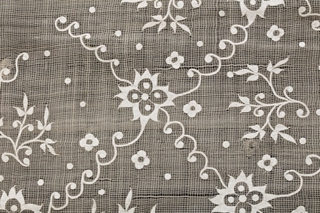
Early examples of piña exhibit high levels of intricate detail, requiring extreme patience and skill. Artisans mastered such an impressive array of styles and techniques that their works garnered praise and earned prizes in competitions from Manila to Madrid. #PineappletoPina
This tweet was posted on May 10, 2022.
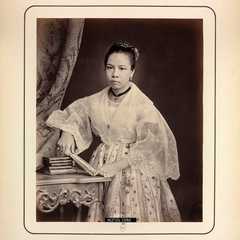
During Spanish colonization, young Filipina women acquired a Western education at convents, orphanages, and schools that were established throughout the Philippines. Female students learned all manner of needlework, from basic stitches to intricate embroidery. #PineappletoPina
This tweet was posted on May 10, 2022.
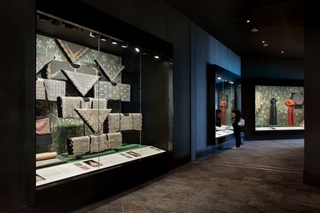
See "From Pineapple to Piña: A Philippine Textile Treasure" on display, post-security, in Harvey Milk Terminal 1 and online at: https://t.co/WWq06Yg2xJ
#PineappletoPina #pineapple #lace #fashion #design #Phillipines
This tweet was posted on April 26, 2022.