
@SFOMuseum Twitter Posts Tagged americanfolkart This is SFO Museum's archive of the @SFOMuseum Twitter account. There are 51 posts and this is page 3 of 5. See all the tags or all the Twitter posts that have been archived so far.
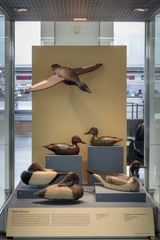
Duck decoy courtesy of the collection Paul A. Mazzilli. See "#AmericanFolkArt: An Enduring Legacy", on display, pre-security, in the International Terminal. https://t.co/fcyWpg2hGV
This tweet was posted on March 01, 2018.
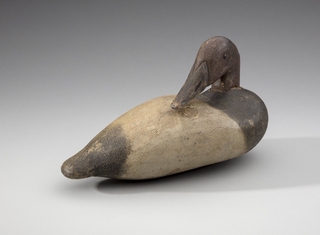
From coast to coast, various regions of North America developed distinctive types of decoys. Carvers made some decoys to appear sleeping, preening, or with their heads tucked low into their bodies as if resting. #AmericanFolkArt
This tweet was posted on March 01, 2018.
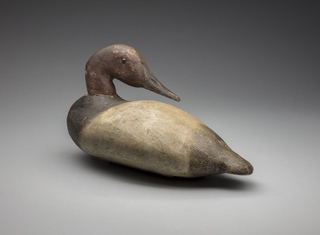
A decoy is a hunting tool intended to lure wild birds. Sometime in the late 1700s, European-Americans began carving duck decoys from wood. #AmericanFolkArt
This tweet was posted on March 01, 2018.
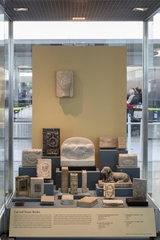
Books courtesy of the collection Ian Berke. See "#AmericanFolkArt: An Enduring Legacy", on display, pre-security, in the International Terminal. https://t.co/fcyWpg2hGV
This tweet was posted on February 16, 2018.
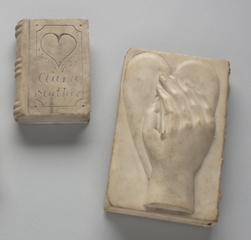
Stone books, usually carved in a closed position, are small, typically three- to six-inches in height. Marble, especially white, was used most often because it was readily available and easily carved. #AmericanFolkArt
This tweet was posted on February 16, 2018.
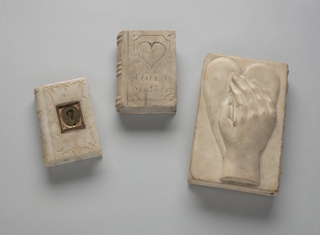
American carved stone books first appeared around 1860. Stonecutters, many of whom worked in gravestone shops, created these intriguing items in their leisure hours. #AmericanFolkArt
This tweet was posted on February 16, 2018.
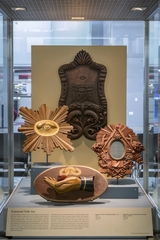
Plaque courtesy of the collection of Ian Berke. See "#AmericanFolkArt: An Enduring Legacy", on display, pre-security, in the International Terminal. https://t.co/fcyWpg2hGV
This tweet was posted on February 05, 2018.
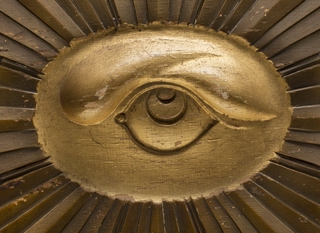
Members also decorated lodges with emblematic pieces, such as plaques and mirrors. The all-seeing eye is a common symbol to the Independent Order of Odd Fellows. #AmericanFolkArt
This tweet was posted on February 05, 2018.
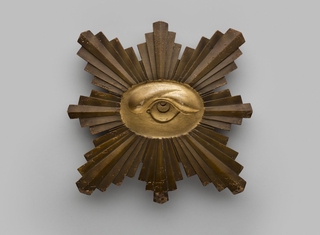
Fraternal organizations thrived in America in the nineteenth century. One of the prevalent groups, the Independent Order of Odd Fellows, provided camaraderie, engaged in various charitable causes, and encouraged the strengthening of moral character among members. #AmericanFolkArt
This tweet was posted on February 05, 2018.
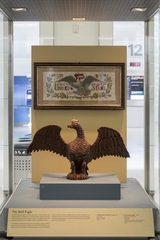
See "#AmericanFolkArt: An Enduring Legacy", on display, pre-security, in the International Terminal. https://t.co/fcyWpg2hGV
This tweet was posted on January 10, 2018.
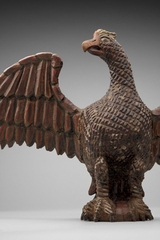
In southeastern #Pennsylvania, where wood was especially abundant, Wilhelm Schimmel, a German immigrant who came to the United States in the 1860s, became the most famous—or perhaps infamous—#carver in Cumberland County. #AmericanFolkArt
This tweet was posted on January 10, 2018.
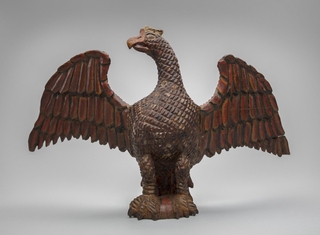
In 1782, Congress designated the bald eagle, unique to North America, as the national emblem. This imposing creature takes form in a variety of folk art, including wood carvings. #AmericanFolkArt
This tweet was posted on January 10, 2018.