
@SFOMuseum Twitter Posts Tagged EnduranceEngines This is SFO Museum's archive of the @SFOMuseum Twitter account. There are 26 posts and this is page 2 of 3. See all the tags or all the Twitter posts that have been archived so far.
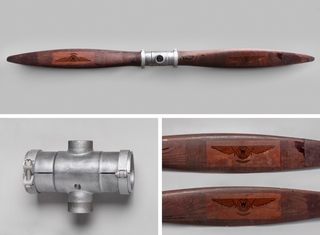
By the late 1920s, Westinghouse began producing single Micarta props that could be attached to a two-bladed metal hub. The hub was designed to be pitch-adjustable on the ground #EnduranceEngines
This tweet was posted on February 21, 2023.
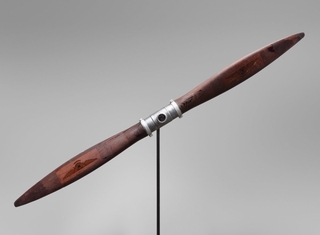
Micarta was used in a broad range of products requiring a high degree of durability. As early as 1918, the Westinghouse Company was producing Micarta propellers for the U.S. Army. #EnduranceEngines
This tweet was posted on February 21, 2023.
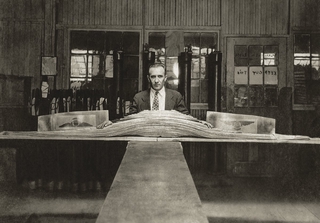
Micarta is a plastic compound first developed around 1910 by George Westinghouse. Initially, it was fabricated by interleaving layers of Bakelite plastic with either paper or fabric and formed into a desired shape in a mold with heat and pressure. #EnduranceEngines
This tweet was posted on February 21, 2023.
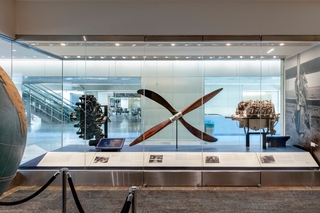
“Going the Distance: Endurance Aircraft Engines and Propellers of the 1910s and 20s” is on display pre-security in the Aviation Museum and Library and online at: https://t.co/DGnv8hSoAF
#EnduranceEngines #AvGeek #AviationHistory #airplane
This tweet was posted on October 05, 2022.
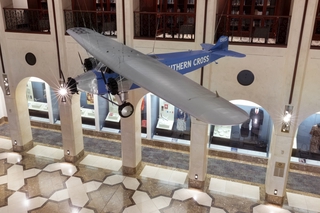
The airplane departed from Oakland, CA, on May 31, 1928, and flew first to O'ahu, then to Suva, Fiji, and continued on to Brisbane, Australia, landing on June 9th. The trip covered a total distance of 7,200 miles in 10 days at an average speed of 90mph. #EnduranceEngines
This tweet was posted on October 05, 2022.
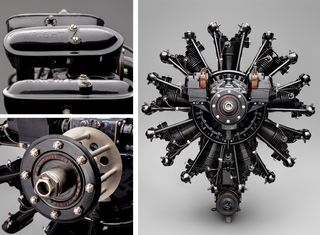
The Southern Cross was initially acquired as a salvaged aircraft. Reequipped with new Wright J-5 engines and the latest Micarta propellers, the plane was based and tested at Mills Field Municipal Airport of San Francisco (later @flySFO). #EnduranceEngines
This tweet was posted on October 05, 2022.
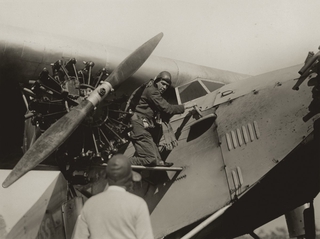
Flown by pilots Charles Kingsford Smith and Charles Ulm, with navigation & radio operations performed by Harry Lyon and James Warner, the Southern Cross, a Fokker F.VII, was the first aircraft to complete a transpacific crossing from North America to Australia. #EnduranceEngines
This tweet was posted on October 05, 2022.
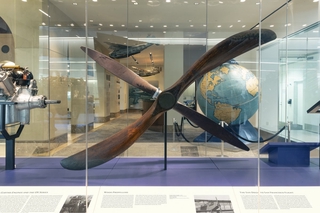
“Going the Distance: Endurance Aircraft Engines and Propellers of the 1910s and 20s” is on display, pre-security in the Aviation Museum and Library and online at: https://t.co/DGnv8hSoAF
#EnduranceEngines #AvGeek #AviationHistory
This tweet was posted on August 09, 2022.
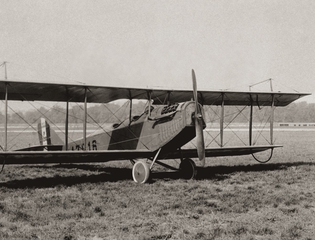
The Paragon Striker propeller on display was designed for use with a Curtiss OX-5 engine, like the one in this JN-4 Jenny, and was produced of oak by the American Propeller and Manufacturing Company (APMC), of Baltimore, Maryland. #EnduranceEngines #AvGeek
This tweet was posted on August 09, 2022.
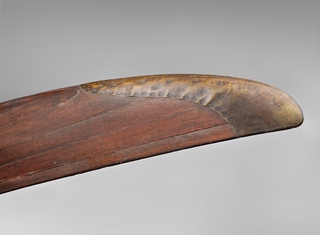
Often, a metal sheath was added to the leading edge of each aircraft propeller blade for extra durability. This helped protect the wood from damage by rocks and other debris that was common on the dirt airstrips of the 1910s and 20s. #EnduranceEngines #AvGeek
This tweet was posted on August 09, 2022.
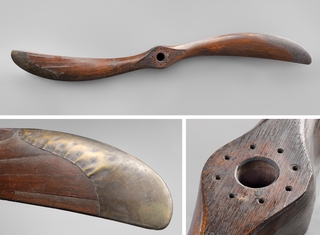
Initially, aircraft propellers were created from single pieces of wood. As propeller technology advanced, manufacturers began to laminate thin layers of wood together. This prevented warping and enhanced strength. #EnduranceEngines #AvGeek
This tweet was posted on August 09, 2022.
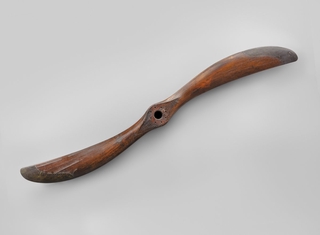
Aircraft propellers convert the power produced by the aircraft’s engine into thrust. Most early manufacturers produced fixed-pitch propellers from wood. Most wood propellers were constructed from hardwoods such as walnut, birch, oak, or mahogany. #EnduranceEngines #AvGeek
This tweet was posted on August 09, 2022.