
@SFOMuseum Twitter Posts Tagged Avgeek This is SFO Museum's archive of the @SFOMuseum Twitter account. There are 1,238 posts and this is page 42 of 104. See all the tags or all the Twitter posts that have been archived so far.
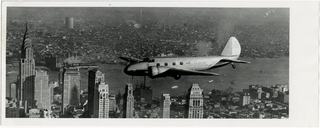
The twin-engine Boeing 247 was a revolutionary airliner when it entered into service with United Air Lines in 1933. Often hailed as the first modern airliner, it featured advancements like wing flaps, autopilot, and semi-retractable landing gear. #WingWednesday #avgeek
This tweet was posted on February 03, 2021.
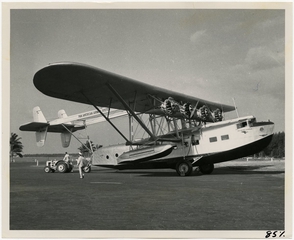
Although the Sikorsky S-40 served #PanAm well through the 1930s, it was often derided for its lack of aerodynamic efficiency due to its many struts and support wires. Charles Lindbergh famously referred to the aircraft as a “flying forest.” #WingWednesday #AvGeek
This tweet was posted on January 27, 2021.
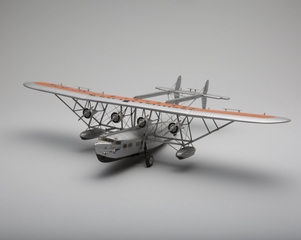
Only three Sikorsky S-40 were built, and these were the first to be named “Clipper Ships.” #PanAm introduced the aircraft in 1931, piloted by Charles A. Lindbergh on its Miami–Barranquilla route. #WingWednesday #AvGeek
This tweet was posted on January 27, 2021.
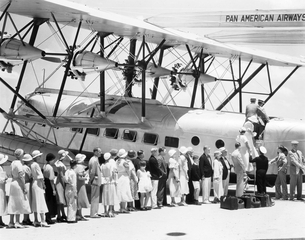
The Sikorsky S-40 was developed in response to requests from #PanAm president Juan T. Trippe for a high-capacity flying boat. With a cabin capable of carrying 38 passengers, it was nearly double the capacity of the airline’s next largest flying boat. #WingWednesday #AvGeek
This tweet was posted on January 27, 2021.
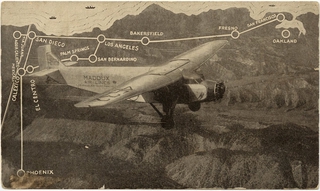
The all-metal Ford Tri-Motor, or “Tin Goose,” had a huge impact on commercial aviation in the late 1920s and 199 were produced. Shown here is a 4-AT Tri-Motor from Maddux Air Lines, a short-lived airline from the late 1920s based out of southern California. #WingWednesday #avgeek
This tweet was posted on January 20, 2021.
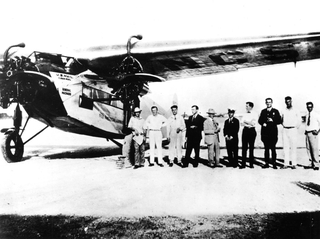
With a maximum speed of 130 mph, a cruising speed of just over 100mph, and a capacity of 8 passengers, the Fokker F.VII/3m trimotor was a groundbreaking aircraft of the late 1920s. #WingWednesday #avgeek
This tweet was posted on January 13, 2021.
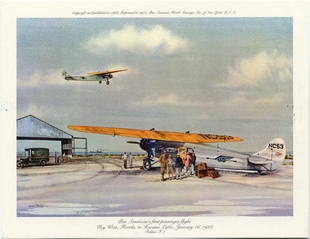
Introduced in 1925 and first operated by the Dutch airline KLM (Royal Dutch Airlines), the F.VII and its variants, the F.VIIa, F.VIIa/3m and F.VIIb/3m, were used in many pioneering and record-breaking flights around the world. #WingWednesday #avgeek
This tweet was posted on January 13, 2021.
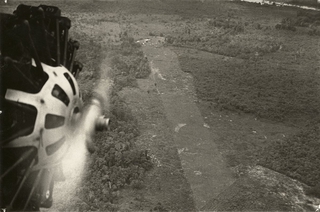
See “Pan American Airways in Central America” online at: https://t.co/cMoTZAe4Q1 #avgeek #MuseumFromHome
This tweet was posted on January 12, 2021.
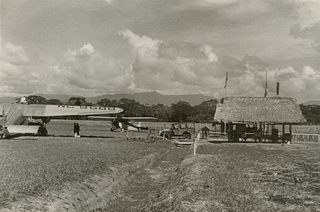
Pan American Airways’ public relations and advertising manager Daniel Rochford photographed the company’s routes through Central America, documenting the fledgling airlines’ foray into countries with marginal aviation infrastructure.
#avgeek #MuseumFromHome
This tweet was posted on January 12, 2021.
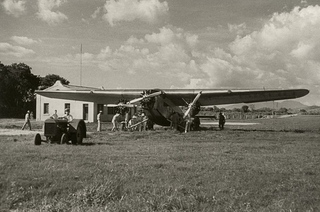
As the world grows more and more interconnected, can you imagine what it was like to fly around the world in the 1930s, when the aviation industry was just in its infancy? #avgeek #MuseumFromHome
This tweet was posted on January 12, 2021.
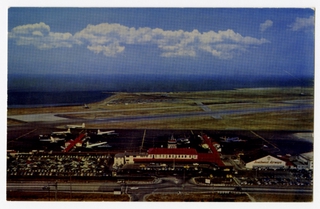
Each airport around the world is assigned a three-letter @IATA (International Air Transport Association) code to make them easily and quickly identifiable. San Francisco International Airport’s three letter code, SFO, first appeared in 1947. @flysfo #avgeek #MuseumFromHome
This tweet was posted on January 07, 2021.

Happy New Year from SFO Museum! As 2020 winds down, what are your wishes for 2021?
TranStar Airlines brochure
c. 1986
SFO Museum Collection
Gift of David Winckoski
2011.195.075
#avgeek #MuseumFromHome
This tweet was posted on December 31, 2020.