
@SFOMuseum Twitter Posts Tagged AVGeek This is SFO Museum's archive of the @SFOMuseum Twitter account. There are 1,238 posts and this is page 39 of 104. See all the tags or all the Twitter posts that have been archived so far.
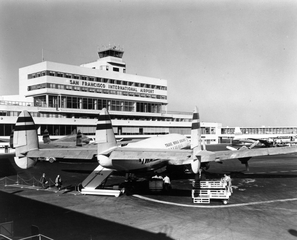
Introduced in 1951, the Lockheed L-1049 Super Constellation was an enhanced-range, stretched upgrade of the L-049 Constellation and was designed primarily to compete on transoceanic routes with the Douglas DC-6. #WingWednesday #avgeek
This tweet was posted on May 26, 2021.
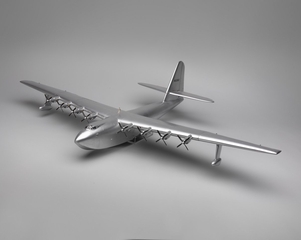
Despite the "spruce" nicknaming, the H-4 was actually constructed primarily of birch due to weight concerns and restrictions on the use of aluminum during WWII. Numerous delays prevented it from being completed before the end of the war. #WingWednesday #avgeek
This tweet was posted on May 05, 2021.
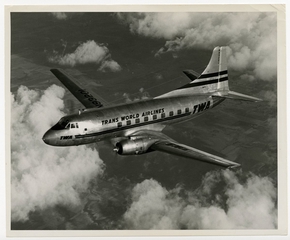
Though only 47 were built, the Martin 2-0-2 was flown by airlines such as Northwest Airlines, Pacific Air Lines, Trans World Airlines, and Allegheny Airlines. #WingWednesday #avgeek
This tweet was posted on April 28, 2021.
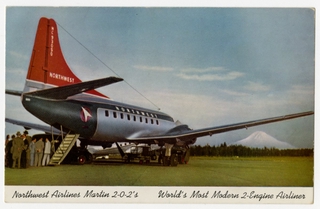
The unpressurized 2-0-2 had a capacity of 40 passengers and a maximum speed of 311 miles per hour, much faster than the DC-3. With a range of just over 600 miles, it was designed to compete with the Convair 240 on short domestic routes. #WingWednesday #avgeek
This tweet was posted on April 28, 2021.
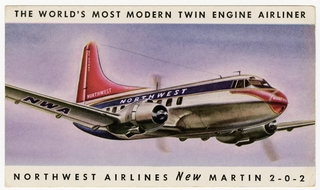
Developed by the Glenn L. Martin Company, the Martin 2-0-2 was intended to supersede the DC-3. Although early orders placed in 1945 were canceled due to production delays, the 2-0-2 was introduced into service by Northwest Airlines in October 1947. #WingWednesday #avgeek
This tweet was posted on April 28, 2021.
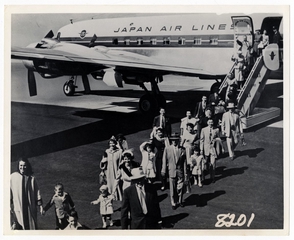
One of the most economical large propliners to operate during the postwar period and beyond, over 700 Douglas DC-6 were built and added to airline fleets worldwide. #WingWednesday #avgeek
This tweet was posted on April 21, 2021.
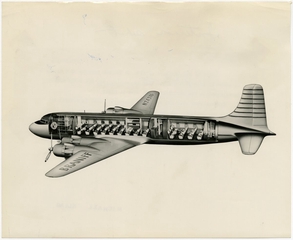
The passenger versions could feature luxuriously appointed cabin interiors with options for a lounge in the tail section and sleeper berth accommodations. #WingWednesday #avgeek
This tweet was posted on April 21, 2021.
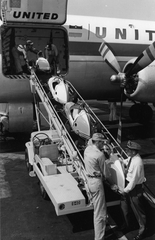
Later DC-6 variants had a longer fuselage, increased range, and higher weight capabilities, and include the DC-6A cargo-liner, the DC-6B passenger-liner, and the convertible cargo/passenger DC-6C. #WingWednesday #avgeek
This tweet was posted on April 21, 2021.
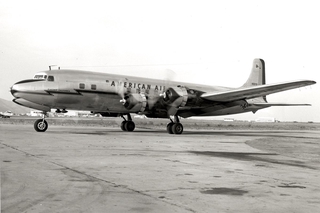
Introduced by United Air Lines and American Airlines in 1946, the DC-6 was the first new American-designed airliner to operate during the postwar years. #WingWednesday #avgeek
This tweet was posted on April 21, 2021.
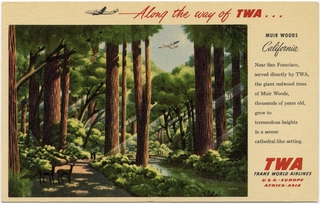
It's National Parks Week! The wonder, beauty, and magnificence of our country's national parks make them popular imagery in airline advertisements, even going back to the 1930s. #NationalParkWeek #AvGeek
This tweet was posted on April 20, 2021.
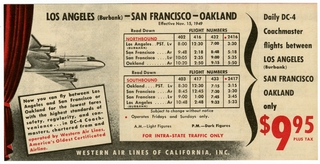
With its long range and capacity of up to eighty-six passengers, the DC-4 was crucial to advancing trans-ocean commercial aviation in the immediate postwar era. #WingWednesday #AvGeek
This tweet was posted on April 07, 2021.
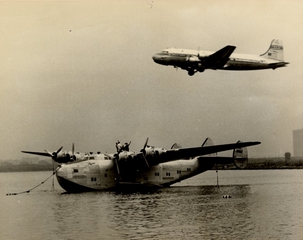
By late 1945, #PanAm realized the superiority of the DC-4 over the Boeing 314 flying boat and began to operate the airliner on both transpacific and transatlantic routes. #WingWednesday #avgeek
This tweet was posted on April 07, 2021.