
Search results for @a
Refine these results
There are 9,868 results for this query, grouped by the following types:
- tweet 4,409 results
- instagram 3,494 results
- image 990 results
- exhibition 458 results
- publicart 306 results
- waypoint 69 results
- gallery 38 results
- country 30 results
- boardingarea 17 results
- city 11 results
📸 pt. 2:
chandelier; May 1, 1937
1997.52.078.025
architectural drawing: Architectural Details; March 23, 1936
1997.52.025.05.02
interior, staircase; July 15, 1937
1997.52.078.017
interior, lobby, Dec. 24, 1937
1997.52.078.018 a
This tweet was posted on March 23, 2021.
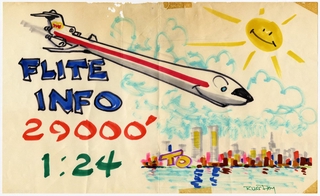
Colorful hand-made #TWA cabin welcome signs not only identified the crew and communicated other essential information to passengers as they came onboard, but they conveyed something far more memorable: a sense of hospitality, character, and trust. #AvGeek
This tweet was posted on March 30, 2021.
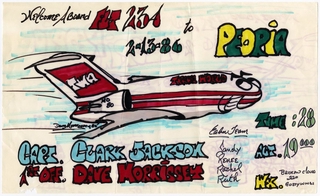
From every personal snapshot, video clip, and diary entry of an airline employee emerges a series of experiences supporting the broader story of commercial aviation. These unique perspectives can offer an alternative take on the official account of an airline. #AvGeek
This tweet was posted on March 30, 2021.
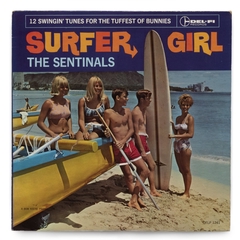
Hundreds of instrumental surf bands pressed a multitude of records, producing both regional and national hits. Album cover artwork and graphic design reflected California’s surfing culture and is a colorful reminder of the 1960s surf music scene. #InstrumentalSurf
This tweet was posted on March 26, 2021.
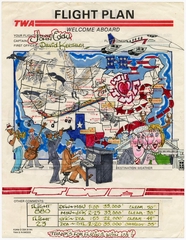
Read more about these drawings and how they continue to uphold the enduring legacy of #TWA's team of dedicated professionals in a new blog post: https://t.co/nB7AgHlCPl
#AvGeek
This tweet was posted on March 30, 2021.
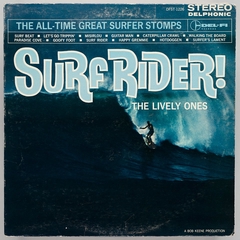
Surf groups backed their lead and rhythm guitar parts with a melodic bassline and a powerful rhythm section, sometimes with a saxophone included for additional intensity. #InstrumentalSurf
This tweet was posted on March 26, 2021.
The films take us from a celebration of Native American culture in the American Southwest to a walk through a Slovakian streetscape, and from the passion of a Haitian-born street dancer to an animated meditation on the potential for a romantic connection. https://t.co/L4nkcbBQBp
This tweet was posted on March 29, 2021.
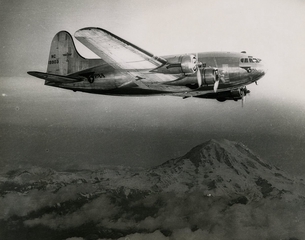
In 1934, Boeing began design studies for a four-engine bomber in conjunction with a four-engine civil airliner. The bomber version became the B-17 and was produced in large numbers. The civil airliner version emerged as the Model 307. #WingWednesday
This tweet was posted on March 31, 2021.
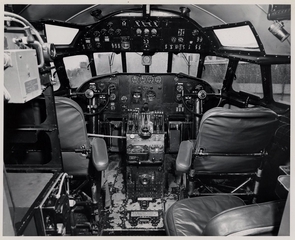
Named the “Stratoliner” for its ability to fly near the stratosphere, it had a circular cross-section and a tear-drop fuselage to handle pressurization. Only ten were produced: a prototype, three for Pan Am, five for TWA, and one for Howard Hughes. #WingWednesday
This tweet was posted on March 31, 2021.
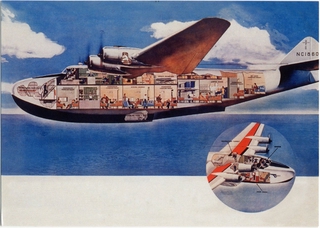
The largest and most luxurious of all of the flying boats, the Boeing 314 was called a flying hotel by journalists of the day. #WingWednesday #avgeek
This tweet was posted on March 17, 2021.
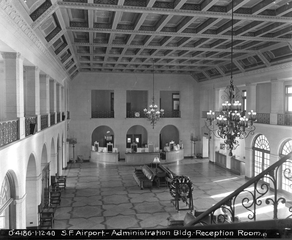
The new building included a 4-story control tower, meteorological observation platform, and weather department offices, in addition to a spacious passenger waiting room and numerous amenities. It was dedicated and opened to the public on October 24, 1937. #SFOHistory
This tweet was posted on March 16, 2021.
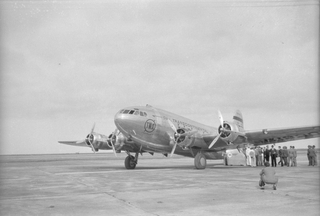
These days, it's common for planes to cruise at altitudes of 35,000 feet. But back in 1940, when the first pressurized commercial airliner, the Boeing 307 Stratoliner, was introduced, it was a marvel to fly above most weather disturbances at 20,000 feet. #WingWednesday
This tweet was posted on March 31, 2021.
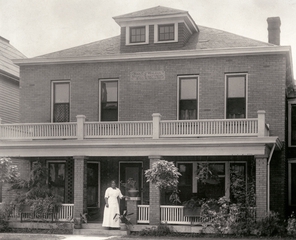
“I am a woman who came from the cotton fields of the South...and from there I promoted myself into the business of manufacturing hair goods and preparations. I have built my own factory on my own ground!”
—Madam C. J. Walker addressing the National Negro Business League, 1912
This tweet was posted on April 01, 2021.
📸 1/2:
TWA (Transcontinental & Western Air) Stratoliners at San Francisco Airport; early 1940s and 1946
Gifts of and photos by Charles Loomis
2005.062.008 a, 2005.062.011 a
Pan Am Stratoliner over Mt. Rainier; early 1940s
Gift of M.D. Klaas
2018.112.0658 a b
This tweet was posted on March 31, 2021.
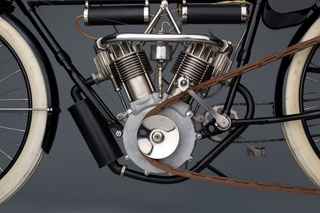
Amazingly, Curtiss clocked 136 miles-per-hour—the fastest speed anyone had achieved on a motorized vehicle—on the hard-packed sand before the motorcycle’s driveshaft broke while traveling over ninety miles-per-hour on the return run. #EarlyAmericanMotorcycles
This tweet was posted on March 19, 2021.
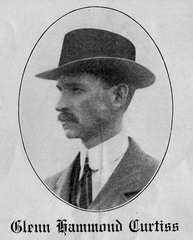
Before Glenn Curtiss (1878-1930) turned to aviation, he was one of the first to design motorcycles that significantly improved on their bicycle heritage. An avid cyclist and racer, he ran a small manufacturing and retail shop in NY in the late 1890s. #EarlyAmericanMotorcycles
This tweet was posted on March 19, 2021.
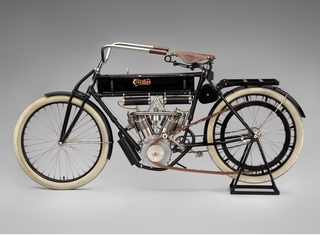
He soon dropped the Hercules name in favor of Curtiss and in January 1907, he entered a modified racing motorcycle fitted with the new V-8 aircraft engine at the Winter Speed Carnival in Ormond Beach, Florida. #EarlyAmericanMotorcycles
This tweet was posted on March 19, 2021.
In 1902, he advertised single-cylinder motorcycles, engines, and casting kits under the brand Hercules, and the next year he was winning races on a powerful new twin-cylinder machine. In 1904, Curtiss made a twin-cylinder Hercules capable of an impressive 5 to 50 miles-per-hour.
This tweet was posted on March 19, 2021.
San Francisco artist Dana Hemenway spoke with us during the fabrication and installation of her work, The Color of Horizons, which is a suspended lighted sculpture located at the southern end of Harvey Milk Terminal 1. https://t.co/JQXoUCDEqP
#WomensHistoryMonth
This tweet was posted on March 18, 2021.

While sitting in the salon (perhaps for the first time in over a year) have you ever wondered how blowout styling started? Rose Evansky (1922-2016), a Polish Jew who fled to Britain from Nazi Germany, pioneered it in the early 1960s in London. #HairStyle
This tweet was posted on March 22, 2021.
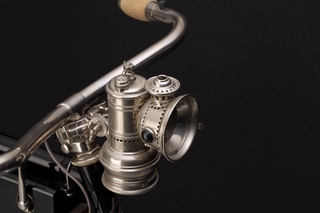
A broken handlebar at top speed caused one damaging crash, and Wyman steered his motorcycle with a hardwood stick lashed across the handlebars for the next 400 miles until the bike was repaired.
This tweet was posted on March 05, 2021.
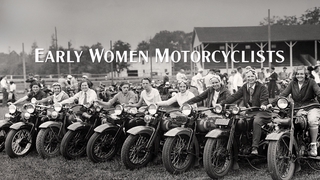
Happy #InternationalWomensDay! Adventure lovers, gear up for a spin through our newest photography exhibition, Early Women Motorcyclists, which is on view post-security in Terminal 3: https://t.co/wQpJEn2ky5
This tweet was posted on March 08, 2021.
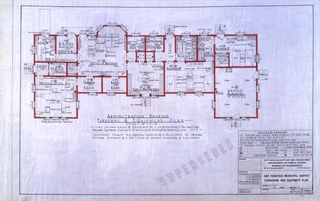
Measuring 34 feet by 88 feet, the Administration Building at Mills Field was considered a temporary structure, built at a cost of $8,566, and wasn’t yet complete when the air port was officially dedicated on May 7, 1927.
This tweet was posted on March 09, 2021.
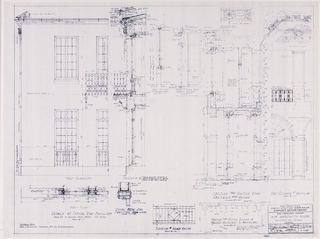
The woodwork was oak, the countertops were of Belgian black marble travertine, and the floor was patterned in a four-color terrazzo. #SFOHistory
This tweet was posted on March 23, 2021.
Want to learn more about George Wyman and his epic adventure? Check out The George A. Wyman Memorial Project, where you can even download a rider's guide to his grand tour: https://t.co/vddbMIpwYU
This tweet was posted on March 05, 2021.
📸:
George A. Wyman at the end of his transcontinental ride July 1903
The Motorcycle Magazine November 1903 | New York
Courtesy of The George Wyman Memorial Project
California Motor Bicycle, 1902
California Motor Company, Inc., San Francisco
Courtesy of Dave Scoffone
This tweet was posted on March 05, 2021.
@darryl_ramm You know, that’s a little bit of a mystery to us as well. It's most likely that the rooms were used by pilots, particularly airmail pilots, in need of an overnight crash pad.
This tweet was posted on March 10, 2021.
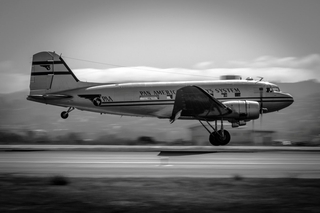
By 1940, nearly three million passengers had flown in DC-3s, and the aircraft had collectively logged over 100 million miles. By the end of production, more than 10,000 commercial and military transport versions had been built, and a few are still flown today. #WingWednesday
This tweet was posted on March 10, 2021.

In Japan, Takeshi Terauchi (b. 1939) and Yūzō Kayama (b. 1937) sparked a craze for electric guitar music known as Eleki. #InstrumentalSurf
This tweet was posted on March 12, 2021.
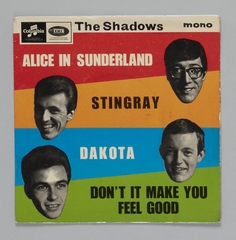
Like their counterparts in the United States, international instrumental bands in the late 1950s and 1960s were influenced by rhythm and blues and rock ‘n’ roll. The Shadows, a group of teenagers from London, led the European instrumental charge. #InstrumentalSurf
This tweet was posted on March 12, 2021.
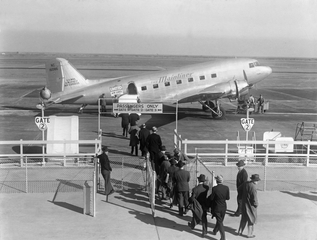
The DC-3 proved aerodynamically superior to other planes, highly reliable, safe, easy to maintain, and for the first time, enabled carriers to make a profit from passenger services. More than four hundred DC-3s were initially ordered by most major airlines. #WingWednesday
This tweet was posted on March 10, 2021.
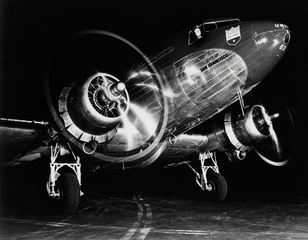
The Douglas DC-3 was arguably the most significant commercial airliner introduced prior to WWII. Introduced in 1936, it incorporated many advancements, including a strong, streamlined, all-aluminum, semi-monocoque fuselage, and a low-drag wing design. #WingWednesday #avgeek
This tweet was posted on March 10, 2021.
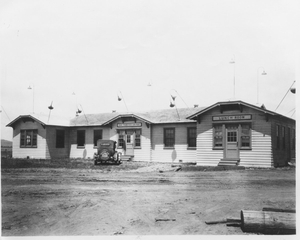
We had a request recently for some #TerminalTuesday posts, and where better to start than at the beginning?
*Technically*, the first structure at Mills Field wasn’t referred to as a “terminal,” but rather an “Administration Building.”
This tweet was posted on March 09, 2021.
📸:
DC-3, late 1930s
Gift of United Airlines Archives
1999.047.231 a
@flySFO, DC-3, 1938
SFO Museum Collection
1997.52.050
DC-3 cutaway, late 1930s
Gift of the family of Raymond B. Klinke, Sr.
2019.080.074
DC-3, 2014
Photo by & Gift of Alexis Esguerra
2014.138.002
This tweet was posted on March 10, 2021.
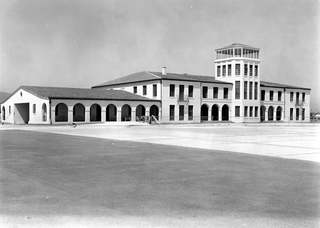
As the commercial aviation industry grew in the early 1930s, it became apparent that San Francisco Airport needed to enlarge and enhance their passenger facilities. Construction began in 1936 for a new administration building. #SFOHistory
This tweet was posted on March 16, 2021.
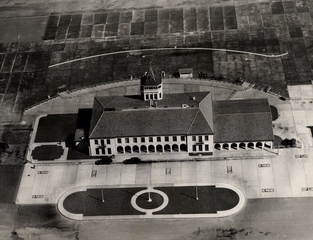
Designed in a modernized Spanish Revival style, the new Administration Building measured 88 feet by 206 feet and was sited where the 1927 building stood. #SFOHistory
This tweet was posted on March 16, 2021.